PLEASANT VALLEY CHURCH OF THE BRETHREN
Who Do You Say That I Am?
Small Group Discussion Guide
Based on the sermon “Do Not Go and Do Not Tell” by Pastor Harry Jarrett · Matthew 16:13-20
SUMMARY
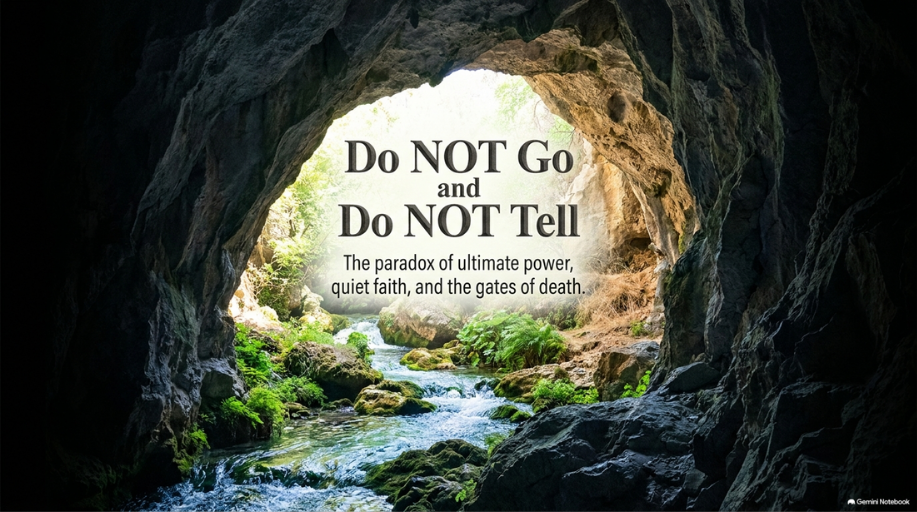
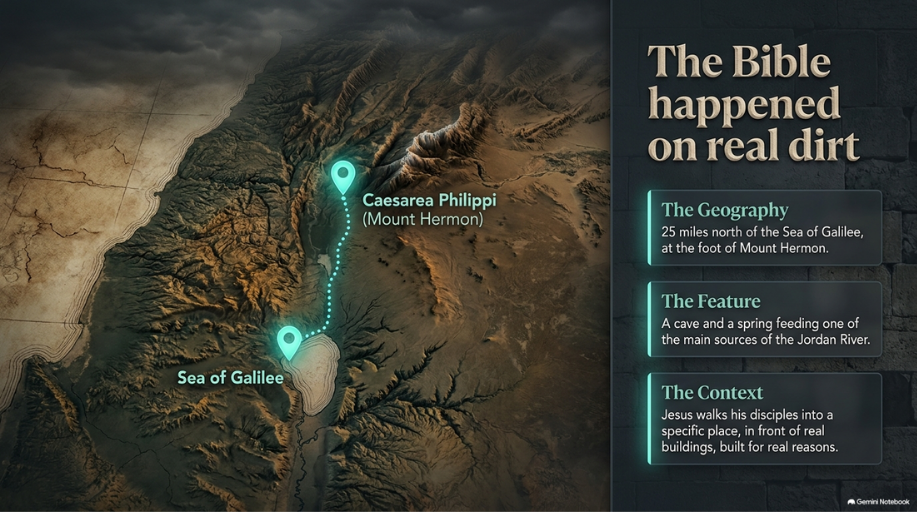
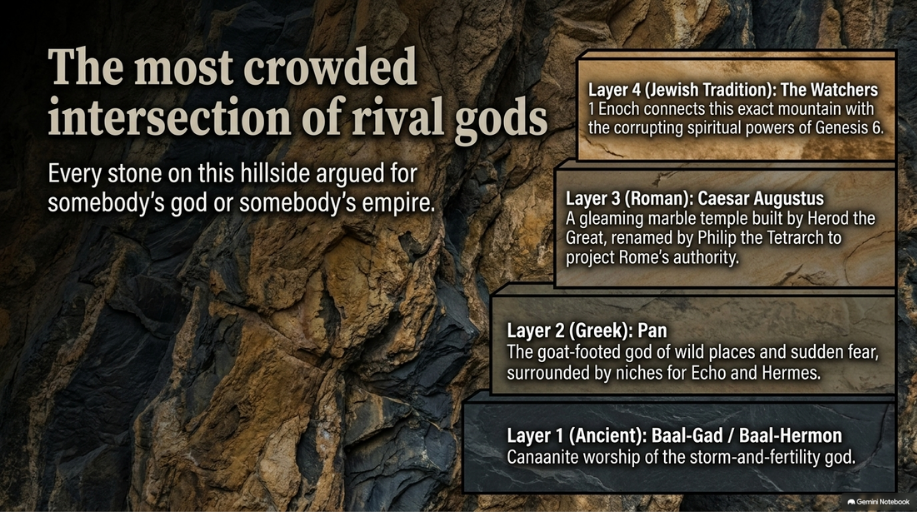
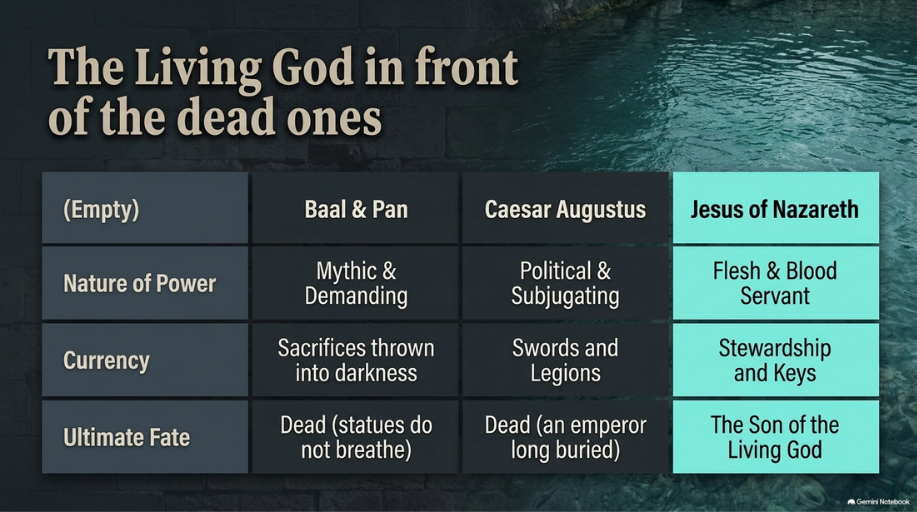
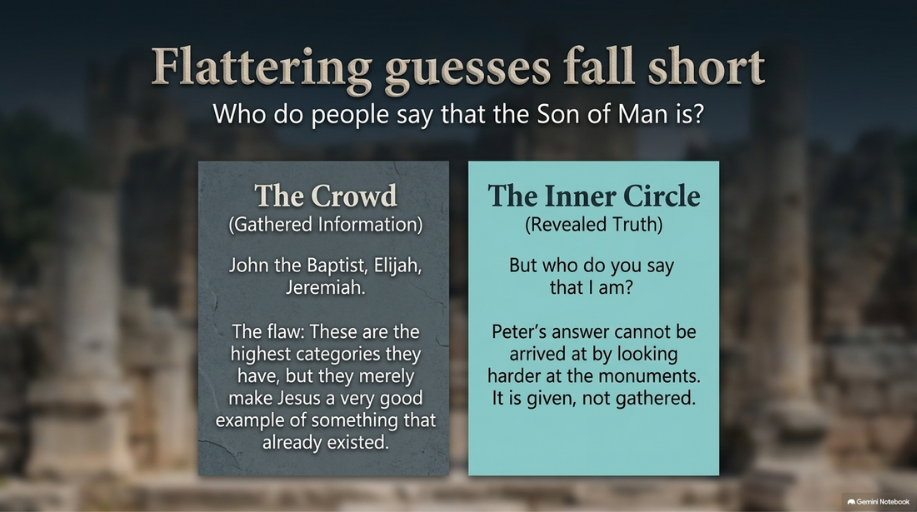
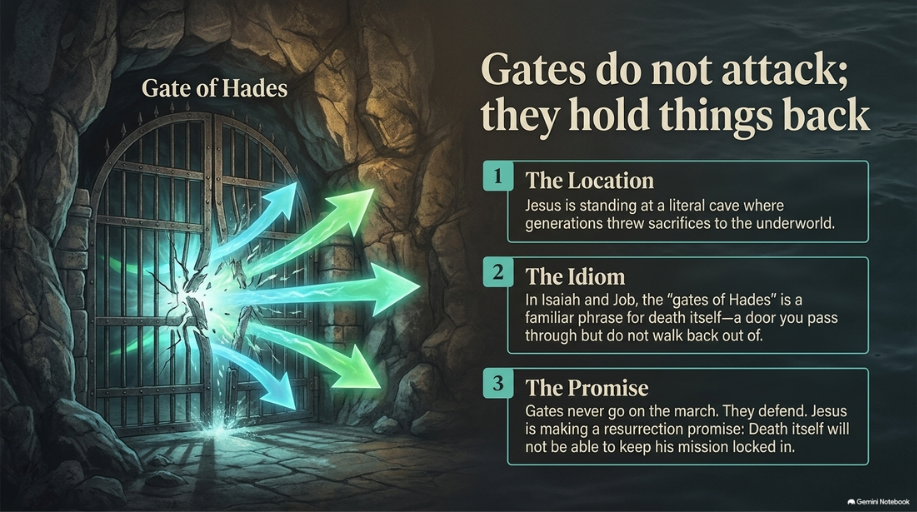
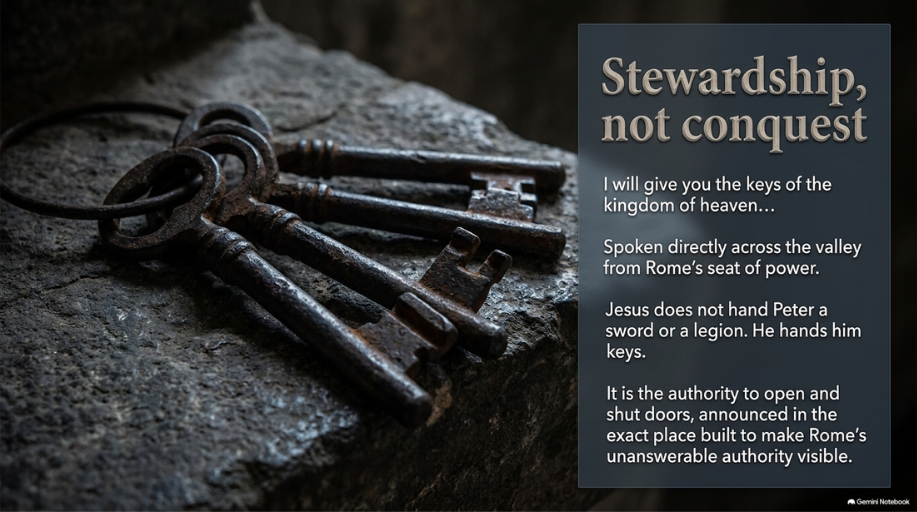
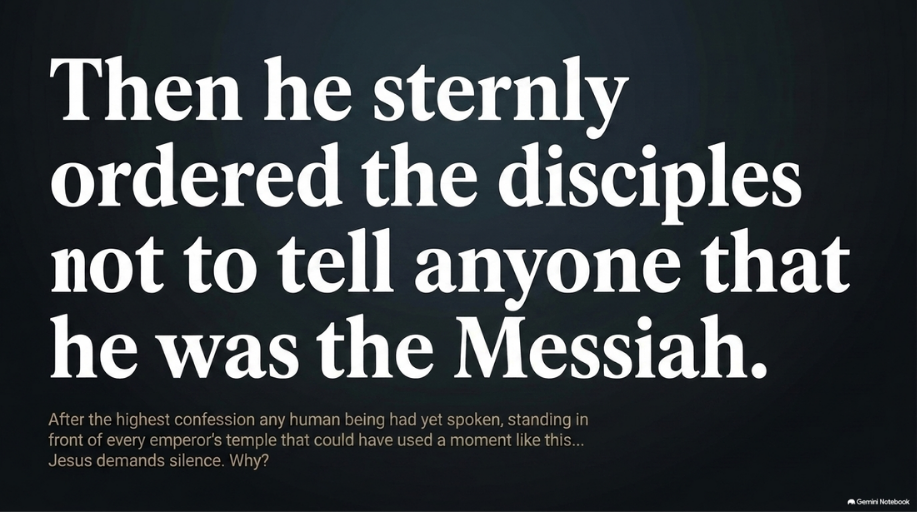
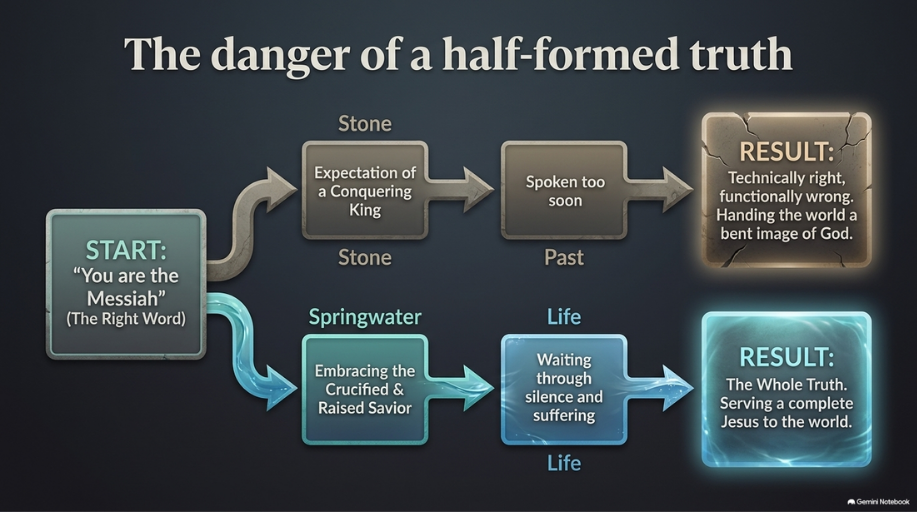
This week’s sermon takes us to Caesarea Philippi, a hillside crowded with rival claims to ultimate power: an old cave once dedicated to the Canaanite god Baal, later rededicated to Pan, and a marble temple Herod built to honor Caesar Augustus. Standing in the middle of all of it, Jesus asks his disciples, “Who do you say that I am?” Peter answers rightly: “You are the Christ, the Son of the living God,” a truth Jesus says was revealed to Peter by the Father, not discovered by Peter himself. Jesus then promises that the gates of Hades will not prevail against what he is building, and hands Peter keys rather than a sword, a picture of stewardship rather than conquest. Strikingly, Jesus then orders the disciples to tell no one, because a half-formed Messiah, announced too soon, does more damage than good news spoken once it has had time to become whole. The sermon closes with a challenge drawn from Barna Group research: most people still view Jesus positively, but view Christians and Christianity far more skeptically. The call this week is to let our answer to Jesus’s question show up in our hands, in quiet, faithful service, before it ever shows up in our mouths.
OPENING PRAYER
Living God, we gather tonight the way the disciples once stood at Caesarea Philippi: surrounded by competing claims on our attention and our loyalty. Quiet the noise in this room and in our hearts. Help us hear your question clearly: who do we say that you are? Give us honesty as we answer, patience as we listen to one another, and courage to let our lives, and not only our words, tell the truth about you this week. Amen.
ICE BREAKER
Think of a place that carries a lot of history or meaning for you, a hometown, a family homestead, a favorite trail, a room in a building you know well. Without over-explaining, describe that place in a sentence or two. What competing memories, associations, or claims does that place hold for you, good and hard alike?
KEY VERSES
Matthew 16:15-16. He said to them, “But who do you say that I am?” Simon Peter answered, “You are the Christ, the Son of the living God.”
Matthew 16:18. “I also tell you that you are Peter, and on this rock I will build my assembly, and the gates of Hades will not prevail against it.”
1 Peter 2:12. having good behavior among the nations, so in that of which they speak against you as evildoers, they may by your good works, which they see, glorify God in the day of visitation.
GROUP DISCUSSION QUESTIONS
- Pastor Harry described Caesarea Philippi as “the most crowded intersection of rival claims to ultimate power in the entire region.” What are the modern equivalents of that intersection in our own culture, or in your own life?
- Jesus asked the disciples what other people were saying about him before he asked what they themselves believed. Why might it matter that he asked it in that order?
- Peter’s confession, “You are the Christ, the Son of the living God,” is described as revealed rather than discovered. How does that change the way we think about helping someone else come to faith?
- The sermon reframes the “gates of Hades” as defensive rather than offensive: gates hold something back rather than attack. How does that shift change the way you picture the church’s mission in the world?
- Jesus gives Peter keys, not a sword, calling it stewardship rather than conquest. Where have you seen the church, or yourself, tempted to reach for conquest instead of stewardship?
- Why do you think Jesus ordered the disciples to keep silent about his identity immediately after Peter’s confession, especially given what happens just a few verses later when Peter rebukes Jesus?
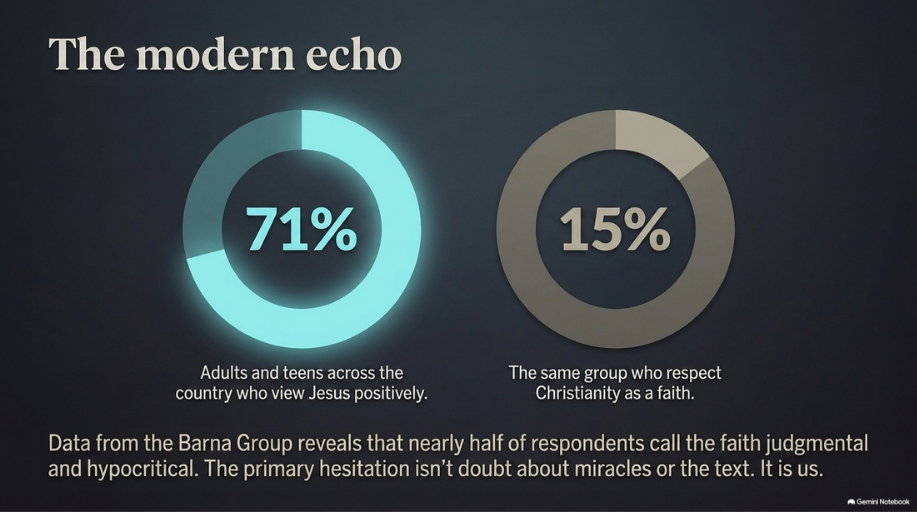
- The Barna Group statistics cited in the sermon show that seventy-one percent of people still view Jesus positively, but only fifteen percent respect Christianity as practiced by believers. What is your honest reaction to that gap?
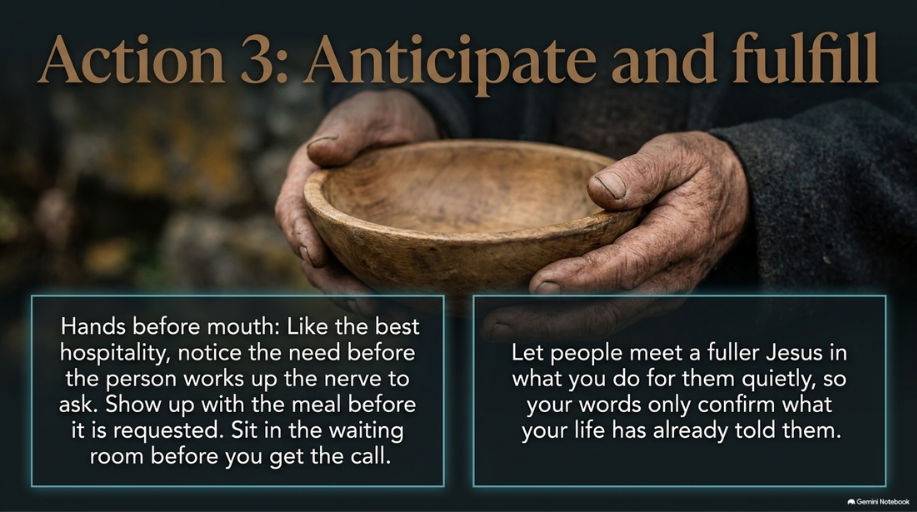
- Pastor Harry described “anticipate and fulfill” as a posture of noticing someone’s need before they ask. What would it look like for our group, or this church, to practice that this month?
LIFE APPLICATIONS
- Sit With the Question
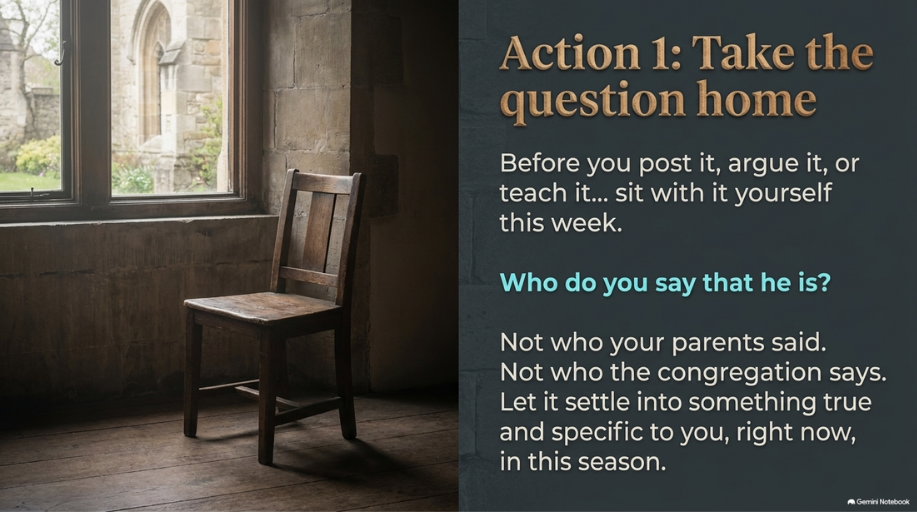
Before you post it, argue it, or hand it to someone else, take fifteen quiet minutes this week to write out your own honest answer to “Who do you say that I am?” Not who your parents said, not who this congregation has always said. Let it be specific to you, right now, in this season of your life.
| Check-In: Share one sentence from what you wrote, or one thing that surprised you about the process, at our next gathering. |
- One Small Step of Repair
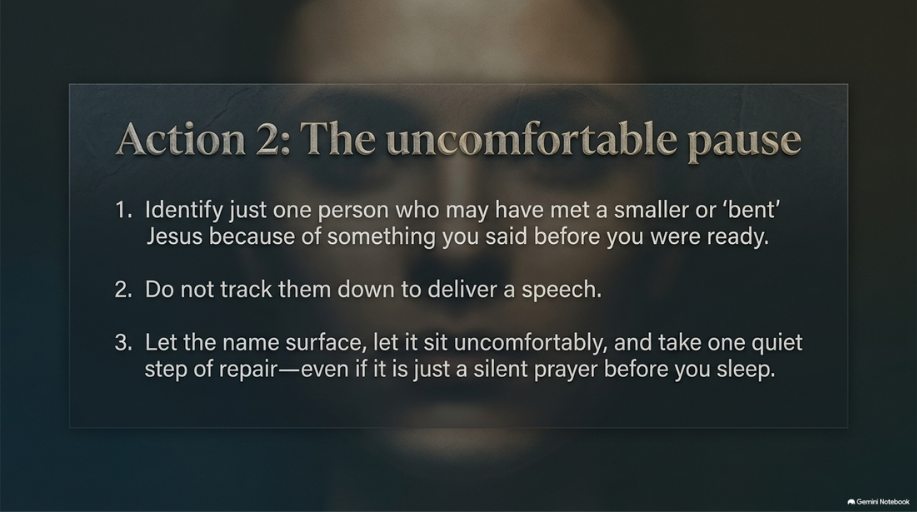
Let the name of one person surface, someone who may have met a smaller or more bent version of Jesus because of something you said or did before you were ready. You do not need to deliver a speech. Ask God to show you one small, humble step of repair, even if it is nothing more than praying for that person by name this week.
| Check-In: Without necessarily naming the person, share whether God brought someone to mind and what step, if any, you felt led to take. |
- Notice Before They Ask
Practice “anticipate and fulfill” this week. Choose one person, a neighbor, a coworker, a family member, and notice a need before they voice it. Show up with the meal before it is requested. Sit in the waiting room before you get the call. Let your actions say what your words have not yet earned the right to say.
| Check-In: Tell the group what need you noticed and what you did, or what got in the way of doing it. |
- Hand Someone a Key
Identify one door you have some ability to open for someone else this week, whether that is a welcome, an opportunity, a word of forgiveness, or simple belonging. Use whatever influence or position you have to open that door rather than to control it.
| Check-In: Report back on the door you tried to open and what happened when you did. |
KEY SERMON TAKEAWAYS
- God does not wait for quiet, uncontested spaces to speak to us; he asks his most important questions right in the middle of our noisiest competing loyalties.
- True knowledge of who Jesus is comes as revelation from God, not as a conclusion we argue our way into on our own.
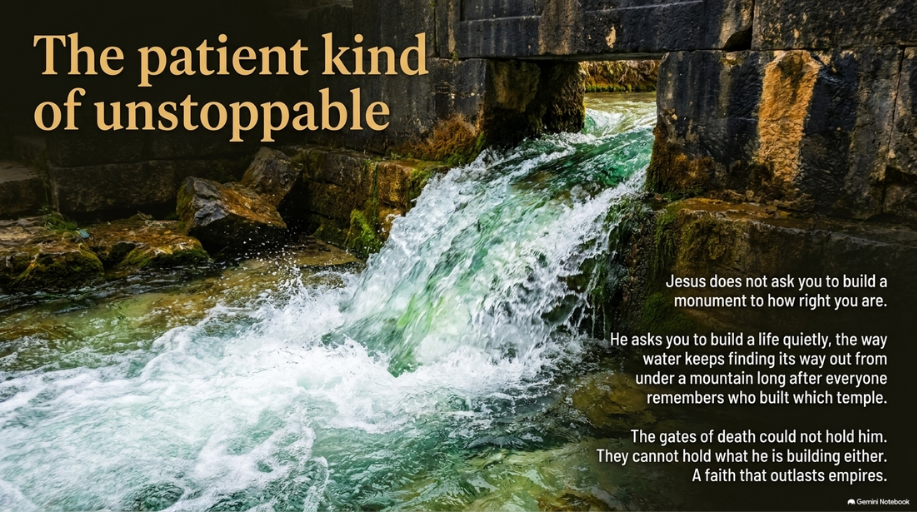
- The gates of Hades are defensive, not offensive: death itself cannot hold back what Jesus is building, which is a resurrection promise, not a battle cry.
- Kingdom authority looks like keys and stewardship, not swords and conquest.
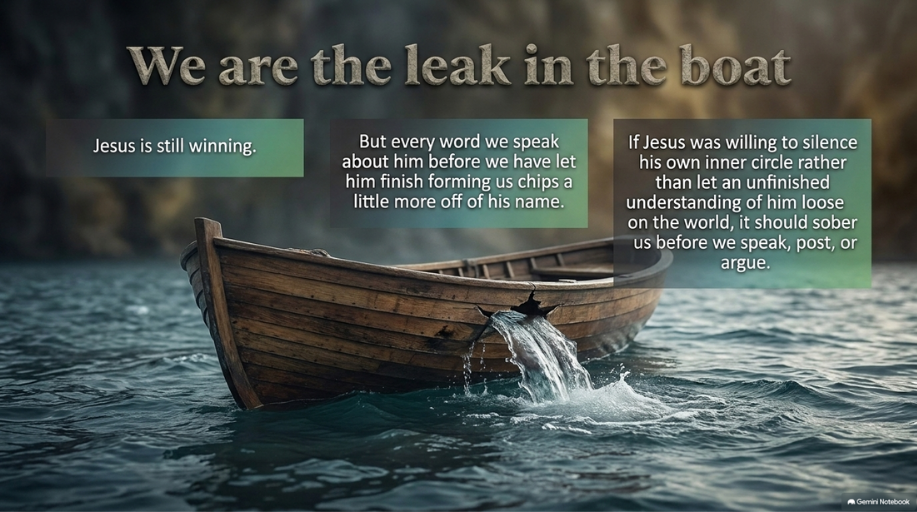
- A half-formed understanding of Jesus, spoken too soon, does more damage than good news spoken later, once it has had time to become whole.
- The biggest obstacle to faith today is often not unbelief in Jesus but disappointment in his followers; our lives preach a sermon every week whether we intend to or not.
CLOSING PRAYER
Gracious God, thank you for meeting us in the middle of our noise and asking us the question that matters most. Forgive us for the times our words have described you better than our lives have. Give each of us in this room the courage to sit with your question this week, the humility to repair what we can, and the patience to let our hands tell the truth about you before our mouths do. Build your church here, not with swords, but with keys, faithfully placed in ordinary hands. We ask this together, in the name of Jesus. Amen.