The Harvest That Has Not Ended
DEVOTIONAL
There is a dream many of us have carried for most of our adult lives: the porch, the warm afternoon, the rocking chair waiting with our name on it, earned after decades of faithful work. It is a good dream, and Scripture does not despise rest. But before we settle too comfortably into it, we are asked to look where Jesus looked.
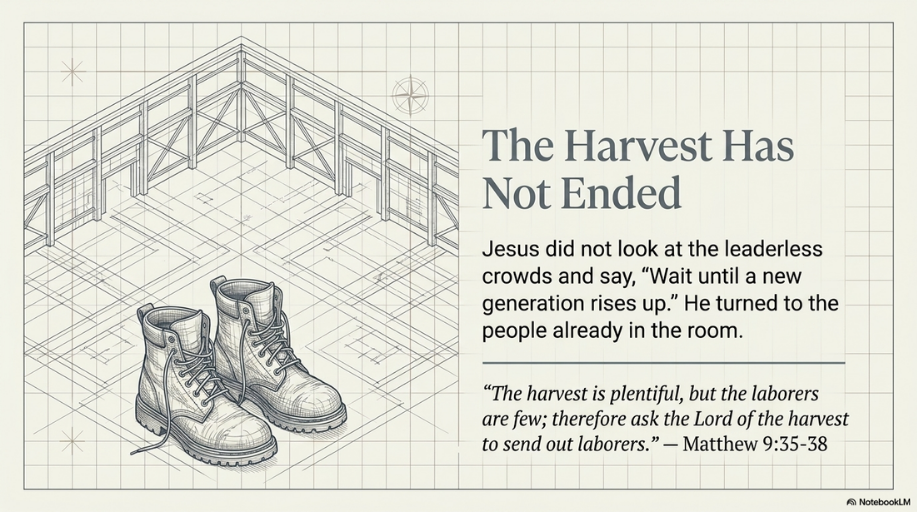
In Matthew 9, Jesus is not in Jerusalem debating the theologians. He is out among ordinary people in ordinary villages, and what he sees breaks his heart. Not their sin. Not their bad theology. Their lostness, their leaderlessness, their need. They are harassed and helpless, like sheep without a shepherd. And out of that compassion comes a sentence that should stop us cold: the harvest is plentiful, but the laborers are few.
This is not a minor staffing inconvenience; it is a crisis of care. And notice what Jesus does not say. He does not say, “Wait until a new generation rises up.” He says, “Pray that the Lord of the harvest will send out laborers,” and he says it to the people already standing in front of him. The ministries we built, the projects we started, the roles we filled with prayer over so many decades, they are still here. The need has not retired, even if we have begun to.
Compassion, in the Gospels, is never a feeling that stays still. It moves Jesus toward the crowd, and it moves the crowd’s need toward us. To love what Jesus loves is to feel the same ache he felt, and to let that ache ask something of us.
SCRIPTURE
When he saw the crowds, he had compassion for them, because they were harassed and helpless, like sheep without a shepherd. (Matthew 9:36)
PULL QUOTE
“The harvest has not ended. And there is no one lining up to take our place.”
REFLECTION
- What does it reveal about the heart of God that Jesus responds to the crowd’s lostness with compassion rather than judgment?
- Where in your own life have you quietly assumed that your season of laboring has ended?
- Who are the “sheep without a shepherd” in your community right now, and what might compassion ask of you this week?
PRAYER
Lord of the harvest, you walked among the crowds and your heart broke for what you saw. Give us your eyes, that we might see the need around us; give us your heart, that we might feel it; and give us the courage to pray, not “send someone,” but “send me.” We are still here, and so is the work. Make us willing. Amen.
Sarah’s Laugh
DEVOTIONAL
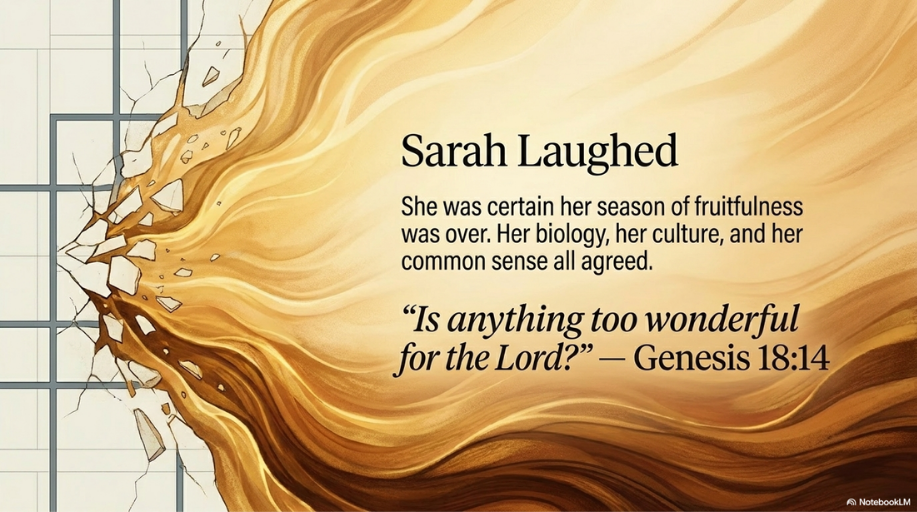
Sarah laughed, and who could blame her? The promise made no sense. Her body had told her in unmistakable terms that the season of bearing was behind her. She was old, Abraham was old, and the train had left the station decades ago. What God proposed made no biological sense, no cultural sense, no common sense. Her laugh was not faithlessness; it was realism, born of long deferred hope and repeated disappointment.
And yet, into that tent in the desert, God speaks a question that has been echoing ever since: “Is anything too wonderful for the Lord?” It is the kind of question that does not argue with our reasoning so much as expose its smallness. Sarah’s arithmetic was correct. Her conclusion was wrong, because she had left God out of the equation.
Here is the quiet danger of the second season of life: not a dramatic rebellion against God, but a slow, reasonable settling. We do the math on our remaining years, our diminishing energy, our changing bodies, and we close certain doors gently, almost piously, telling ourselves we are only being realistic. But God’s question to Sarah is also God’s question to us. It is asked in the direction of every heart that has quietly decided its most fruitful years are over.
God did not ask Sarah to pretend she was young again. He did not ask her to deny her age or the weight of her years. He asked her only to hold her conclusions loosely enough that he might still surprise her. Nine months later, she held a son in her arms.
SCRIPTURE
Is anything too wonderful for the Lord? At the set time I will return to you, in due season, and Sarah shall have a son. (Genesis 18:14)
PULL QUOTE
“That question is not just for Sarah. It is for every one of us who has quietly decided that our most fruitful years are behind us.”
REFLECTION
- What does Sarah’s story reveal about the difference between human realism and the possibilities God holds open?
- What conclusion about your own future have you reached that you have never thought to question?
- Is there a calling you closed the door on too soon, and what would it mean to leave it open to God this week?
PRAYER
Faithful God, you met Sarah in her laughter and did not turn away. Meet us in ours. When we have done the math and decided our season is over, ask us again your wonderful question. Loosen our grip on what we are certain we cannot do, and make us ready for the surprises of your grace. Nothing is too wonderful for you. Amen.
The Spirit Blows Where It Will
DEVOTIONAL
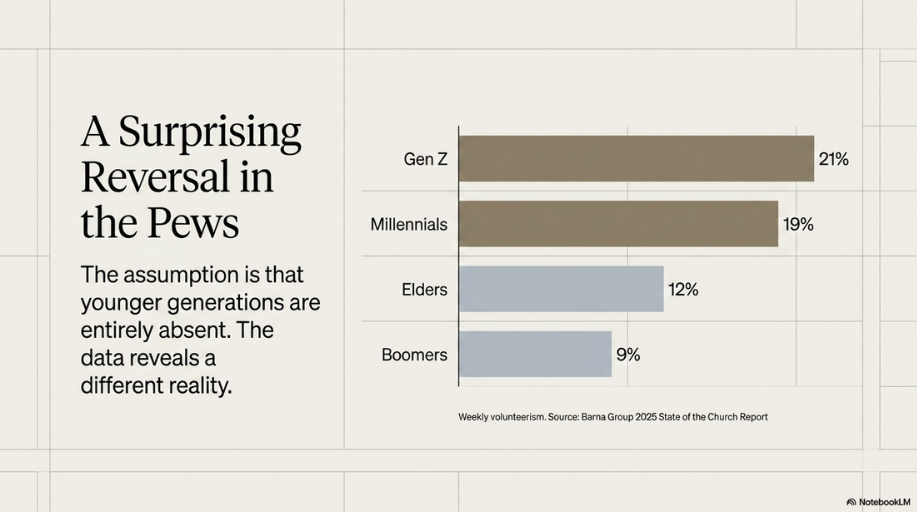
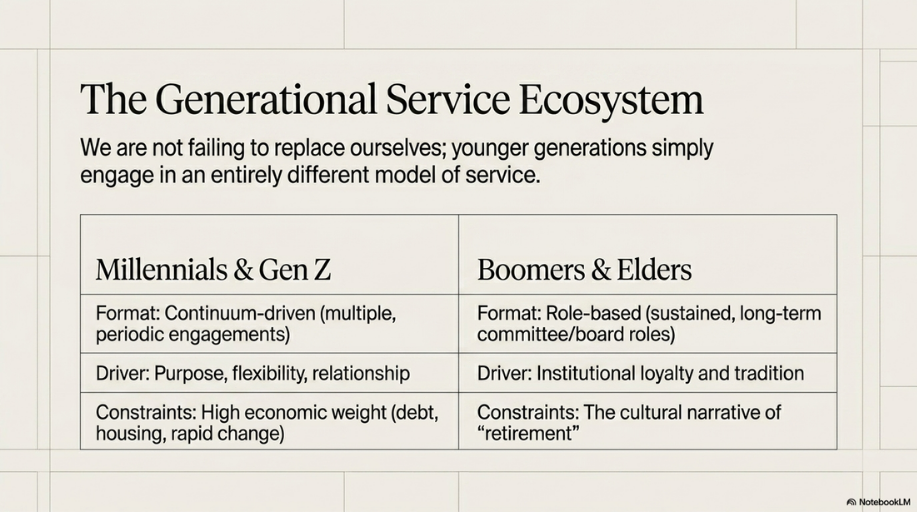
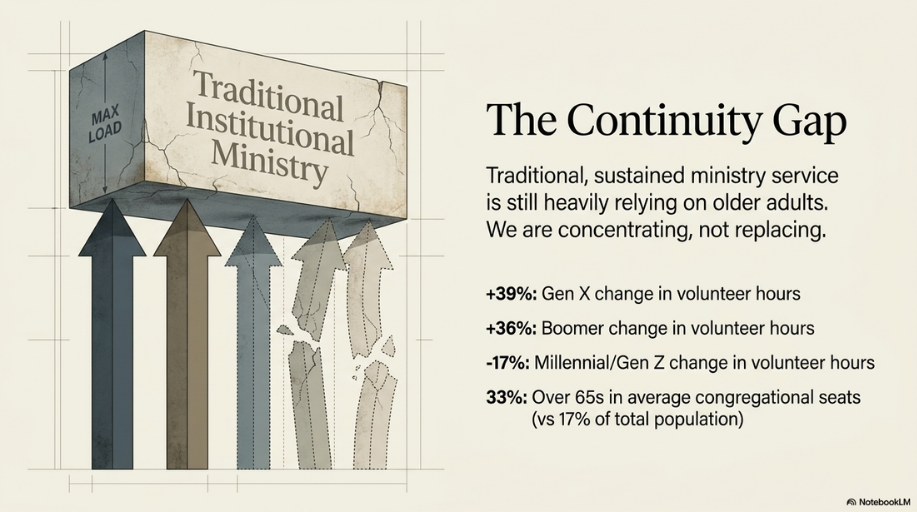
It is tempting to tell ourselves a simple story: the young are not stepping up, not showing up, not caring. But the truth is more complicated, and more hopeful. Younger generations are showing up, often at higher rates than we are, yet they engage differently. They serve on a continuum, drawn by purpose and relationship rather than institutional obligation. They carry burdens we did not carry at their age. And some of them are finding genuine faith in places that look nothing like the structures we built.
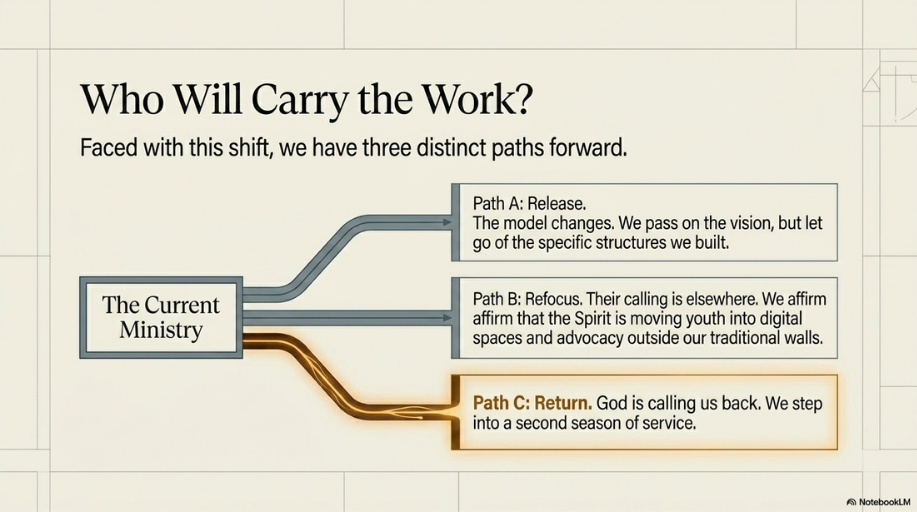
This calls for discernment, not frustration. We affirm in our Anabaptist tradition that the Spirit blows where it will, and we should be careful about mistaking our preferences for God’s direction. It may be that God is not calling this generation to continue the exact programs we began. Their calling may lie in the digital spaces, the advocacy movements, the neighborhood expressions of faith that look less like Sunday school and more like the kingdom breaking in. The work may not look identical to ours; the vision may be carried in forms we cannot yet imagine.
But here is the harder, and perhaps holier, possibility: the same Spirit who is calling them somewhere new may be calling us back. The Brethren before us did not hand down identical structures; they handed down a vision. Perhaps our task is the same, and perhaps part of that task is to stay in the work ourselves, not because no one younger will do it, but because God still has something for us to carry.
Discernment means holding two truths at once: releasing our grip on how the work must look, while refusing to release our grip on the work itself. The Spirit is moving. The question is whether we are listening for where.
SCRIPTURE
The wind blows where it chooses, and you hear the sound of it, but you do not know where it comes from or where it goes. So it is with everyone who is born of the Spirit. (John 3:8)
PULL QUOTE
“We should be careful about mistaking our preferences for God’s direction.”
REFLECTION
- How does trusting that the Spirit blows where it will free us from the burden of controlling how God’s work continues?
- Where have you mistaken your own preferences for God’s direction, especially in how ministry “should” be done?
- Who is one younger person whose different way of serving you could bless, rather than correct, this week?
PRAYER
Spirit of the living God, you blow where you will, and you are never bound by our preferences or our plans. Forgive us when we have confused our comfort with your call. Give us discernment to release what is not ours to hold, and faithfulness to carry what still is. Move freely among us, and make us willing to follow wherever you lead. Amen.
The Sacred Dance
DEVOTIONAL
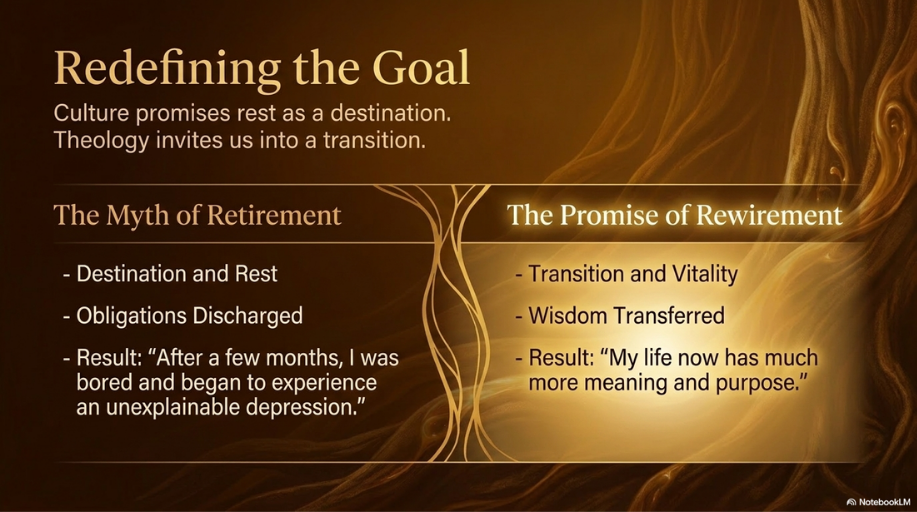
Our culture hands us a clear narrative about life after a certain age: striving completed, obligations discharged, rest deserved. And rest is holy. Sabbath is a gift from God, and we are not called to exhaustion. But there is a difference between Sabbath rest and the hollow boredom one retiree described after reaching the destination our culture promised: golf, travel, no pressure, and then, unexpectedly, an aching emptiness. He had arrived where he was told to go and found it strangely empty, until he returned to service and discovered that his life again held meaning.
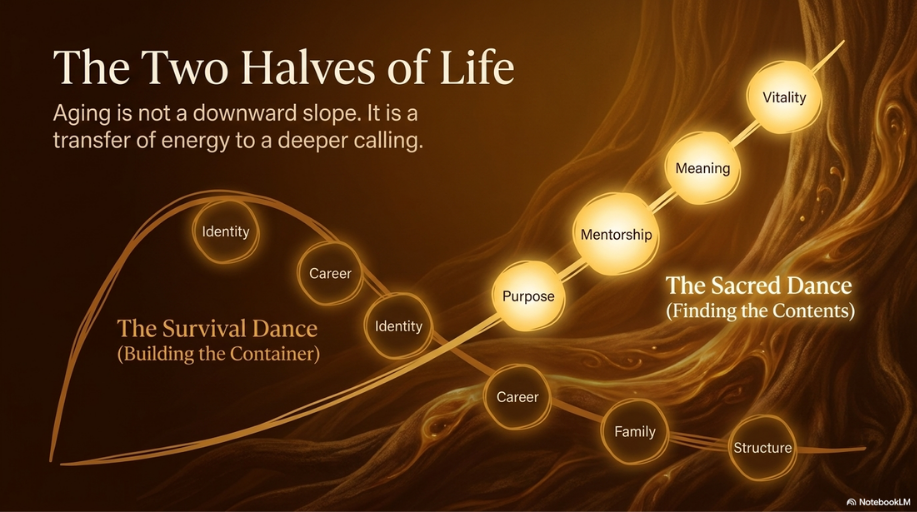
Richard Rohr describes two journeys in a single life. The first half is the survival dance: building identity, career, family, the container of a life. The second half is the sacred dance: discovering the actual contents that the container was meant to deliver. The second half is not a winding down. It is a summoning. Many of us get stuck repeating the survival dance because we do not know another way, or because the second journey frightens us more than the first.
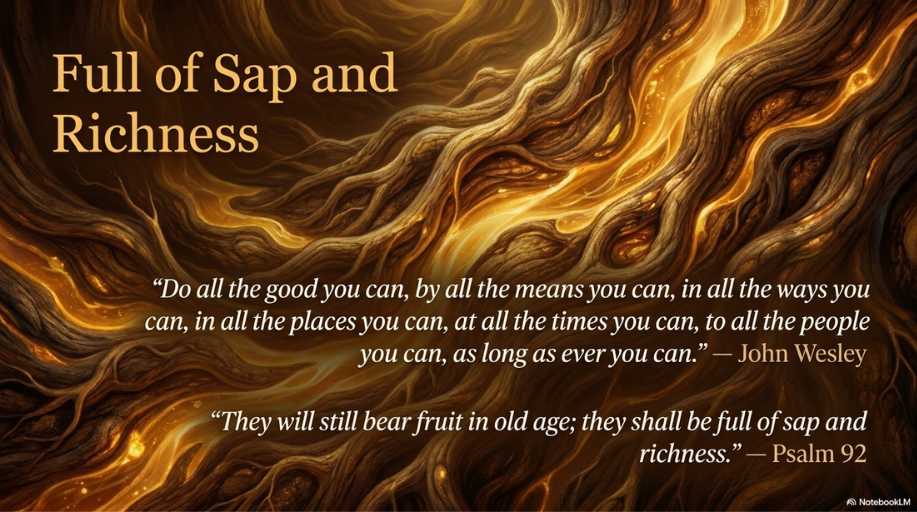
Scripture has its own image for this, and it is not a rocking chair but a tree. The psalmist says the righteous will still bear fruit in old age, full of sap and richness. Notice what is promised and what is not. The psalmist did not promise ease. He promised vitality: not the restless vitality of the young, still building their containers, but the deeper vitality of those who have finally learned what the container is for.
This is the invitation of the second season: not to deny our limits, not to shame ourselves for loving the idea of rest, but to remain open to a summons that comes precisely now, when we hold wisdom we did not have before. Not retirement from service, but a rewirement for whatever God is doing next.
SCRIPTURE
They still bear fruit in old age; they are ever full of sap and green. (Psalm 92:14)
PULL QUOTE
“The psalmist did not promise ease. He promised vitality.”
REFLECTION
- What is the difference, theologically, between holy Sabbath rest and the disengagement our culture sells as retirement?
- Which dance are you living in right now: the survival dance of building, or the sacred dance of discovering what your life was for?
- What is one fruit your years of experience uniquely equip you to bear for others this week?
PRAYER
God of every season, you plant the righteous like trees beside living water, and you promise fruit even in our later years. Thank you for the gift of rest, and save us from mistaking emptiness for peace. Call us into the sacred dance of this second season; fill us with your sap and richness; and let our lives still bear fruit that feeds those who come after us. Amen.
What Would You Have Me Carry?
DEVOTIONAL
You did not earn your way into God’s kingdom, and you cannot retire from it either. The grace that called you into service decades ago is the same grace that holds you now, and that grace, if you are willing, still has work to do. The Gospel does not offer us a finish line where our usefulness expires; it offers us a rewirement, a shift in which everything we have done until now can lead us into a new and purposeful stage.
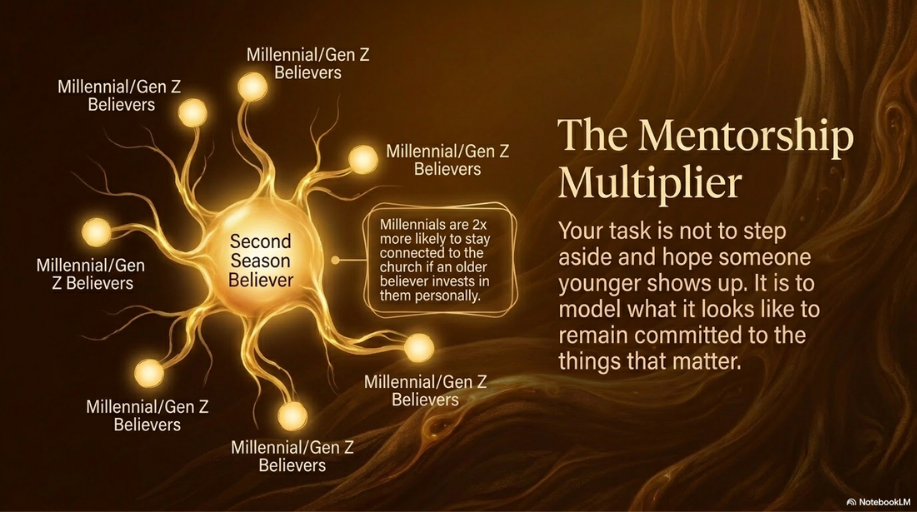
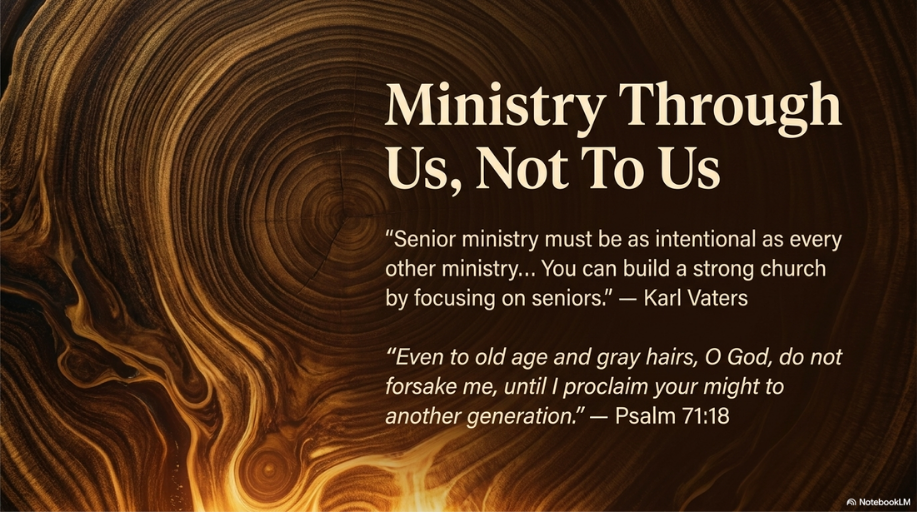
What that looks like may surprise us. The research is striking: younger believers who stay connected to the church are far more likely to say that an older believer invested in them personally. Not managed a program. Invested. Showed up. Walked alongside them. The most formative thing we may offer the next generation is not a structure to inherit but a presence to remember. This is ministry not only to us, but through us. It is the prayer of Psalm 71, the prayer that belongs to this season: that God would not forsake us, even to old age and gray hairs, until we have proclaimed his might to another generation.
So this week the invitation is simple, and it is personal. Pray one honest question: Lord, what would you have me carry in this season? Not what someone else should carry. Not what someone younger ought to be doing. What would you have me carry? And then listen. And then show up.
Sarah packed her bags for a journey she never expected to take. Abraham walked into a future he could not see. And the disciples, when Jesus looked at the crowds with compassion, were already standing there, already present, already enough. So are we.
SCRIPTURE
So even to old age and gray hairs, O God, do not forsake me, until I proclaim your might to another generation, your power to all those to come. (Psalm 71:18)
PULL QUOTE
“The harvest is plentiful. The laborers are few. And some of them, I believe, are sitting right here.”
REFLECTION
- What does it mean that we can be called into God’s kingdom but never retire from it?
- When you pray honestly, “Lord, what would you have me carry in this season?” what comes to mind, even if it frightens you?
- Who is one younger person you could simply show up for and invest in this week, not as a program, but as a presence?
PRAYER
Lord of the harvest, you have not finished with us yet. Thank you for grace that called us long ago and holds us still. Show us what you would have us carry in this season, and give us the courage to show up. Keep us faithful, even to gray hairs, until we have proclaimed your might to the generation coming after us. Here we are. Send us. Amen.
Small Group Discussion Guide
Ministry in the Second Season of Life
Pleasant Valley Church of the Brethren | June 14, 2026 Texts: Matthew 9:35-38; Genesis 18:11-14
Summary
This message invites those in the “second season of life” to reconsider the cultural dream of retirement as the end of meaningful service. In Matthew 9, Jesus looks on the crowds with compassion, not over their sin but over their lostness, and declares the harvest plentiful but the laborers few, speaking to the people already standing in front of him. In Genesis 18, Sarah laughs at a promise that defies biology, culture, and common sense, and God answers with a question meant for every heart that has decided its fruitful years are over: “Is anything too wonderful for the Lord?”
Honest research complicates the easy story that younger generations simply will not serve. They are serving, often at higher rates than older adults, but they engage differently and carry different burdens. This calls for discernment rather than frustration. The message holds two truths together: we can release our grip on how ministry must look, while refusing to release the work itself. Aging, in this light, is not a winding down but a summoning, a “rewirement” rather than a retirement from service. And the most formative gift we may offer the next generation is not a program to inherit but a presence to remember. The week’s guiding prayer is simple and personal: “Lord, what would you have me carry in this season?”
Opening Prayer
(to be led by one person, with the group listening and joining in the “Amen”)
Gracious God, you have walked with us through many seasons, and you are with us still. As we gather, quiet the voices that tell us our best work is behind us, and open our ears to your voice. Speak to us through your Word and through one another, and give us courage to ask what you would have us carry. We come ready to listen. Amen.
Ice Breaker
Go around the circle and share: when you were younger, what did you imagine your later years or “retirement” would look like? Has that picture changed over time?
(Keep it light, and let people laugh a little. The rocking chair is welcome here.)
Optional follow-up: tell about someone you have known who did something surprising, meaningful, or brand new later in life.
Key Verses
- Matthew 9:37-38 “The harvest is plentiful, but the laborers are few; therefore ask the Lord of the harvest to send out laborers into his harvest.”
- Genesis 18:14 “Is anything too wonderful for the Lord?”
- Psalm 92:14 “They still bear fruit in old age; they are ever full of sap and green.”
- John 3:8 “The wind blows where it chooses … So it is with everyone who is born of the Spirit.”
- Psalm 71:18 “So even to old age and gray hairs, O God, do not forsake me, until I proclaim your might to another generation.”
Group Discussion Questions
- In Matthew 9, Jesus’ compassion is stirred by the crowds’ lostness and leaderlessness, not their sin. What does that tell us about the heart of God, and about the kind of need he sends his laborers toward?
- Jesus prays for laborers among the people already present rather than waiting for a new generation to rise up. Why do you think he speaks to the people already in the room, and how does that land with us?
- The sermon calls Sarah’s laugh “realism, not faithlessness.” Where is the line between honest realism about our limits and quietly closing doors that God has left open?
- The message names a “quiet danger” of the second season: not rebellion against God, but a slow, reasonable settling. Have you noticed that settling in yourself or in someone you love? What does it sound like?
- The research suggests younger generations are serving, just differently. How do you respond to the idea that God may be calling them to forms of ministry that look nothing like what we built? Is that hard to hear, freeing to hear, or both?
- Richard Rohr describes a “survival dance” of building a life and a “sacred dance” of discovering what that life was for. Which dance feels more familiar to you right now, and what might it look like to step into the sacred one?
- The sermon says the most formative gift we can give the next generation may be presence: an older believer who invests personally rather than managing a program. Who is one younger person you could walk alongside, and what tends to hold you back?
- “Lord, what would you have me carry in this season?” If you sat honestly with that question this week, what do you sense God might be inviting you to pick up, or to keep carrying?
Life Applications
(Choose one or two to commit to this week. Each includes a built-in check-in for when the group next gathers.)
- Pray the one question. Each day this week, pray: “Lord, what would you have me carry in this season?” Jot down whatever surfaces. Check-in: next time we meet, share one word or phrase that kept returning.
- Invest in one person. Identify one younger person (a grandchild, a newer member, a neighbor) and take one concrete step to show up for them this week: a phone call, a coffee, a handwritten note, or attendance at something that matters to them. Check-in: come ready to tell the group who you reached out to and what happened.
- Examine the dream. Name one assumption you hold that your most productive years are behind you. Speak it honestly to God and to one trusted friend, and ask together: is this realism, or a door closed too soon? Check-in: report back whether the assumption held up under that light.
- Bless a different way of serving. Notice one example of younger people serving differently (online, in advocacy, in the neighborhood) and choose to bless it rather than critique it, perhaps with an encouraging word to someone involved. Check-in: share what you noticed and how it felt to affirm rather than correct.
Key Sermon Takeaways
- Rest is holy, but there is a difference between Sabbath and disengagement. We are called to neither exhaustion nor hollow retirement.
- The harvest still needs laborers, and Jesus addresses the people already present, not only the next generation.
- Sarah’s story reminds us that our conclusions about our own future may be far smaller than what God intends. “Is anything too wonderful for the Lord?”
- Younger generations are serving, just differently. Discernment, not frustration, is the faithful response, for the Spirit blows where it will.
- The second season is a summoning, not a winding down: a “rewirement,” not a retirement from service.
- Presence and personal investment may shape the next generation more than any structure we could hand them.
- The week’s prayer: “Lord, what would you have me carry in this season?” Then listen. Then show up.
Closing Prayer
(to be prayed aloud together, or led by one with the group joining in the final lines)
Lord of the harvest, you have not finished with us yet. Thank you for the years behind us and the grace that holds us now. Where we have grown weary, renew us; where we have settled too soon, stir us; and where you are calling, give us the courage to answer. Make us a people who still bear fruit, who invest in those coming after us, and who show up when you say, “Go.” Here we are. Send us. Amen.