Pleasant Valley Church of the Brethren
When Desperation Is a Good Thing
Small Group Discussion Guide
Based on the sermon by Pastor Harry Jarrett · Psalm 119:33-40
Pleasant Valley Church of the Brethren, Weyers Cave, Virginia
Summary
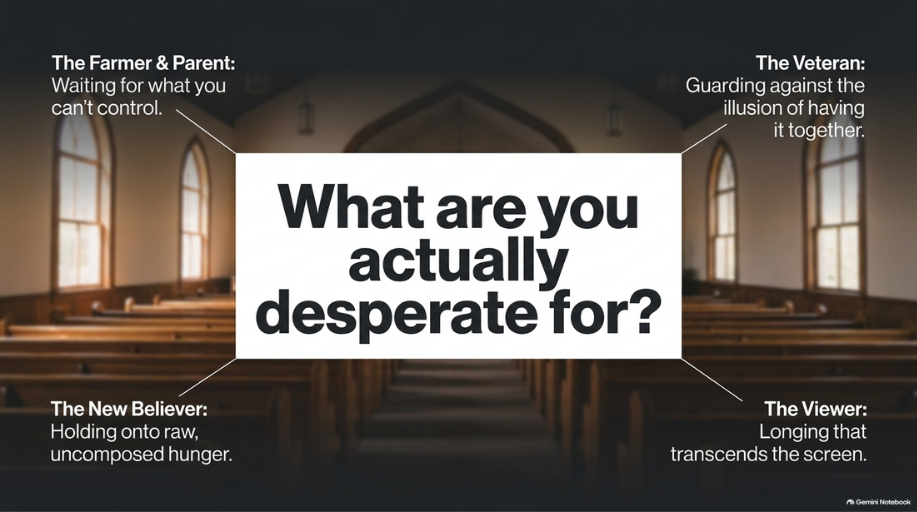
This week we sat with Psalm 119:33-40, the hey stanza of the Bible’s longest chapter, in a week when our own desperation shifted overnight from praying for rain to praying for it to stop. Pastor Harry walked us through nearly every line of this stanza, almost all of it verbs aimed at God: teach me, give me, lead me, turn my heart, turn my eyes, confirm your word, turn away my disgrace, I long. Tracing the Hebrew behind these requests (derek and nathiv for road and path, natah for turning, ta’avah for longing) he showed a psalmist who was not asking God for a map or a manual, but for nearness: to be taught the way, to camp close enough to God to stay there, to have a promise confirmed and a fear of disgrace taken away. The sermon returned again and again to one question: what are we actually desperate for? Some circumstance we want changed, or, underneath it, God himself? Like the psalmist, we are invited to bring our whole, honest desperation to God, and to let it lead us not merely toward outcomes, but toward the God who is already walking the road beside us.
Opening Prayer
(Read aloud together, or led by one person.)
Gracious God, we come to you today with whatever desperation we are carrying, named or unnamed. Quiet our hearts long enough to notice what we are actually asking of you. Teach us the way, turn our hearts toward you, and meet us, in this conversation and in every ordinary desperate moment of our week, with more of yourself. In the name of Jesus we pray. Amen.
Ice Breaker
Think of something you have prayed for desperately, more than once. Looking back, was the prayer really about the outcome, or was some of it about wanting God nearer? Share as much as you’re comfortable with.
Key Verses
“Teach me, Yahweh, the way of your statutes. I will keep them to the end.”
Psalm 119:33, WEB
“Turn my heart toward your statutes, not toward selfish gain.”
Psalm 119:36, WEB
“Take away my disgrace that I dread, for your ordinances are good.”
Psalm 119:39, WEB
“Behold, I long for your precepts! Revive me in your righteousness.”
Psalm 119:40, WEB
“When Yahweh saw that he came over to see, God called to him out of the middle of the bush.”
Exodus 3:4, WEB
Group Discussion Questions
- The psalmist’s plea in Psalm 119:33-40 is almost entirely verbs aimed at God: teach, give, lead, turn, confirm, long. What does the shape of these requests tell us about how the psalmist related to God, and how is that different from a prayer list?
- Pastor Harry traced three Hebrew words for road in this stanza: derek (the ordinary road), nathiv (the narrower path), and binah (understanding gained only by walking, not by having a concept explained). What difference does it make to hear “teach me the way” as a request for companionship rather than a request for a map?
- The Hebrew verb behind “turn my heart” and “turn my eyes,” natah, is the same word used elsewhere for pitching a tent beside someone. How does that image reshape what it means to ask God to turn your heart toward him?
- The psalmist names his own fear outright: “take away the disgrace I dread.” Pastor Harry said we don’t dread disgrace over a rule we memorized, we dread it over a relationship we’ve staked something real on. What promise or hope have you staked something real on, and how comfortable are you naming the fear that comes with it?
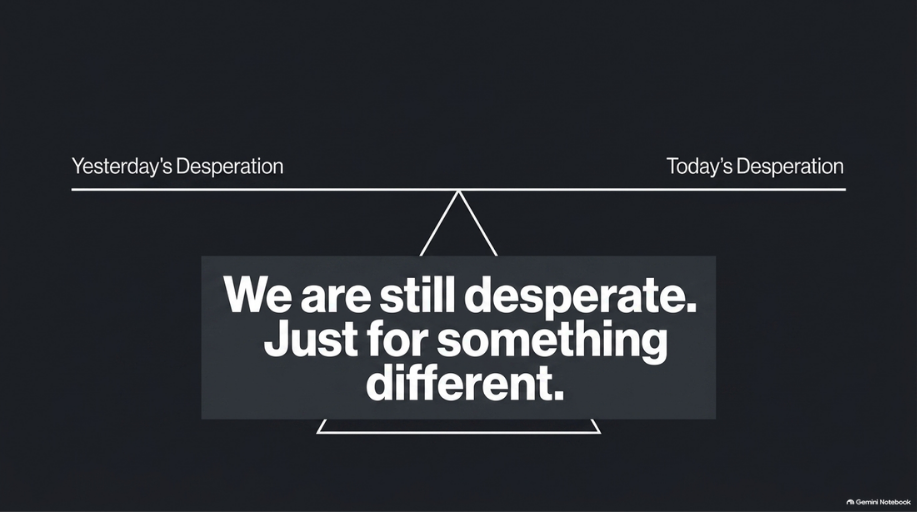
- Notice how fast the congregation’s own desperation shifted this week: desperate for rain last Sunday, desperate for it to stop this Sunday. Where has your own desperation shifted recently, and what stayed the same underneath it?
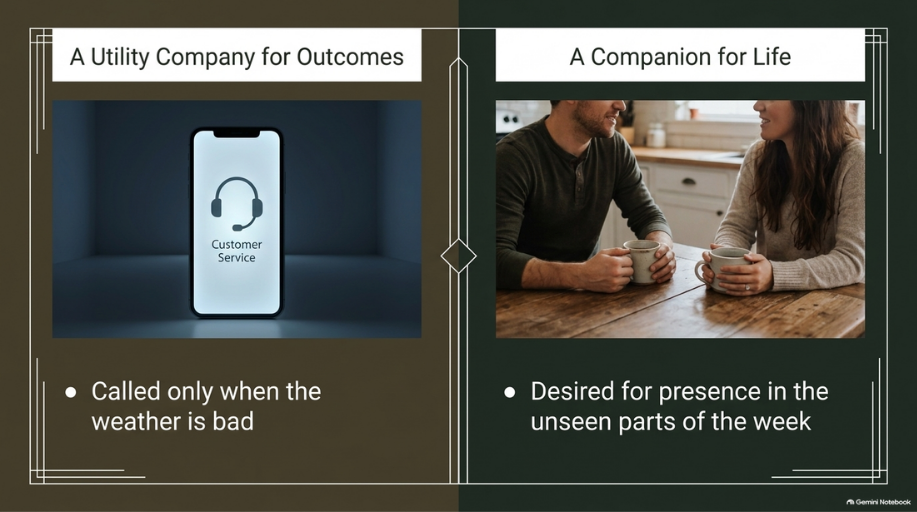
- Pastor Harry said, “the psalmist never asks God to fix a circumstance. He is desperate for God, not merely for what God can arrange.” What is the difference between being desperate for an outcome and being desperate for God himself, and which one is more often true of your own prayers?
- Last week’s sermon on Moses at the burning bush turned on one detail: Moses noticed, he was curious. Pastor Harry asked, “when was the last time you turned aside for God, not because you needed something, but simply because you wanted to know God more fully?” How could this group help each other rediscover that kind of curiosity?
- Pastor Harry noted that “if you’re watching this later, on the video or in one of the shorts, that desperate wanting travels through a screen just as well. You’re not too far away to ask.” Who in your life is watching from a distance right now, and how could this group reach toward them this week?
Life Applications
- Name what you’re desperate for. Take ten honest minutes this week to write down what you are actually desperate for right now: a circumstance you want changed, or, underneath it, God’s own nearness.
Check-in: Be ready to share one thing from your list, even if it surprises you.
- Pitch your tent closer. Choose one worthless thing your eyes keep drifting to (a habit, a scroll, a worry) and each day this week pray simply, “turn my heart, turn my eyes,” instead of trying to white-knuckle a fix.
Check-in: Note whether the daily prayer changed anything by the time the group meets again, and share it.
- Turn toward, not just outward. In one situation you’re praying for an outcome (rain, healing, a decision, a resolution), add a second prayer this week: not only “change this,” but “meet me here, whatever happens.”
Check-in: Come ready to say which prayer, the outcome prayer or the presence prayer, was harder to actually mean.
- Reach toward someone watching from a distance. Think of someone who feels far off right now, from church, from faith, or from you, and send one message, card, or call this week simply to say they are not too far away.
Check-in: Share who you reached out to and how it went, or didn’t.
Key Sermon Takeaways
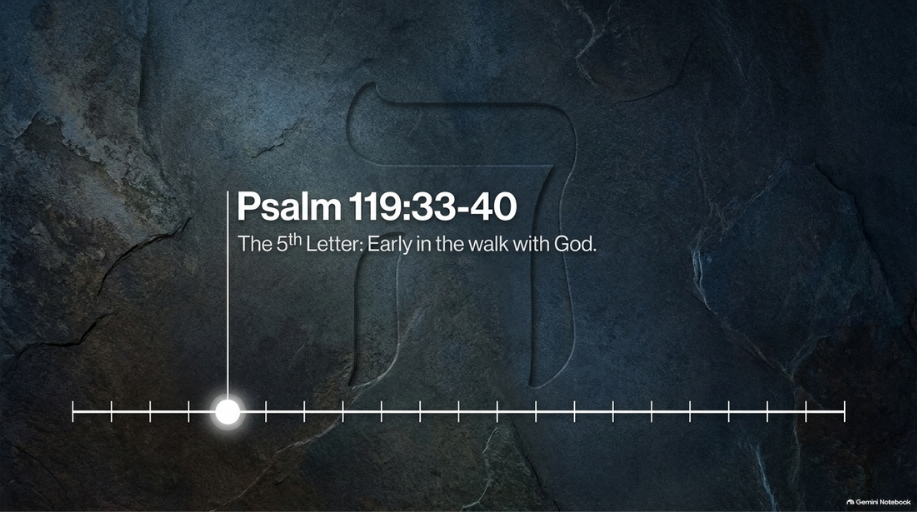
- Psalm 119:33-40 is the hey stanza, the fifth letter of the longest chapter in the Bible’s alphabet-built acrostic, earlier in the walk than the “lamp and path” verses (nun) our youth sat with in July.
- Nearly every line of the stanza is a verb aimed at God (teach, give, lead, turn, confirm, long): one long, moving plea rather than eight separate requests.
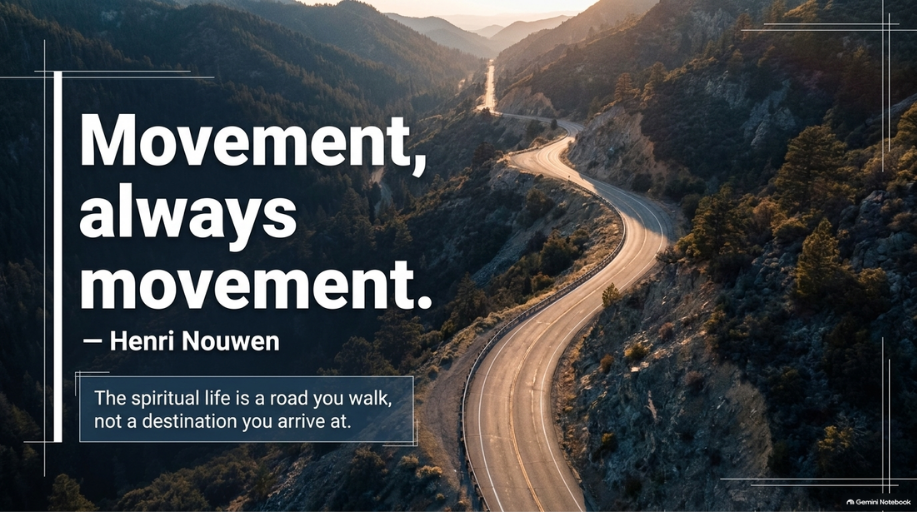
- The three Hebrew words for road (derek, nathiv, binah) show the psalmist asking for companionship on the way, not a map of the destination.
- “Turn my heart” and “turn my eyes” use natah, the word for pitching a tent beside someone: a request for nearness, not merely better priorities.
- Fearing disgrace over an unmet promise is not weak faith. It is the fear that only comes from staking something real on a relationship.
- The psalm’s final longing (ta’avah) reveals what the whole stanza was after all along: not information about God or even outcomes from God, but God himself.
Closing Prayer
(Read aloud together, or led by one person.)
Faithful God, thank you for meeting us honestly in our desperation this week. Whatever we carried into this room, named or unspoken, we lay it in front of you now. Teach us the way, lead us the path, turn our hearts and our eyes, confirm your word to us, and take our shame away. We long for you, not only for what you can do for us. Whatever the weather does this week, in our fields or in our lives, meet us with more of yourself. In Jesus’ name, amen.