Day One
The City That Prized What Showed
DEVOTIONAL
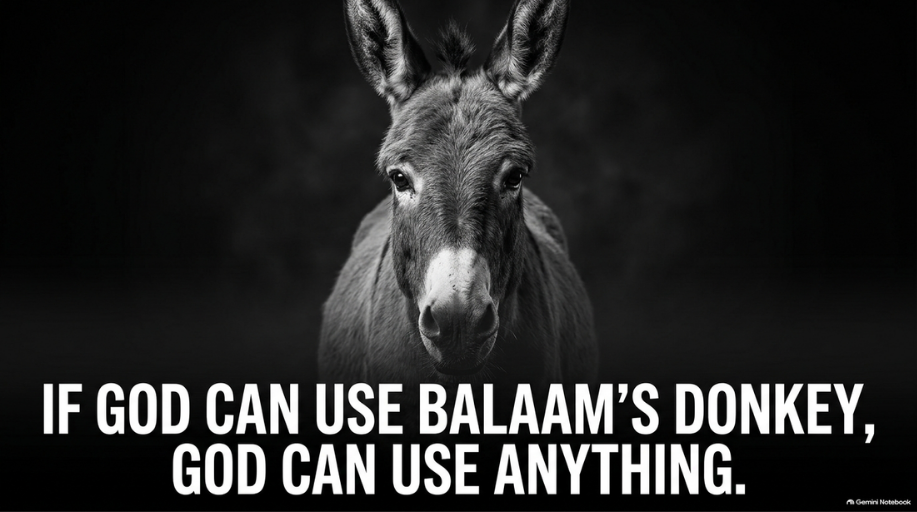
Pastor Harry tells of driving his son Harrison home from school when the boy announced he had finally figured out why God could use his father to do great things. Harrison had learned about Balaam’s donkey that day: if God can use a donkey, God can use anything, even you. It was not exactly the compliment it sounded like, but it is close to the whole argument the apostle Paul makes in 1 Corinthians 1, minus the joke and minus the donkey, in a city that would not have found either one funny.
Corinth had been leveled by Rome in 146 BC and left in ruins for a century, then refounded by Julius Caesar in 44 BC as a fresh Roman colony on the isthmus between two seas. Trade moved through it in both directions, and money moved with it. What grew up in that soil was a city that prized what showed: rhetoric, public benefaction, status, reputation you could point to. It was a city built the second time almost entirely around visibility.
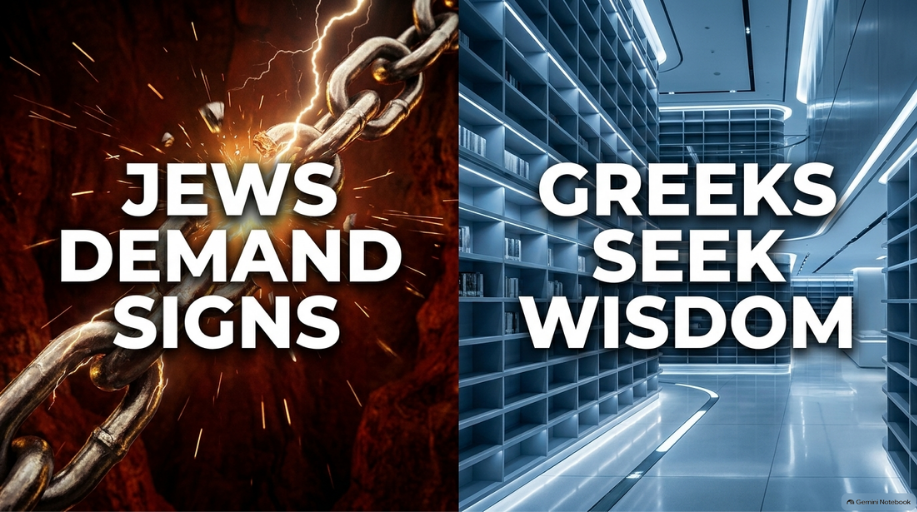
Paul tells us exactly what two groups in that city were shopping for. Jewish hopes wanted proof of power, a messiah who looked like a messiah, someone who would break the empire’s grip the way the prophets had promised: visibly, decisively, now. Greek expectation wanted sophistication, an argument tight enough and a teacher polished enough to survive the marketplace of ideas that ran through that city as steadily as goods ran through its harbor. Paul had neither one to offer. He had a man who had been executed by the state.
We are not so different from Corinth. We build our own scoreboards too: the resume that shows well, the platform that draws a crowd, the church that looks like it has its act together. It is worth asking, before we go any further into this passage, what our own city is shopping for, and whether we have quietly started shopping for the same thing.
This week we will walk through Paul’s argument slowly, from the scandal of the cross to the surprising claim that closes the passage: that the very thing Corinth found foolish is, to those who are called, the power of God and the wisdom of God. Begin today simply by noticing what your own eyes have been trained to look for.
SCRIPTURE
“For Jews ask for signs, and Greeks seek after wisdom” (1 Corinthians 1:22, WEB)
FROM THE SERMON
| “Jews demand signs and Greeks seek wisdom.” |
FOR REFLECTION
- What were the “signs” and “wisdom” that Corinth’s culture prized, and what does our own culture prize in their place?
- Where have you found yourself shopping for a faith that shows well rather than one that is simply true?
- Who in your circle is quietly measuring their worth against a scoreboard the gospel never asked them to keep?
PRAYER
God who sees behind every scoreboard, we confess how easily we are drawn to what shows well and how quickly we look past what simply is true. Open our eyes this week to the difference. Teach us, like Paul, to bring you exactly what we have, even when it seems too small or too plain to matter. We ask this in the name of Jesus, who was executed by the state and raised by your power. Amen.
Day Two
A Symbol Too Obscene to Name
DEVOTIONAL
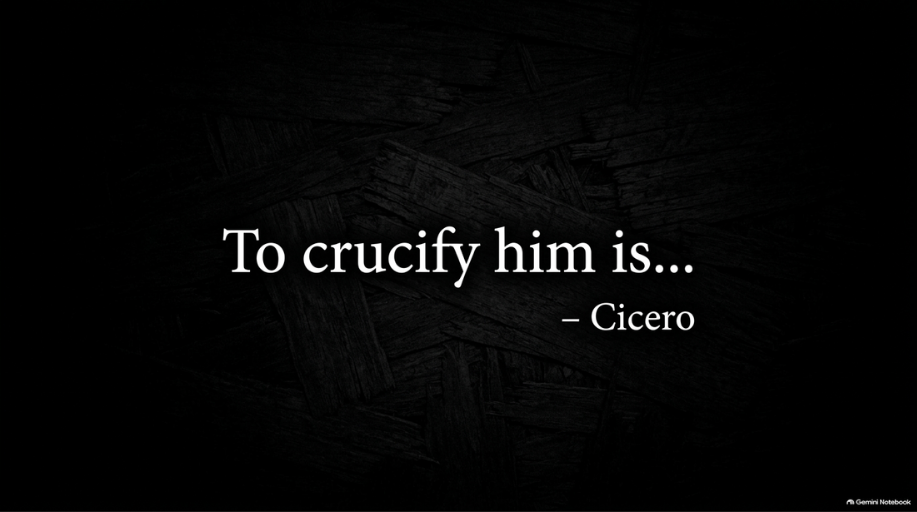
It is worth slowing down on what the cross actually meant in the world Paul was writing into, because we have had two thousand years to turn it into jewelry and stained glass, and Corinth had none of that distance. Cicero, prosecuting a corrupt governor a few decades before Paul ever set foot in Corinth, needed a way to describe how far outside the bounds of decency the man’s cruelty had gone. To bind a Roman citizen is a crime, he wrote. To flog him is a wickedness. To kill him is almost an act of murder. To crucify him is… and there he stops. No word ugly enough exists to finish the sentence.
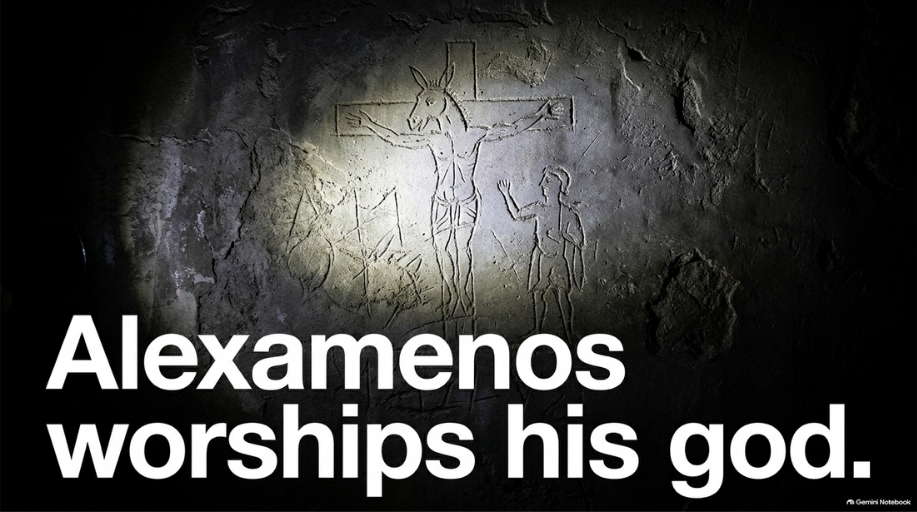
That was the standing opinion among educated Romans of Paul’s own century. Crucifixion was not a solemn symbol. It was the empire’s most obscene punishment, reserved for slaves, pirates, and rebels, built to strip away every trace of a person’s dignity in public, slowly, as a warning to everyone walking by. A generation or two after Paul, someone scratched a cartoon into the plaster of a building near the imperial palace in Rome: a man with the head of a donkey, nailed to a cross, and beside him a boy with one hand raised in worship. Underneath, in Greek: Alexamenos worships his god. It was not theology. It was a joke at a Christian’s expense.
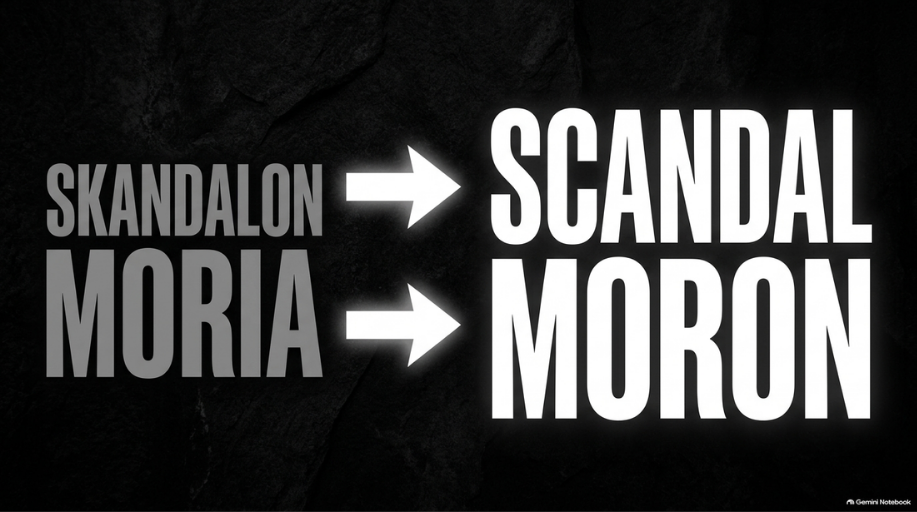
Paul was not naive about any of this. He names both reactions himself, in the two words he chooses. To Jews, he says, the cross is a skandalon, the word behind our English scandal: a stumbling block, something you trip over on the way to what you actually wanted. There was scripture standing behind that stumble; the law already said cursed is everyone who hangs on a tree. A crucified man was not a candidate for messiah. He was proof, by their own reading, that God had already said no to him. To Greeks, Paul says, the cross is moria, foolishness, the same root underlying our word moron. Not simply mistaken. Beneath serious consideration.
You could not have handed the ancient world a symbol less likely to gather a following if you had tried. And yet Paul does not soften it, explain it away, or apologize for it before he preaches it. He names the offense honestly and lets it stand. There is something for us here: the temptation to dress up the harder parts of our faith so they sound more respectable is old, and Paul refuses it in the very first paragraph of his defense.
What in your own faith have you been tempted to smooth over because it embarrasses you in front of people whose opinion you want? Paul’s example is not to argue the cross into looking less scandalous. It is to say what it actually is, plainly, and trust that the truth does not need our help to be believed.
SCRIPTURE
“but we preach Christ crucified, a stumbling block to Jews, and foolishness to Greeks” (1 Corinthians 1:23, WEB)
FROM THE SERMON
| “Crucifixion was not a solemn symbol. It was the empire’s most obscene punishment… built to strip away every trace of a person’s dignity in public, slowly, as a warning to everyone walking by.” |
FOR REFLECTION
- Why might it matter that Paul does not try to make the cross sound less shocking than it was?
- What is a “scandal” or “foolishness” in your own life right now, something about faith you’ve been tempted to soften or explain away because it embarrasses you?
- Who do you know who needs someone to name a hard truth honestly this week, rather than dress it up?
PRAYER
God of the cross, we do not ask you to make the hard truths of our faith sound easier than they are. Give us the courage Paul had, to name what is scandalous and foolish to the world without shrinking from it or dressing it up. Where we have been tempted to soften your gospel to keep it comfortable, forgive us, and give us plain, honest words this week. In the name of Jesus, crucified and risen, we pray. Amen.
Day Three
The Scoreboard Is Broken
DEVOTIONAL
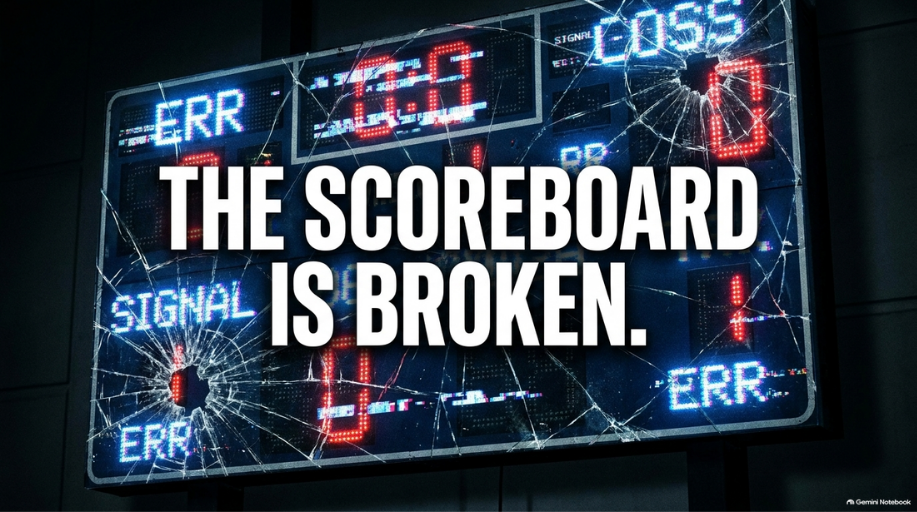
Here is the strange turn worth pondering. Paul does not argue with either group’s assessment of the cross. He agrees with it. Yes, he says, to the ones perishing, the message of the cross really is foolishness. He is not building a sharper argument that will make the cross look wise on Corinth’s own scoreboard. He is telling them the scoreboard itself is broken.
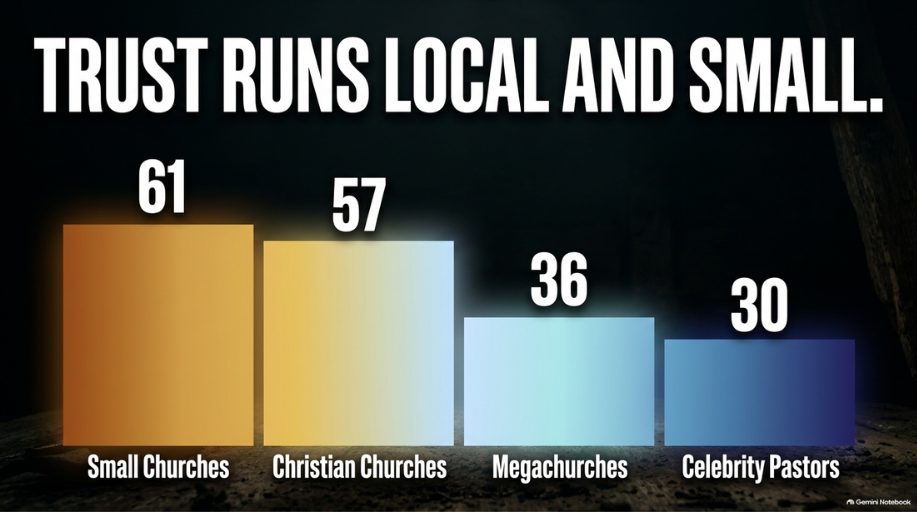
That is not only a first-century problem. Barna Group released research this past August on how much Americans actually trust Christian institutions, and the results run against what you would predict if bigger and more polished automatically earned more confidence. Small churches scored a trust index of 61. Christian churches overall scored 57. Megachurches scored 36. Celebrity pastors scored 30, barely half of what neighborhood pastors received. The researchers said it clearly: trust runs local, and it runs small. Nobody engineered that outcome on purpose. It is simply what happens once people go looking for something real and quietly walk past whatever was only built to look impressive.
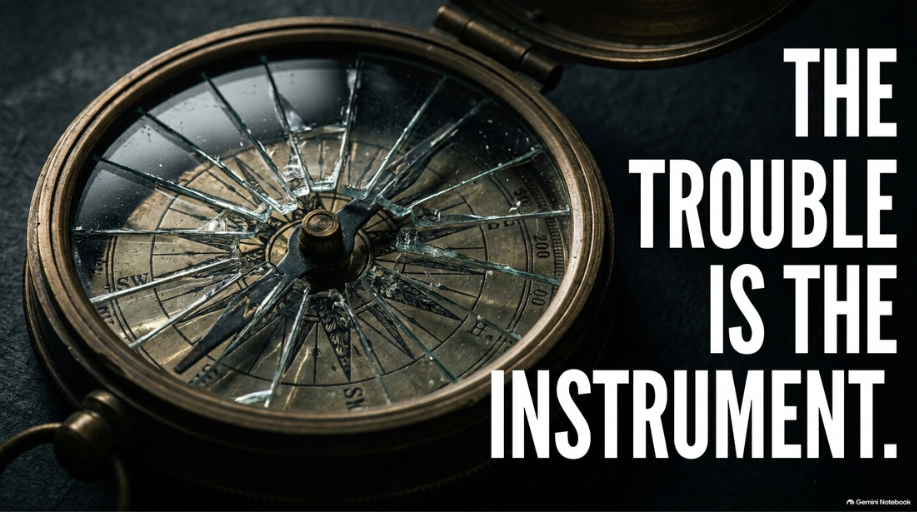
The New Testament scholar N.T. Wright has spent a career making a related point about this passage. Paul is not trying to smuggle the gospel past Corinth’s rhetoric class by dressing it up cleverly enough to pass inspection. His argument is closer to a diagnosis. The instruments Corinth was using to measure power and wisdom were never built to register the real thing, because the real thing arrived looking like a dying man on a Roman execution device. If your instrument cannot detect what you are pointing it at, the trouble is not the object. The trouble is the instrument.
It is tempting to read that as ancient history and move on. But most of us are still carrying an instrument or two we have never questioned: size as proof of blessing, polish as proof of truth, confidence as proof of wisdom. Paul is not asking Corinth to sharpen those instruments. He is asking them to consider that the instruments themselves may be the reason they keep misreading what God is doing right in front of them.
What would change this week if you set down the instrument you have been using to measure your own faith, or your church, or your worth, and simply asked God to show you what is actually there?
SCRIPTURE
“Where is the wise? Where is the scribe? Where is the debater of this age? Hasn’t God made foolish the wisdom of this world?” (1 Corinthians 1:20, WEB)
FROM THE SERMON
| “If your instrument cannot detect what you are pointing it at, the trouble is not the object. The trouble is the instrument.” |
FOR REFLECTION
- Paul agrees the cross looks foolish to those measuring by Corinth’s scoreboard, rather than trying to make it look wiser. What does that tell us about how God’s wisdom relates to the world’s wisdom?
- What “instrument” have you been using to measure faith, church, or your own worth (size, polish, credentials), and how might it be the wrong tool for the job?
- The Barna research found trust runs local and small, not polished and celebrated. Where do you see that truth playing out in your own relationships or community?
PRAYER
God who is not measured by our instruments, forgive us for the scoreboards we have built, the ones that reward size and polish and confidence over what is actually true. Break our broken instruments. Teach us to trust what you are doing even when it does not register on the scales the world hands us. We ask this through Christ, the power and wisdom of God. Amen.
Day Four
Christ, the Power and the Wisdom of God
DEVOTIONAL
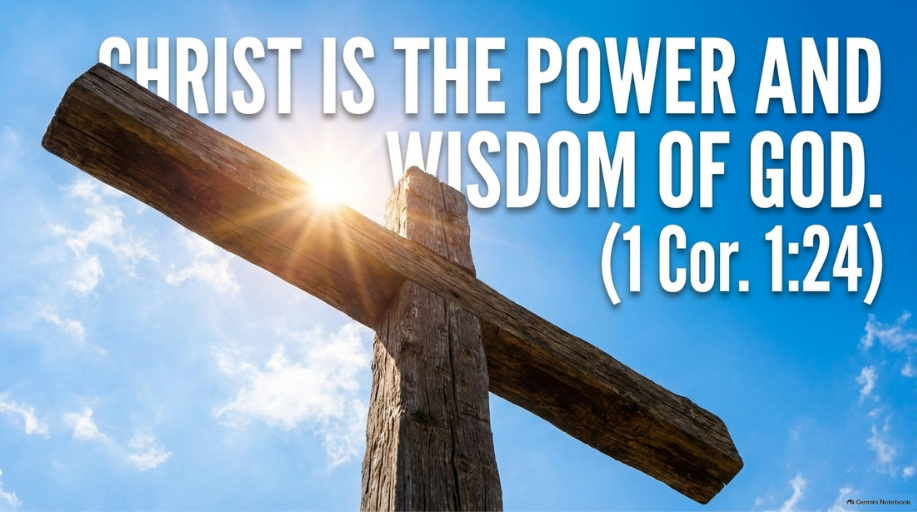
That is where the passage lands, in verse twenty-four. To those who are called, both Jews and Greeks, Christ is the power of God and the wisdom of God. Same cross. Same execution. Nothing about the object changes between verse twenty-three and verse twenty-four. What changes is the eyes looking at it. Not sharper eyes. Not more educated eyes. Just eyes that have finally stopped grading the cross on Corinth’s curve.
Some of you spend your working life reading a room, a field, or a market, whatever your particular room happens to be, and you already know that whatever actually produces something worth having rarely looks impressive while it is happening. Some of you are still working out what “smart” is even supposed to look like, and who gets to decide that for you. And some of you have enough mileage on you now to remember a time you put your full weight on something that looked strong and later learned it was not, and another time you nearly walked past the one thing that actually was strong, because it never once looked the part.
This is not a niche experience. It is close to a universal one. We have all trusted the wrong thing because it looked right, and doubted the right thing because it looked wrong. The gospel does not ask us to stop noticing what things look like. It asks us to stop letting appearance be the final word.
Whatever you are still waiting on to look strong enough, or to sound wise enough, before you will trust it, the cross was never going to clear that bar. It was never trying to. It cleared a different one. That is the one that actually holds eternity.
Today, practice a different kind of arithmetic. Instead of counting what impresses you, count the one who came looking foolish and turned out to be the whole of what God had for us.
SCRIPTURE
“but to those who are called, both Jews and Greeks, Christ is the power of God and the wisdom of God” (1 Corinthians 1:24, WEB)
FROM THE SERMON
| “Same cross. Same execution. Nothing about the object changes between verse twenty-three and verse twenty-four. What changes is the eyes looking at it.” |
FOR REFLECTION
- What does it mean that nothing about the cross itself changed between being called foolishness and being called the power and wisdom of God, only the eyes looking at it changed?
- Recall a time you put your full weight on something that looked strong and later learned it wasn’t, or nearly walked past something that was strong because it never looked the part. What did that teach you?
- Whose eyes might need to change this week, someone measuring their life or their faith by a curve the cross was never trying to pass?
PRAYER
God of the cross and the empty tomb, change our eyes this week. We have trusted things that looked strong and were not, and walked past things that were strong because they never looked the part. Teach us to see Christ as he is: your power, your wisdom, worth more than every scoreboard we have ever kept. In his holy name we pray. Amen.
Day Five
Nobody Has to Clean Up the Field
DEVOTIONAL
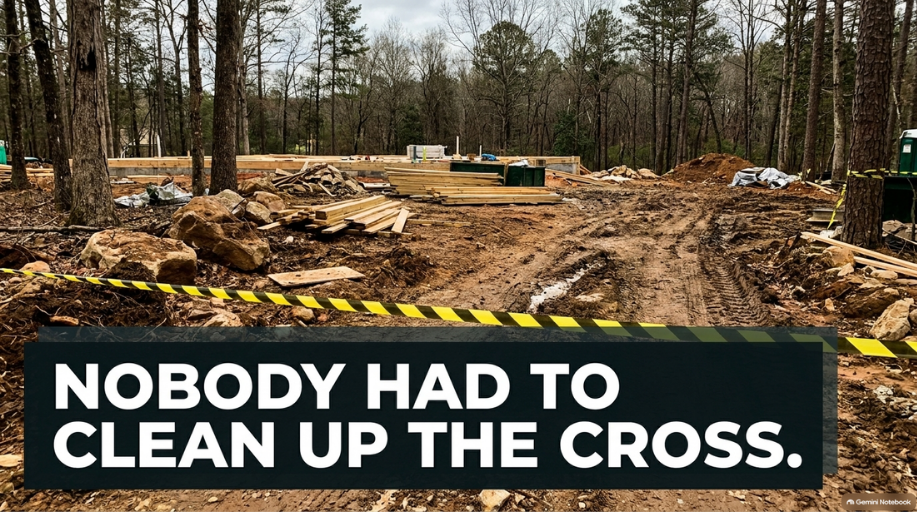
That same instinct that grades by appearance is going to try to talk some of us out of something concrete this week. Next Sunday is Worship in the Grove, and some have already thought of someone to invite and then talked themselves back out of it, because the grounds are still torn up from construction, and the service out there is not going to look like what a bigger church down the road can put together, with the sound dialed in and the parking directed and coffee already brewed by the time anyone walks in.
Nobody invited a friend to the church at Corinth because the building was impressive or the service ran without a hitch. That church met in someone’s private home, was arguing with itself over which apostle it liked best, and had just been told its central message sounded like foolishness to half the people who heard it. God did not wait for that church to look finished before working through it. God is not waiting on the grove to look finished either.
So invite the sister, the neighbor, the coworker who has never once asked you about church. Tell them the truth on the way in: the ground is torn up out there, and this will not be a performance. That is not something to apologize for before you say it. It might be the whole reason the invitation works. Nobody had to clean up the cross to make it fit for use. Nobody has to clean up a field either.
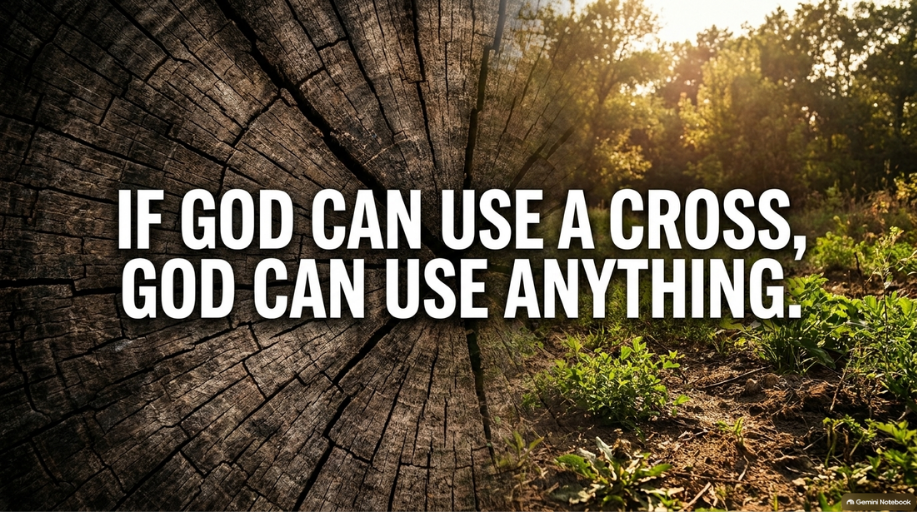
Pastor Harry’s son Harrison figured this out on the way home from school with a story about a donkey. If God can use a donkey, God can use anything. Even you, he told his father, and Harry laughed it off at the time. Paul is telling the same church at Corinth something far harder to laugh off: if God can use a cross, God can use anything. Even the thing you were about to walk past because it never looked the part.
Go from here this week practicing that same arithmetic: not the kind that counts what impresses, but the kind that counts the one who came looking foolish and turned out to be the whole of what God had for us.
SCRIPTURE
“it was God’s good pleasure through the foolishness of the preaching to save those who believe” (1 Corinthians 1:21, WEB)
FROM THE SERMON
| “Nobody had to clean up the cross to make it fit for use. Nobody has to clean up a field either.” |
FOR REFLECTION
- Paul says it was God’s good pleasure to save people through the foolishness of preaching, not through polish. What does that free us from having to prove before we speak or invite?
- What have you talked yourself out of, an invitation, a conversation, a step of faith, because the setting or the circumstances didn’t look finished enough?
- Who is the sister, the neighbor, the coworker who has never once asked you about church, that you could invite this week, torn-up ground and all?
PRAYER
God who used a donkey and a cross and can use us too, give us courage this week to invite without apology and to trust you with what we cannot finish or dress up ourselves. Go before us into the torn-up ground, the awkward conversation, and the ordinary field, and use it, and use us, exactly as we are. In the name of Jesus we pray. Amen.
Christ, the Power and the Wisdom of God
Small Group Discussion Guide
Based on the sermon by Pastor Harry Jarrett | 1 Corinthians 1:18-24 Pleasant Valley Church of the Brethren, Weyers Cave, Virginia
Summary
This week we looked at 1 Corinthians 1:18-24, Paul’s opening argument to a church in a city built twice over on the strength of what showed: rhetoric, public benefaction, status, reputation you could point to. Into that visibility-obsessed culture, Paul brought nothing but a man executed by Rome in its most obscene punishment, and both the Jews who wanted proof of power and the Greeks who wanted polished wisdom took one look and called it foolishness. Pastor Harry walked us through the real historical weight of the cross (Cicero’s own words could not finish the sentence describing how vile crucifixion was), and showed how Paul does not argue Corinth out of that verdict. He agrees with it, then tells them the scoreboard itself is broken. Drawing on recent Barna research showing trust running toward small, local churches rather than polished megachurches, and N.T. Wright’s insight that Corinth’s instruments were never built to register the real thing, Pastor Harry brought us to the turn in verse twenty-four: the same cross that looks foolish to those perishing is, to those who are called, the power of God and the wisdom of God. He closed by tying it to our own invitation to Worship in the Grove: nobody had to clean up the cross to make it fit for use, and nobody has to clean up a field either.
Opening Prayer
(Read aloud together, or led by one person.)
Gracious God, before we open your word together, quiet the part of us that measures by what shows. We do not come needing everything about our faith, our church, or ourselves to look impressive. We come asking you to show us what is actually true. Meet us in this conversation, and meet us in the cross, exactly as it is. In the name of Jesus, we pray. Amen.
Ice Breaker
Think of a time you judged something (a person, a product, a place) entirely by how it looked, and were completely wrong. What actually turned out to be true once you looked closer? Or, if you prefer: what is one thing in your life right now that looks unimpressive on the outside but you know is actually solid and true?
Key Verses
“For the word of the cross is foolishness to those who are dying, but to us who are being saved it is the power of God.” (1 Corinthians 1:18, WEB)
“For Jews ask for signs, and Greeks seek after wisdom,” (1 Corinthians 1:22, WEB)
“but we preach Christ crucified, a stumbling block to Jews, and foolishness to Greeks,” (1 Corinthians 1:23, WEB)
“but to those who are called, both Jews and Greeks, Christ is the power of God and the wisdom of God.” (1 Corinthians 1:24, WEB)
Group Discussion Questions
- Paul says the cross is foolishness to those who are perishing but the power of God to those being saved. What does it mean that the very same cross can look like two completely different things depending on who is looking at it?
- Corinth was a city rebuilt around visibility: rhetoric, status, reputation you could point to. Jews wanted signs of power, Greeks wanted polished wisdom, and Paul offered neither, only a crucified man. What does it tell us about God that this is what Paul chose to bring?
- Pastor Harry described the real historical weight of crucifixion, quoting Cicero, who could not even finish a sentence describing how vile it was. Why might it matter that Paul doesn’t soften or dress up how shocking the cross actually was?
- Rather than arguing the cross into looking wiser, Paul tells the Corinthians that their scoreboard itself is broken. What “scoreboards” do we use today (in our churches, our own lives, our culture) to measure whether something is worth trusting?
- Barna’s research found small, local churches are trusted more than polished megachurches and celebrity pastors. Does that surprise you? What do you think it reveals about what people are actually looking for?
- N.T. Wright’s point was that Corinth’s instruments were never built to register the real thing, because the real thing looked like a dying man on an execution device. Where might you be using the wrong instrument to measure what God is doing in your own life?
- Where have you put your full weight on something that looked strong and later learned it wasn’t, or nearly walked past something that was strong because it never looked the part?
- Worship in the Grove is coming up, and the grounds are still torn up. Pastor Harry said nobody has to clean up a field to make it fit for use, just like nobody had to clean up the cross. Who is one person you could invite this week, torn-up ground and all?
Life Applications
1. Name your instrument. Identify one scoreboard you have been using to measure your own worth, your church, or your faith (size, polish, confidence, credentials), and write down what it would look like to set it aside this week. Check-in: Come ready to share what instrument you named and whether setting it down changed anything.
2. Invite without apology. Invite one person to Worship in the Grove (or to any gathering of this church), and tell them honestly that it will not be a polished performance. Check-in: Text one group member once you’ve extended the invitation, simply saying “invited,” so you can encourage each other.
3. Practice the different arithmetic. Each day this week, instead of noticing what impresses you, look for one thing (a person, a choice, a small act) that looked foolish or unimpressive but was actually the real thing. Check-in: Bring one example to share at your next gathering.
4. Say the hard truth plainly. Think of one part of your faith you have been tempted to soften or explain away to sound more respectable, and find one honest way to name it plainly this week, even if only to yourself or to God in prayer. Check-in: Share, if you’re comfortable, what that was like.
Key Sermon Takeaways
- Corinth was a city built twice, the second time almost entirely around visibility: rhetoric, status, reputation.
- Jews wanted signs of power; Greeks wanted polished wisdom; Paul offered neither, only a crucified man.
- Crucifixion in the ancient world was not a solemn symbol; it was the empire’s most obscene punishment, and Paul names that honestly rather than softening it.
- Paul does not argue the cross into looking wiser. He agrees it looks foolish, then tells the Corinthians their scoreboard is broken.
- Recent Barna research shows trust running toward small, local churches over polished megachurches and celebrity pastors.
- N.T. Wright’s insight: if an instrument cannot detect what you are pointing it at, the trouble is the instrument, not the object.
- In verse 24, nothing about the cross changes, only the eyes looking at it: to those who are called, Christ is the power of God and the wisdom of God.
- Nobody had to clean up the cross to make it fit for use; nobody has to clean up a field (or anything else) either.
Closing Prayer
(Read aloud together, or led by one person.)
Faithful God, thank you for meeting us in this word today, in all its honesty and all its scandal. Teach us to set down the instruments that keep misreading what you are doing. Give us courage to invite without apology, and to see Christ, exactly as he is: your power and your wisdom, worth more than every scoreboard we have ever kept. Send us out to carry that good news into torn-up ground and ordinary places. Amen.