When Our Love Reaches Its Limit
Scripture
Genesis 21:15-16
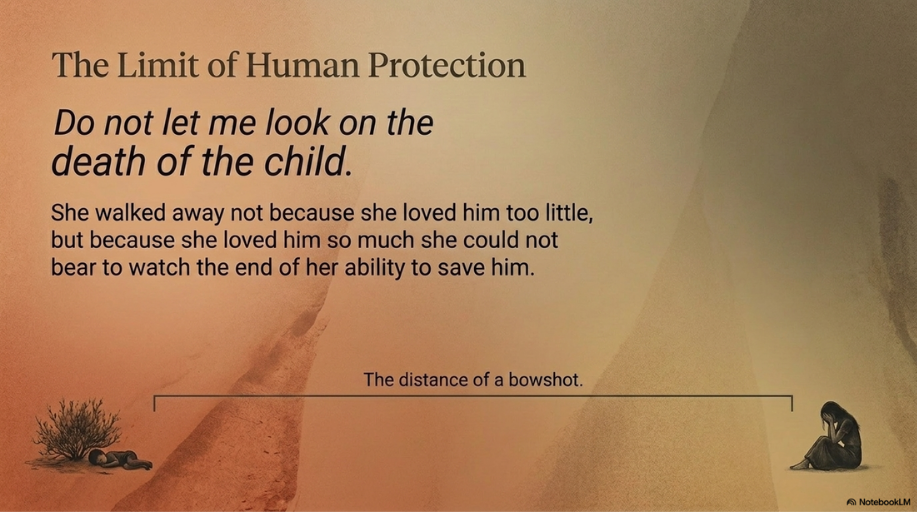
When the water in the bottle was spent, she put the child under one of the shrubs. She went and sat down opposite him, a good way off, about a bow shot away. For she said, “Don’t let me see the death of the child.” She sat opposite him, and lifted up her voice, and wept.
Devotional
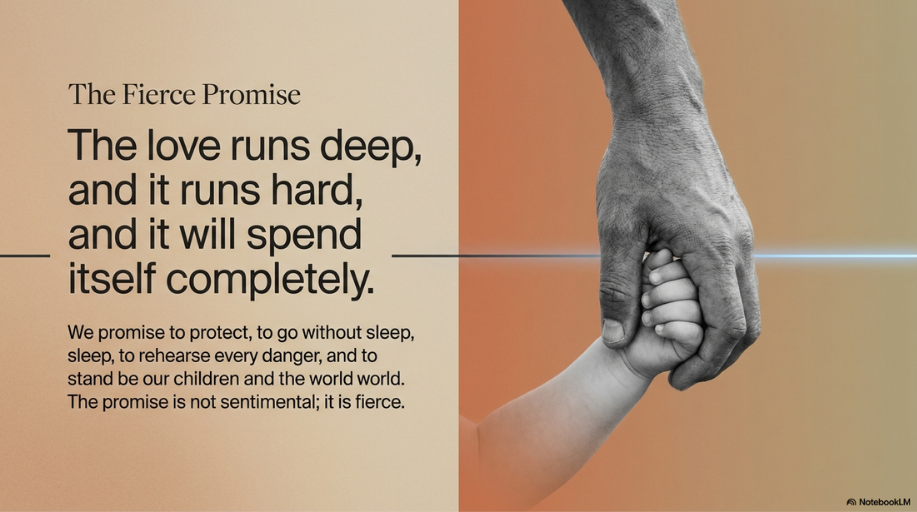
This past Sunday we watched two families stand and make promises over their little ones, promises to raise them in the knowledge of God, to love them, to protect them, to spend themselves completely on their behalf. Those promises were not sentimental. They were fierce. Any parent knows the feeling: the willingness to go without sleep, without money, without rest, lying awake rehearsing every danger the world might hold and trying to figure out how to stand between a child and all of it. The love runs deep, and it runs hard, and it will give itself away entirely.
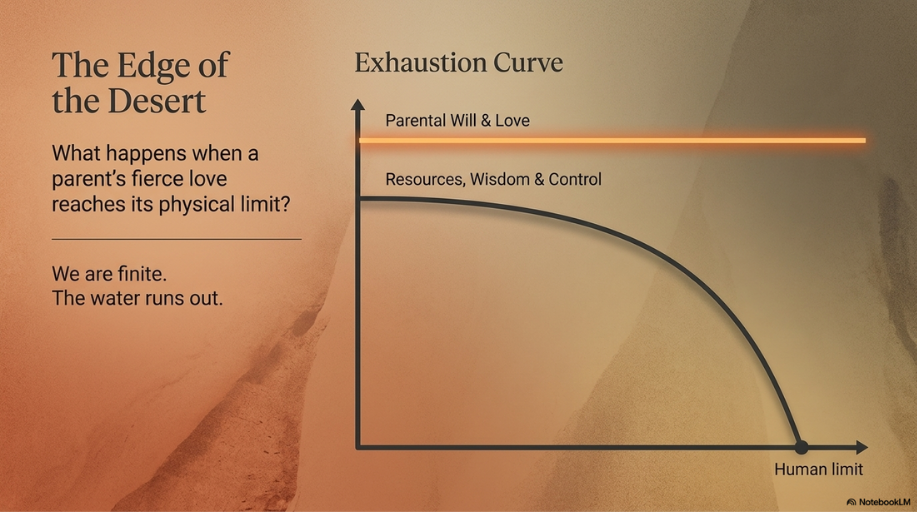
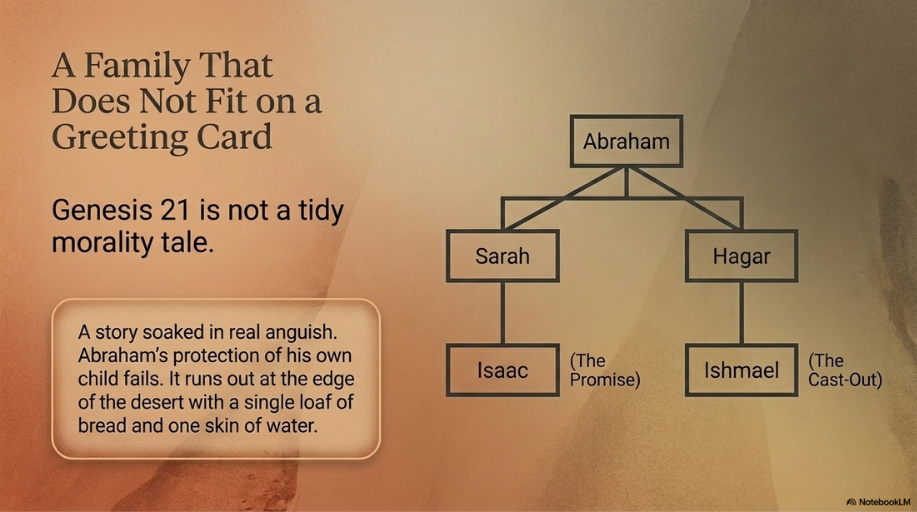
And yet there is a question worth sitting with on a day that celebrates exactly that kind of love. What happens when a parent’s love, real as it is, reaches its limit? Because it does reach a limit. We are finite. Our resources run out. Sometimes our wisdom runs out, and sometimes, God forgive us, our courage runs out too. Genesis 21 walks straight into that question and refuses to flinch. Hagar, an enslaved Egyptian woman, is sent into the wilderness of Beersheba with her son, a loaf of bread, and a single skin of water. Then the water is gone.
What she does next is perhaps the most human and heartbreaking moment in all of Scripture. She cannot watch her child die, so she lays him down under a bush, walks away the distance of a bowshot, sits down, and weeps. That is the limit of a parent’s love, and notice carefully where the limit falls. It is not that she loved him too little. It is that she loved him so much she could not bear to watch. She had given him everything she had, and everything she had ran out, and there was nothing left in her hands but grief.
We do ourselves no favors by rushing past this. The honest word for today is that our love, however fierce, will reach its edge, and the desert is real. If the story stopped here, it would still be true, one more honest picture of how the world breaks the people we love and breaks our ability to save them. But before we hurry toward comfort, let us be willing to sit in the wilderness with Hagar for a moment. Only those who have admitted the limit of their own hands are ready to be surprised by the One whose hands have no limit at all.
From the Sermon
“That is the limit of a parent’s love. Not because she loved him too little. Because she loved him so much she could not bear to watch.”
For Reflection
- Why do you think Scripture tells this story so honestly, refusing to tidy up Hagar’s grief or excuse the failure of protection?
- Where in your own life have you come to the end of what your love, effort, or wisdom could accomplish?
- Who near you is sitting at the distance of a bowshot right now, weeping over something they cannot fix, and how might you quietly draw near?
Prayer
God of Hagar and God of every weeping parent, we come to you honest about our limits. We have loved with everything we have, and still our hands have run empty. Teach us to sit in the wilderness without pretending, and to trust that you are nearer than our grief. When our love reaches its edge, meet us there. Amen.
God Goes Farther
Scripture
Genesis 21:17
God heard the voice of the boy. The angel of God called to Hagar out of the sky, and said to her, “What troubles you, Hagar? Don’t be afraid. For God has heard the voice of the boy where he is.”
Devotional
Yesterday we sat in the wilderness with Hagar and let the water run out. Today the story turns on a single line: God heard the voice of the boy. Feel the weight of it. The mother has given up. The father is miles away. The water is gone. The child lies under a bush in the desert. And the narrator does not say that God noticed, or God considered, or God eventually got around to it. The narrator says God heard. The cry of a forgotten child reaches all the way to heaven.
Then comes a detail we must not skip. The angel of God tells Hagar that God has heard the voice of the boy where he is. Where he is, not where he should be. Not back in Abraham’s household, not inside the covenant line, not in any of the respectable places the religious imagination of that time would have expected God to be paying attention. God heard him exactly where he was: cast out, dying, forgotten by everyone except his mother and his God. The love of God is not bound by the boundaries we draw.
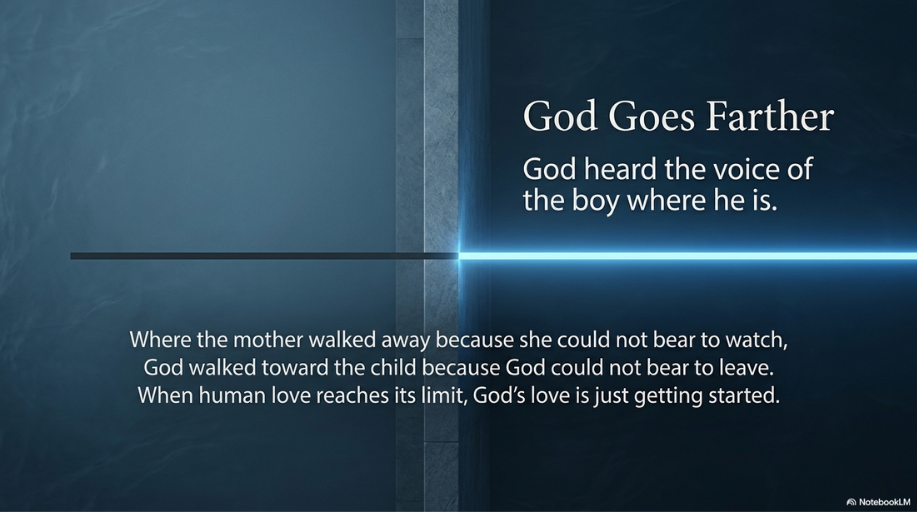
Notice, too, how God’s care actually arrives. Not as a lecture. Not as a theological argument. God opens Hagar’s eyes to a well that was apparently there the whole time, and she fills the skin and gives her boy a drink. A child cries, God hears, and God comes with water. That is not a transaction; that is the most relational thing in the world. That is a Father. Where the mother walked away because she could not bear to watch, God walked toward the child because God could not bear to leave.
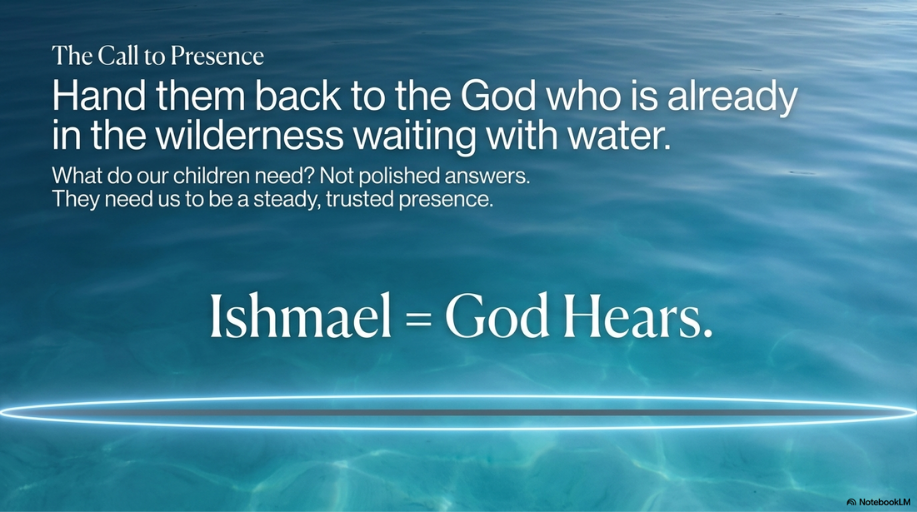
There is one more thing sewn quietly into the story. The boy’s name is Ishmael, and Ishmael means “God hears.” The promise was woven into his name before he was ever born, so that every time anyone spoke it aloud they were preaching the gospel without knowing it. This is the bedrock of everything else: parents will do almost anything for their children, and God will do more. When a parent’s love reaches its limit, God’s love is just getting started.
From the Sermon
“When the parent’s love reaches its limit, God’s love is just getting started. Where the mother walked away because she could not bear to watch, God walked toward the child because God could not bear to leave.”
For Reflection
- What does it tell us about God that the first thing the text reports is not what God said, but that God heard?
- Where do you most need to trust that God hears you exactly where you are, and not only where you think you ought to be?
- Whose cry have you grown slow to hear, and what would it look like to listen the way God listens?
Prayer
God who hears, we thank you that no wilderness is too far for your ear. You heard the voice of the boy where he was, and you hear us where we are. Open our eyes to the wells you have already provided, and open our hearts to come toward the ones we are tempted to leave behind. We pray in the name of the One whose love runs out to meet us. Amen.
A Family Big Enough to Hold Everyone
Scripture
Galatians 3:29
If you are Christ’s, then you are Abraham’s offspring and heirs according to promise.
Devotional
The whole drama of Genesis hangs on the question of children. Who is the true heir? Who carries the promise? Whose line does God bless? The surface answer is Isaac, the child of Sarah, the child of laughter and promise, the line that runs to Jacob, to Israel, to David, and at last to a baby in Bethlehem. For a long time the story seems to be about choosing one child and setting the other aside.
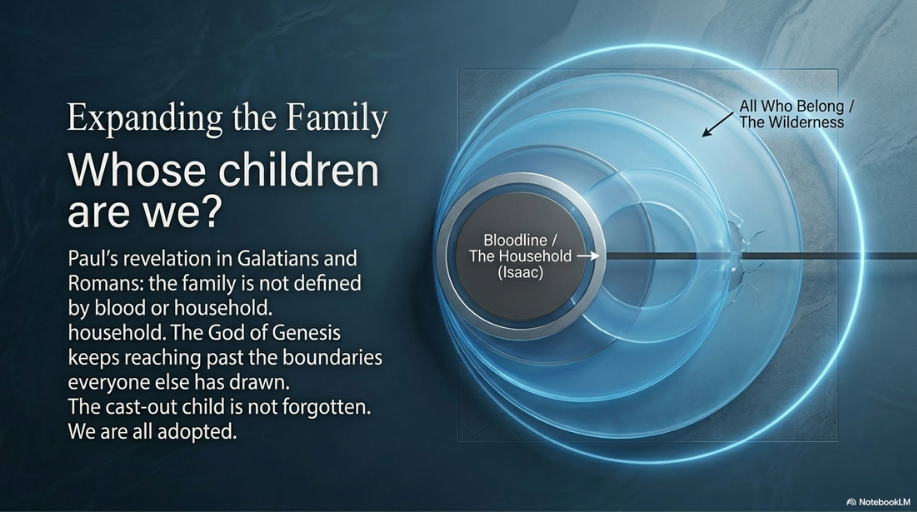
Then Paul takes that whole question and opens it wide. In Galatians he insists that the real children of Abraham are not defined by blood at all. If you belong to Christ, he says, then you are Abraham’s offspring, heirs according to the promise. Heirs. Not because of who your parents were, not because of your bloodline, not because you were born inside the right family, but simply because you belong to Christ. In Romans he adds that all who are led by the Spirit are children of God, who have received a spirit of adoption. And John says it as plainly as it can be said: see what love the Father has given us, that we should be called children of God.
Look at what the gospel has done with this Genesis story. The line we thought was about excluding people gets opened up until the family is big enough to hold everyone who will come. Every one of us is adopted into this family. The ones born into faithful homes and the ones who came in from the wilderness with nothing, all of us are children of the promise now. The doors that the household once could not hold open, grace flings wide.
And here is the part we must not flatten. Even in the actual Genesis story, God does not abandon Hagar’s child. God hears Ishmael, saves Ishmael, and promises to make a great nation of him too, because, God says, he is your offspring. The narrative refuses to let the cast-out child be forgotten. This is the God we serve: a God whose family keeps getting bigger, who hears the children inside the household and the children out in the wilderness, who looked at a dying boy everyone else had written off and said, that one is mine too.
From the Sermon
“The line we thought was about excluding people, picking one child and casting out the other, gets opened up until the family is big enough to hold everyone who will come.”
For Reflection
- How does Paul’s claim that we are heirs according to the promise, rather than by bloodline, reshape the way you read the casting out of Hagar and Ishmael?
- When have you felt like the one outside the right family, and what would it mean to truly hear that you belong?
- Who in your community is still treated as outside the family, and how might you help widen the circle God has already widened?
Prayer
Gracious God, you have made your family larger than our fences and wider than our fear. We thank you that we have been adopted as your own, heirs according to the promise. Forgive us for the boundaries we keep drawing, and teach us to welcome the ones you have already claimed. Make us a household big enough to hold everyone who comes. Amen.
Heard Where We Are
Scripture
1 John 3:1
Behold, how great a love the Father has given to us, that we should be called children of God! For this cause the world doesn’t know us, because it didn’t know him.
Devotional
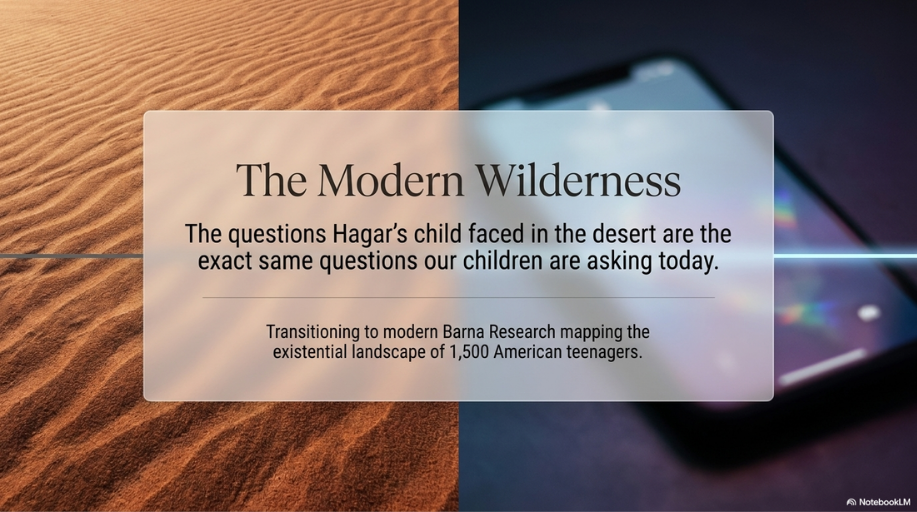
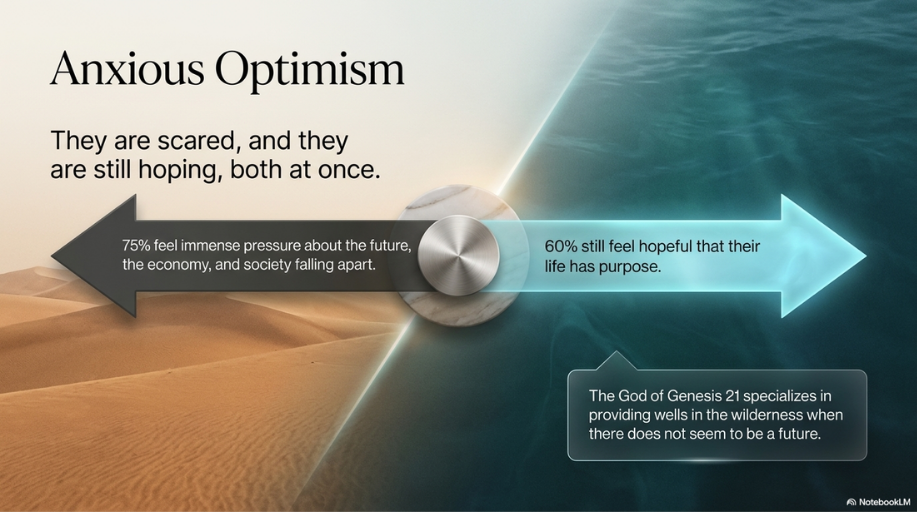
These ancient truths, that God goes farther than any parent and that we are all God’s own children, are not abstractions. They are answers, and our young people are asking the questions. Recent research from Barna, done with Christ In Youth, surveyed fifteen hundred American teenagers and asked which of life’s big questions weigh on them most. Their first and heaviest cluster was about the future: how they will make a living, whether their generation has a stable future, whether the world is holding together at all. And yet most of them have not given up hope. Barna called it anxious optimism: scared and still hoping, both at once. To a generation drowning in dread about whether they will have a future, we get to introduce the God who showed Hagar a well in the wilderness and promised her child a future when there did not seem to be one.
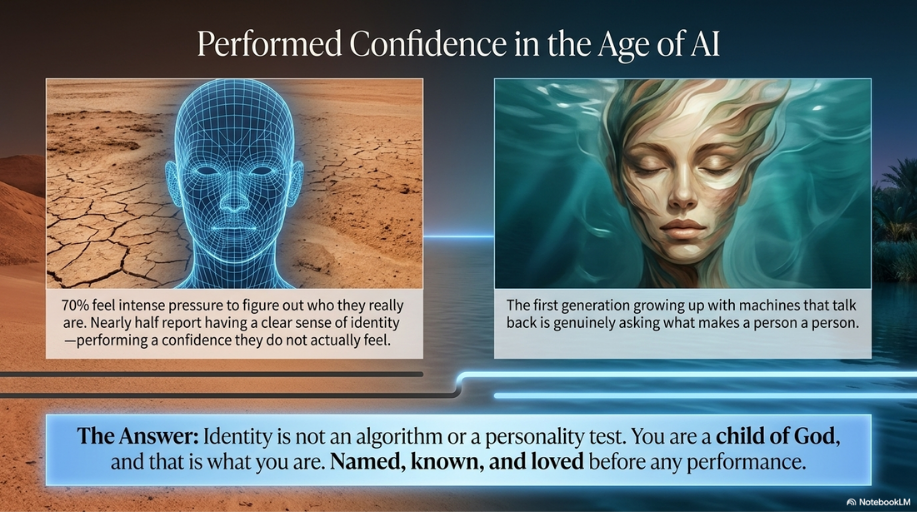
Their second cluster was about truth and identity: what is real, who am I really, what does it even mean to be human. Nearly half of these teenagers say they have a clear sense of who they are, yet seventy percent feel pressure to figure out who they really are, which means many are performing a confidence they do not feel. The answer to who am I, really, is not a personality test, and it is not an algorithm. It is the word John gave us: you are a child of God, and that is what you are. Before you achieved anything, before you performed anything, before you figured anything out, you were named and known and loved.
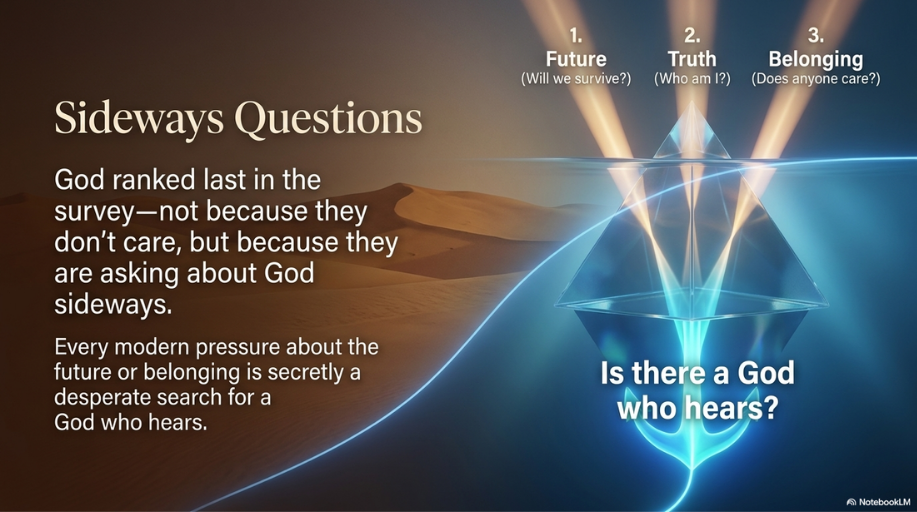
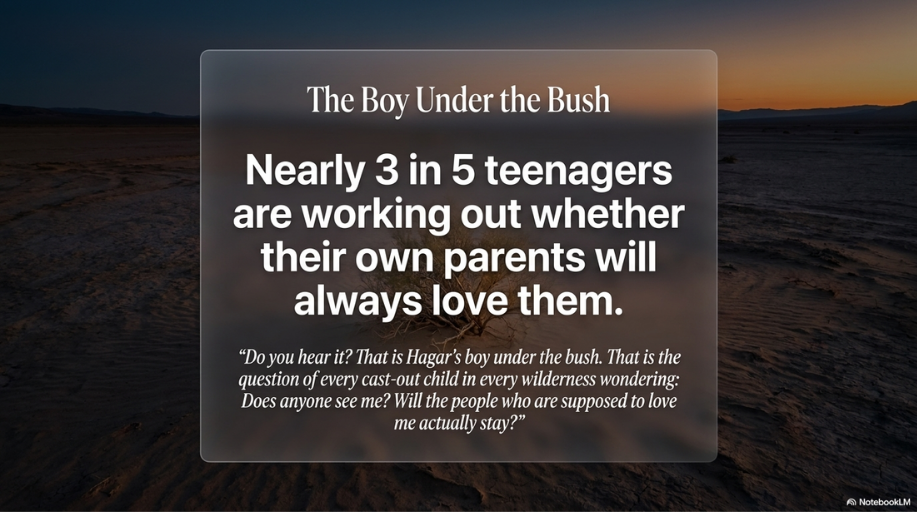
The third cluster nearly breaks the heart, for how closely it echoes this text. It was about belonging. Seven in ten teens feel pressure over where they truly belong, two-thirds wonder whether anyone genuinely cares about them, and nearly three in five are still working out whether their own parents will always love them. Do you hear it? That is Hagar’s boy under the bush. That is the question of every cast-out child in every wilderness: Does anyone see me? Does anyone hear me? Will the people who are supposed to love me actually stay?
The gospel answer, the Genesis 21 answer, is that there is a God who hears the voice of the boy where he is. The fourth and final cluster, ranking last, was the question of God directly, whether God is real and whether God loves them. But last does not mean unimportant. It means our young people are asking about God sideways, through all the other questions. Every question about the future, about truth, about belonging, is secretly a question about whether there is a God who hears. They simply do not always have the words for it. We do. We get to introduce them to the God who has already shown up.
From the Sermon
“There is a God who hears the voice of the boy where he is. Not where he should be. Where he is. There is a God who sees the ones everyone else has walked away from.”
For Reflection
- If every human question about the future, truth, and belonging is secretly a question about whether God hears, what does that reveal about how God chooses to meet us?
- Which of these four questions, the future, truth, belonging, or God, is most alive in you right now, and where do you sense God listening?
- Which young person in your life is quietly asking will anyone show up for me, and how can you be part of God’s answer this week?
Prayer
God who hears, you know the questions our children carry, even the ones they cannot put into words. Where they fear for the future, be their well in the wilderness. Where they wonder who they are, name them as your own. Where they ask whether anyone will stay, let them meet the God who never walks away. And make us bold enough to introduce them to you. Amen.
A Steady, Trusted Presence
Scripture
Deuteronomy 6:6-7
These words, which I command you today, shall be on your heart; and you shall teach them diligently to your children, and shall talk of them when you sit in your house, and when you walk by the way, and when you lie down, and when you rise up.
Devotional
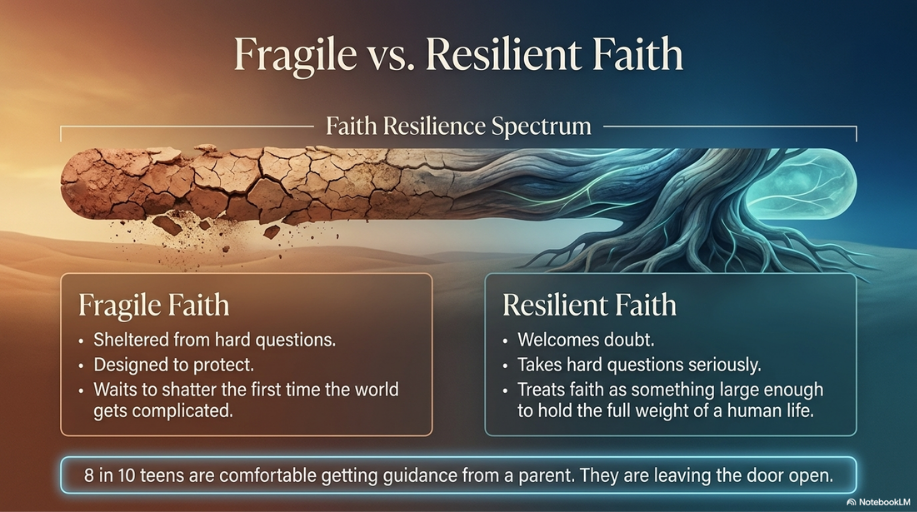
As we carry this story into the week, the most encouraging finding in the Barna report is also the most convicting. These teenagers are remarkably open to the trusted adults in their lives. Eight in ten said they would welcome guidance about who they are from their mother, nearly as many said it about their father, and more than two-thirds said they would gladly receive wisdom from Jesus and from the Bible. They are not slamming the door. They are leaving it open and waiting to see if any of us will walk through it.
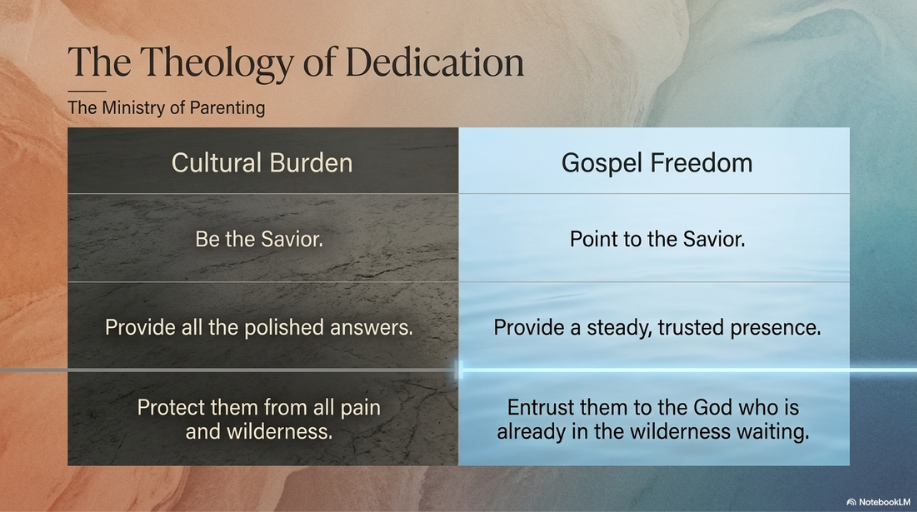
And here is the line worth carrying all week. The young people with the most resilient faith were not the ones sheltered from every hard question. They were the ones who grew up in homes and churches where doubt was welcomed, where hard questions were taken seriously, where faith was treated as something big enough to hold the full weight of a human life. A faith that protects you from hard questions is not strong faith; it is fragile faith, waiting to shatter the first time the world gets complicated. The single most formative thing any adult can offer a young person is not a polished answer. It is a steady, trusted presence, and a faith large enough to survive the questions.
This is what we dedicated those children to this past Sunday, whether we knew it or not. We did not promise to have all the answers. We promised to be a steady, trusted presence, to keep pointing to a faith big enough to hold a whole life. To the parents among us: your love is fierce, and it is good, and it will not be enough, and that is all right. It was never supposed to be enough. Your job is not to be God for your child. Your job is to keep handing your child back to the God who hears, the God who goes farther than you can go, the God who is already out in every wilderness your child will ever wander into, waiting with water.
And this is good news for all of us, because every one of us is somebody’s child, and every one of us has been out under that bush in the desert at some point. Hear it again: God heard the voice of the boy where he was, and God will hear you where you are. You are not outside the family. There is no wilderness far enough to put you there. You are a child of God, and that is what you are. God hears. God hears. God hears.
From the Sermon
“Your job is not to be God for your child. Your job is to keep handing your child back to the God who hears, the God who goes farther than you can go.”
For Reflection
- What is the difference between a faith that shelters us from hard questions and a faith large enough to hold them, and which one does Genesis 21 model?
- Where do you need to release someone or something back into the hands of the God who hears, trusting that God goes farther than you can?
- For whom can you be a steady, trusted presence this week, the kind of grown-up who hears them where they are?
Prayer
Faithful God, you have promised to go farther than we can go and to wait in every wilderness with water. Make us steady and trustworthy for the young ones you have placed among us. Give us a faith large enough to hold their hardest questions, and humble enough to hand them back to you. We are your children, and that is what we are. Hear us now, as you have always heard. Amen.
The God Who Hears
Small Group Discussion Guide
Text: Genesis 21:8-21 Pleasant Valley Church of the Brethren, Weyers Cave, Virginia
Summary
This past Sunday, on a day we dedicated children and watched two families promise to love and protect their little ones, we sat with a hard and honest question: what happens when a parent’s love, real as it is, reaches its limit? Genesis 21 walks straight into that question without flinching. Hagar, cast into the wilderness with her son, a loaf of bread, and a single skin of water, runs out of everything she has. She lays the boy under a bush, walks the distance of a bowshot away, and weeps, unable to watch him die. That is the limit of a parent’s love, not because she loved too little, but because she loved so much she could not bear to watch.
But the story does not end there. “God heard the voice of the boy,” right where he was: cast out, dying, forgotten by everyone except his mother and his God. When the parent’s love reaches its limit, God’s love is just getting started. From there the message widens out. Through Christ we are all adopted into Abraham’s family, children of the promise, and even Ishmael is never abandoned by the God who keeps reaching past every boundary we draw. Set beside recent Barna research, we heard that the questions our young people are carrying, about the future, truth, belonging, and God, are all, underneath, one question: is there a God who hears? Our calling is not to be God for our children, but to be a steady, trusted presence that hands them back to the One who is already waiting in every wilderness with water.
Opening Prayer
(to be prayed together, or led by one person)
Faithful God, you are the One who hears. As we gather, quiet the noise we have carried in with us, and open our ears to your voice and to one another. Meet us in this hour as you met Hagar in the wilderness. Let us speak honestly, listen patiently, and leave knowing that we are your children. We pray together. Amen.
Ice Breaker
Think of a time when you felt truly heard by someone. What did that person do, or not do, that made the difference?
Key Verses
“God heard the voice of the boy. The angel of God called to Hagar out of the sky, and said to her, ‘What troubles you, Hagar? Don’t be afraid. For God has heard the voice of the boy where he is.'” (Genesis 21:17)
“She went and sat down opposite him, a good way off, about a bow shot away. For she said, ‘Don’t let me see the death of the child.’ She sat opposite him, and lifted up her voice, and wept.” (Genesis 21:16)
“If you are Christ’s, then you are Abraham’s offspring and heirs according to promise.” (Galatians 3:29)
“Behold, how great a love the Father has given to us, that we should be called children of God!” (1 John 3:1)
(Scripture quotations from the World English Bible, public domain.)
Group Discussion Questions
- The sermon called this “a family that does not fit on a greeting card.” Why do you think Genesis tells Hagar’s story so honestly, including the failure of Abraham’s protection and the depth of Hagar’s despair? What is gained when Scripture refuses to tidy up real anguish?
- “God heard the voice of the boy where he is. Not where he should be. Where he is.” What does this reveal about how and where God pays attention? How does it challenge our assumptions about who is inside and who is outside God’s care?
- The boy’s name, Ishmael, means “God hears,” a promise sewn into his name before he was born. How does that one detail change the way you read the whole story? Where else in Scripture do you see God show up as the One who hears?
- Paul writes that “if you belong to Christ, then you are Abraham’s offspring, heirs according to the promise.” How does the gospel widen the family beyond bloodline? What does it mean to you that even Ishmael, the cast-out child, is never abandoned by God?
- Harry said a parent’s love “will not be enough, and that is okay. It was never supposed to be enough.” Where have you reached the limit of what your own love, effort, or wisdom could accomplish? How did you experience God in that place?
- The research found young people quietly asking, “Does anyone see me? Does anyone hear me? Will the people who are supposed to love me actually stay?” When have you carried that same question, and where did you hear God’s answer?
- The most formative thing an adult can offer a young person, the sermon said, is “a steady, trusted presence, and a faith large enough to survive the questions.” Who has been that presence for you? Who might be waiting for you to be that presence for them?
- Our young people are “leaving the door open and waiting to see if any of us will walk through it.” What is one concrete way this group could walk through that open door for the children and teenagers in our congregation and community?
Life Applications
1. Hand it back. Name one person or situation you have been trying to carry on your own. Each day this week, in a brief prayer, deliberately hand that person or worry back to the God who hears, the God who goes farther than you can go. Check-in: Next time we gather, share who or what you handed back, and whether anything shifted in you.
2. Listen to a young person all the way through. Choose one child or teenager in your life and have a single, unhurried conversation this week where your only job is to listen. No advice, no fixing, just hearing them where they are. Check-in: Come ready to tell the group one thing you heard, and one thing that surprised you.
3. Welcome a hard question. Pick one faith question you usually avoid, your own or one someone has asked you, and sit with it honestly this week instead of rushing to resolve it. Let your faith be big enough to hold it. Check-in: Report back on the question you chose and what it was like to hold it without tidying it up.
4. Widen the circle. Notice one person who seems to be “outside the family,” at church, at work, or in your neighborhood, and take one concrete step toward them this week: a text, an invitation, a saved seat, a shared meal. Check-in: Share who you reached toward and how it went.
Key Sermon Takeaways
- Parents will do almost anything for their children. God will do more. When a parent’s love reaches its limit, God’s love is just getting started.
- God hears the cry of the cast-out child where he is, not where he should be. There is no wilderness far enough to put anyone outside God’s reach.
- Through Christ we are all adopted into Abraham’s family. We are children of the promise, children of God, and that is what we are.
- The questions our young people are asking, about the future, truth, belonging, and God, are all, underneath, the question of whether there is a God who hears.
- Our calling is not to be God for our children, but to be a steady, trusted presence that points them to the God who hears, with a faith large enough to hold their hardest questions.
Closing Prayer
(to be prayed together, or led by one person)
God who hears, thank you for hearing us today. Send us out as a steady, trusted presence in a world full of people waiting to be heard. Where our love runs out, let yours begin. Keep handing us back to one another, and all of us back to you. We are your children, and that is what we are. Hear us now, as you have always heard. Amen.