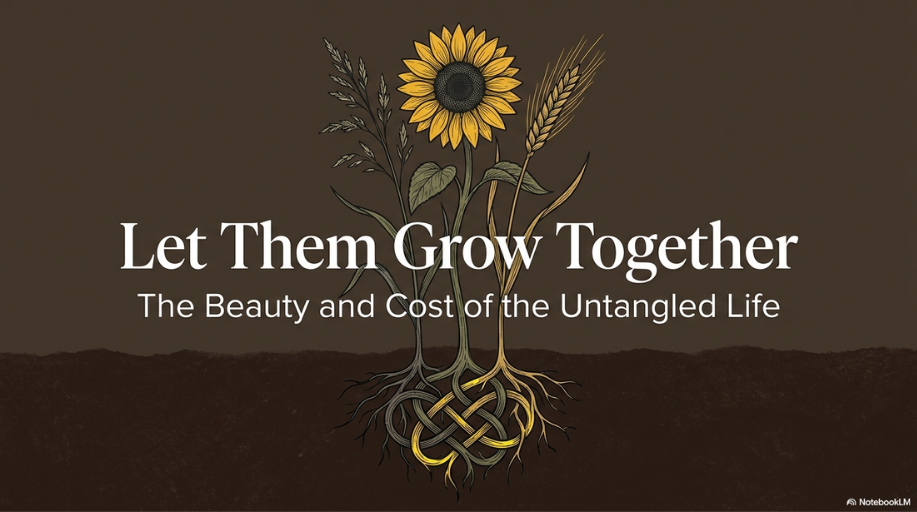
Let Them Grow Together
Small Group Discussion Guide
Pleasant Valley Church of the Brethren | Matthew 13:24-30, 36-43
Summary
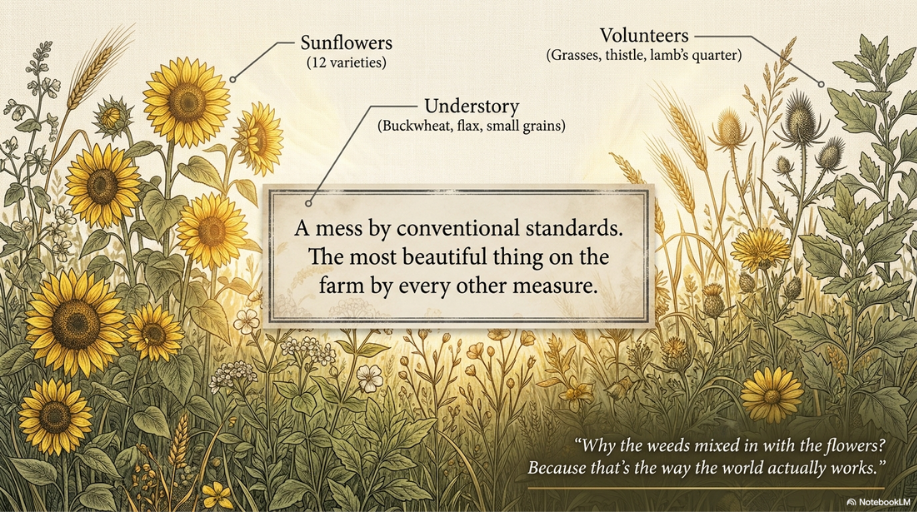
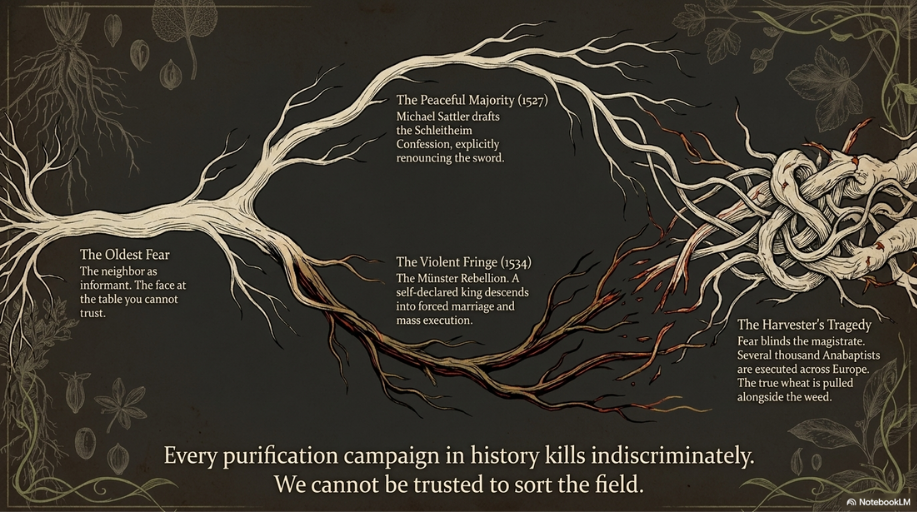
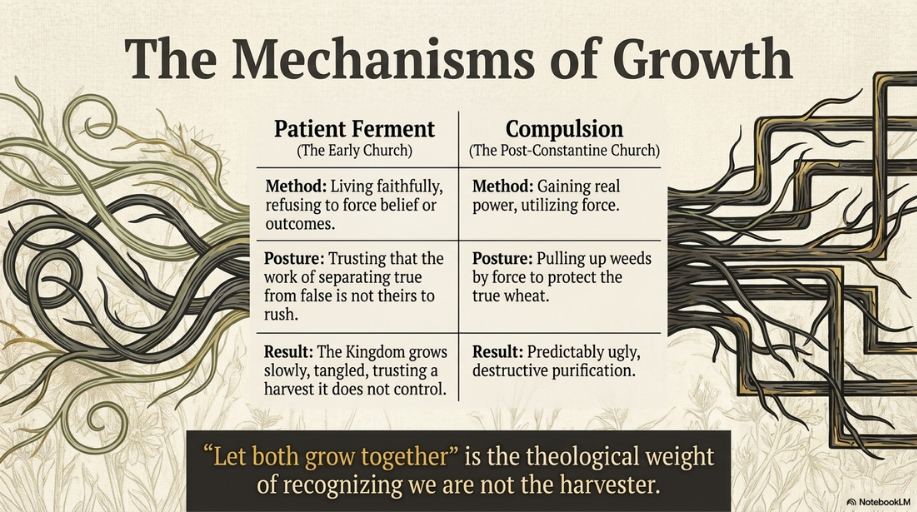
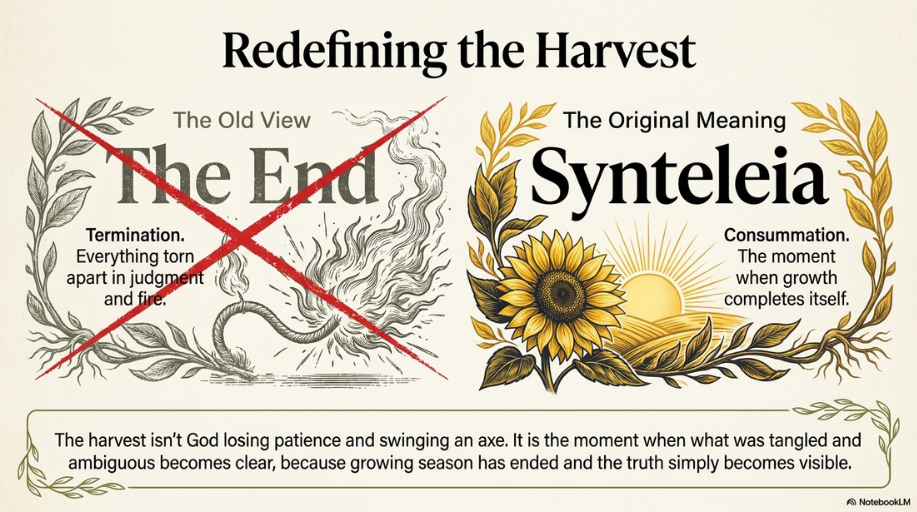
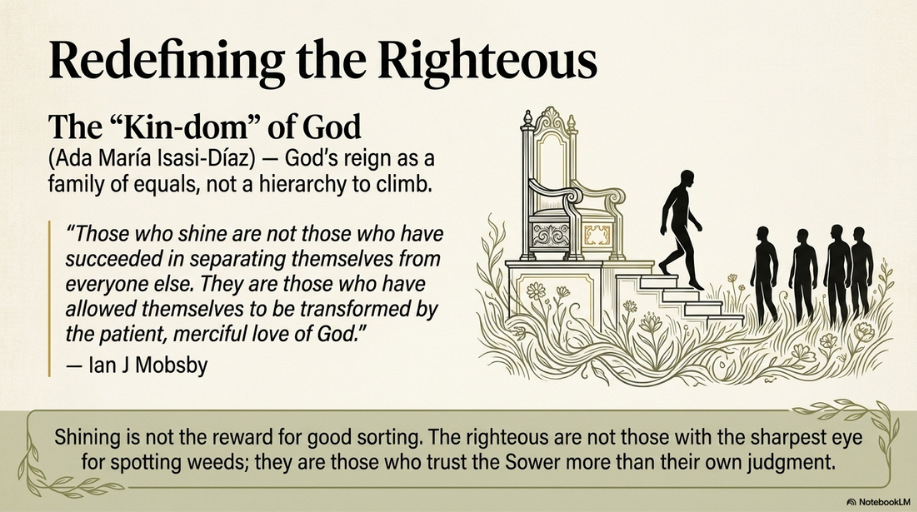
This week’s sermon explores Jesus’ parable of the wheat and the weeds (Matthew 13:24-30, 36-43), drawing on my own sunflower field, where weeds and wildflowers were allowed to grow up together on purpose. I traced how the fear of “imposters growing among us” shaped painful chapters of church history, including the persecution of the Anabaptist forebears of the peace-church tradition, and argued that we do not have the standing to separate wheat from weeds without doing more harm than good. I reframed “the end of the age” as completion rather than destruction, and redefined the righteous not as sharp sorters but as people transformed by God’s patient, merciful love. I closed with a personal reflection on grief, letting grief and joy grow tangled together rather than weeding either one out.
Opening Prayer
God of the field, we come together tonight carrying our own tangled ground: things we understand and things we don’t, people we trust and people we’re not sure of, grief and joy growing side by side. Quiet our instinct to sort and fix. Open us instead to grow together, patiently, honestly, trusting you more than our own judgment. Amen.
Ice Breaker
Have you ever grown, or seen, a garden, field, or yard where something “messy” (wildflowers, a cover crop, an untamed corner) was allowed to grow on purpose? What did you notice about it? What did it teach you, or what did it make you uncomfortable about?
Key Verses
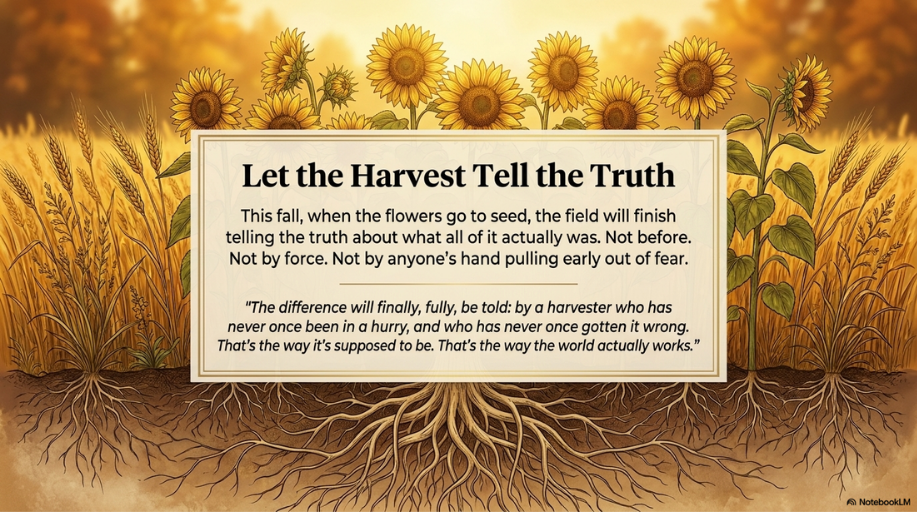
- Matthew 13:30, “Let both grow together until the harvest.”
- Matthew 13:38, “The field is the world, and the good seed stands for the people of the kingdom.”
- Matthew 13:43, “Then the righteous will shine like the sun in the kingdom of their Father.”
Group Discussion Questions
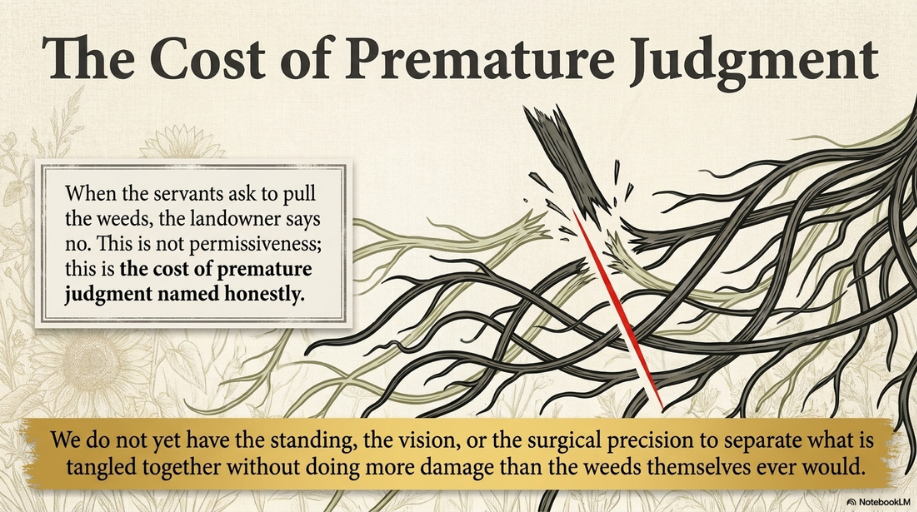
- In the parable, the servants want to pull the weeds right away. Why do you think the landowner says no? What does his answer reveal about the difference between caring about evil and taking judgment into our own hands?
- I explained that the Greek word for “end of the age,” synteleia, means completion rather than termination. How does that change the way you hear the parable’s ending?
- In the sermon, I traced how the impulse to “sort wheat from weeds” played out in Anabaptist history, with tragic results. Where do you see that same impulse, sorting who is “in” and who is “out,” at work in the church or the world today?
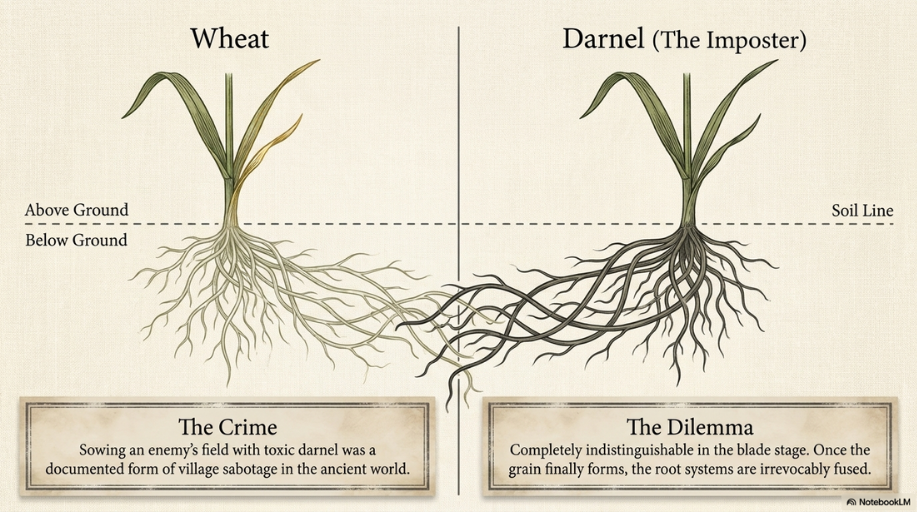
- Darnel could not be told apart from wheat until the grain head formed, months into the season. Have you ever misjudged someone, or been misjudged, before the full picture was clear? What happened?
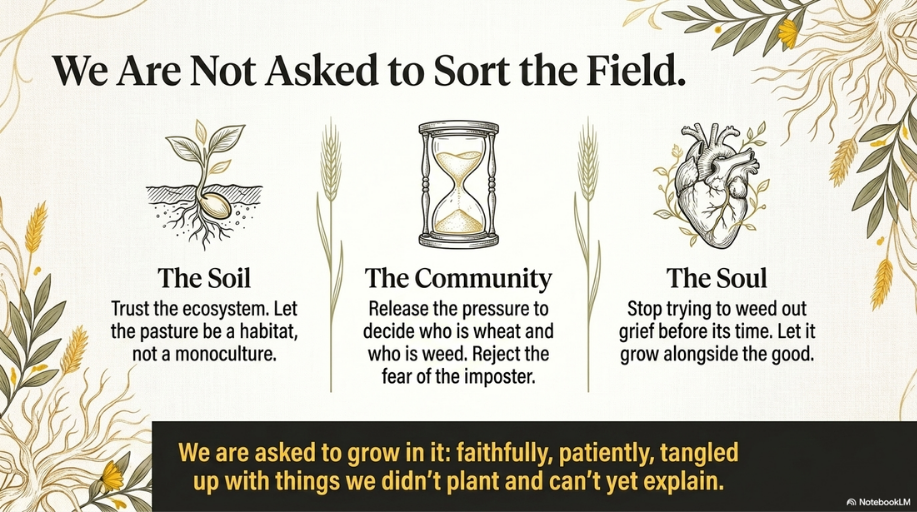
- I described shifting my own approach to grief, from weeding it out to letting it grow tangled with joy. Is there something in your life you have been trying to weed out before its time?
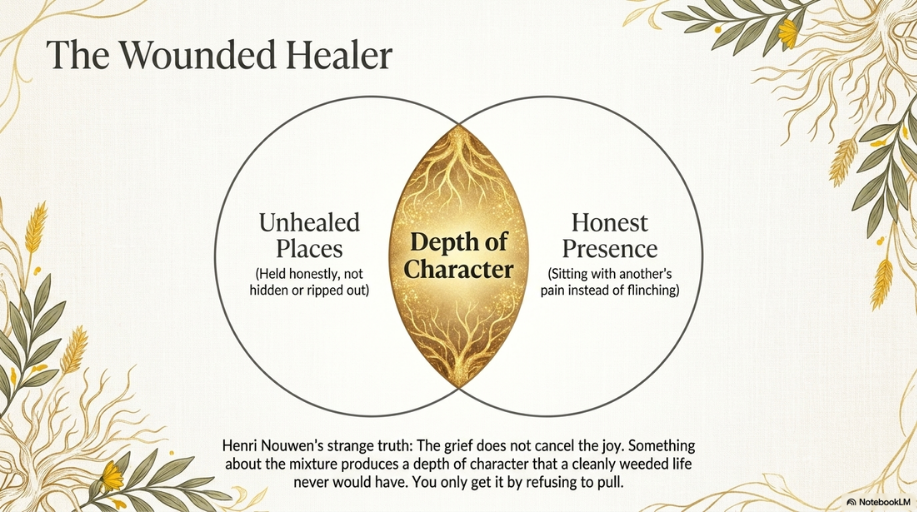
- Henri Nouwen’s phrase “wounded healer” suggests our own unhealed places can become the ground for helping others. Where have you seen that be true, in yourself or in someone you know?
- “Those who shine are not those who have succeeded in separating themselves from everyone else.” Who is someone in your life you have quietly sorted into “weed,” and what would it look like to trust the Sower with them instead?
- This week, what would it look like for you to grow rather than sort, in a specific relationship, situation, or part of your own heart?
Life Applications
- Identify one relationship or situation where you have been trying to “pull weeds” early. This week, practice patience there instead: choose one specific, concrete way to hold off on judgment. Check in with your group next week on what you noticed.
- Choose one person you have quietly sorted into “weed.” Reach out to them this week with one small act of ordinary kindness (a text, a call, a shared meal) and see what happens. Be ready to share how it went.
- If you are carrying grief alongside something good, give yourself permission this week to let both be true at once, without rushing to resolve either. Journal one sentence a day about what that is like, and bring one line to share.
Key Sermon Takeaways
- We are not asked to sort the field; we are asked to grow in it, faithfully and patiently.
- Premature judgment has a cost: pulling weeds too soon tears out wheat too.
- “The end of the age” means completion, not destruction; the harvest is a promise, not a threat.
- Righteousness is not sharp sorting; it is letting ourselves be transformed by God’s patient, merciful love.
- Grief and joy can grow root to root in the same ground, producing a depth of character a cleanly weeded life never would.
Closing Prayer
Good Sower, thank you for planting us in this field together, weeds, wheat, and all. As we leave tonight, help us carry what we’ve talked about: less certainty about who to sort out, more trust in your patience. Grow us together until the harvest, and until then, teach us to grow, not to sort. Amen.