
Day One: The Thank You, Not the Transaction
Pastor Harry opened with a confession. He had preached from the woman at Simon’s table more than once, and he had always preached it the same way everyone else does: she weeps enough, so she is forgiven. Simple math. It was only when he came back to Luke 7 more open to what the story was written to say that something in the actual words cracked open for him. It was always there, he said. He just hadn’t looked closely enough to see it.
So look closely. Simon the Pharisee invites Jesus to dinner, and by every outward measure he is a good host. Guests at a first century banquet did not sit in chairs; they reclined on low couches around the table, propped on one elbow, feet stretched out behind them. Simon has Jesus reclining at his own table, in his own house, in front of his own guests. For a Pharisee and an itinerant rabbi with Jesus’ reputation, that is not nothing.
Then a woman gets in, uninvited. Luke describes her only as a woman of that town who lived a sinful life, and in a small town everyone at that table already knew exactly who she was. She comes in behind Jesus, where his feet are, and she weeps. Her tears fall on his feet. She wipes them with her hair, loose and unbound, in a room full of men. She keeps kissing his feet, and she breaks open a jar of expensive perfume and pours it out.
The line everyone remembers is “your sins are forgiven,” and it is easy to hear it as the moment a deal finally closes: enough tears, enough nerve, and at last the absolution. But when Jesus explains the scene to Simon, his words point backward. Her sins, which are many, have been forgiven. Already. Past and settled before she ever crossed Simon’s threshold. Luke never tells us what happened to her, or where, or when. The grammar simply tells us it came first.
That changes what we are watching. The tears are not a down payment. The perfume is not a bribe. She has not come to get something from Jesus. She has come to thank him for something she already has.
Many of us carry the transaction version of faith for years without noticing it: grace as the reward waiting at the end of enough effort. Today, before you try to earn anything from God, consider the possibility that the grace you keep reaching for has already reached you.
Scripture: “Therefore I tell you, her sins, which are many, are forgiven, for she loved much. But to whom little is forgiven, the same loves little.” (Luke 7:47, WEB)
From the Sermon: “This dinner isn’t the transaction. It’s the thank you.”
For Reflection:
- If the woman’s sins were already forgiven before she walked into Simon’s house, what does that tell us about the order in which God’s grace and our response arrive?
- Where in your own faith have you been treating grace like a transaction, something you hope to finally earn with enough effort, enough tears, or enough good behavior?
- Who in your life needs to hear that grace has already found them, rather than one more reminder of what they still need to do to deserve it?
Prayer: Gracious God, you reached us before we ever reached for you. Forgive us for the times we have treated your grace like a bargain to be struck, as if our tears or our effort could buy what you have already given. Loosen our grip on the math we keep doing in our heads. Teach us to come to you the way this woman did, not to earn, but to give thanks. In the name of Jesus, who received her gift with gladness, we pray. Amen.
Day Two: What Canceled Debt Looks Like
Simon has been doing some math of his own. Watching the woman at Jesus’ feet, he says to himself that if this man were really a prophet, he would know what kind of woman was touching him. Jesus answers the thought with a story.
A moneylender had two debtors. One owed five hundred silver coins, the other fifty. Neither could pay, so the lender canceled both debts. Then Jesus asks Simon which one will love him more. Simon, a little warily, gives the right answer: the one who was forgiven more.
Pastor Harry pointed out that this is not a formula for earning forgiveness by loving enough. It runs the other direction. The debt is canceled first. The love comes after, because love is what canceled debt looks like once it reaches a real, grateful human being.
Then Jesus turns toward the woman while he is still speaking to Simon. Do you see this woman? Simon had extended every proper courtesy of a host, and yet no water for Jesus’ feet, no kiss of greeting, no ordinary oil for his head. The woman gave tears, hair, kisses, and a jar of perfume she probably couldn’t afford. The difference was not that Simon was a villain. As far as Simon knew, he wasn’t carrying much of a debt, so he had little to be grateful for. The woman knew exactly what she had been forgiven, and the freedom that came with it.
There are two ways to miss this in our own lives. One is Simon’s way: to assume our debt was small and offer God polite courtesy without much love. The other is quieter, and Pastor Harry named it near the end of the sermon: keeping a private ledger against ourselves, still making payments on a debt that was written off long ago.
Both ledgers overlook the same truth. The debt is gone. What remains is gratitude, and gratitude tends to make people generous, bold, and even a little extravagant, like a woman breaking open her most valuable possession in a room full of disapproving men. Today, take an honest look at your own gratitude. If it feels small, is that because you believe you owed little? Or because you still don’t quite believe the debt is gone?
Scripture: “A certain lender had two debtors. The one owed five hundred denarii, and the other fifty. When they couldn’t pay, he forgave them both. Which of them therefore will love him most?” (Luke 7:41-42, WEB)
From the Sermon: “The debt gets canceled first. The love is just what canceled debt looks like once it reaches a real, grateful human being.”
For Reflection:
- Jesus’ parable places cancellation before love. How does that reshape the way we understand the relationship between grace and gratitude?
- Are you more likely to be Simon, offering God correct courtesy without much love, or the one still paying on a debt that has already been canceled? What would change if you believed the debt was truly gone?
- What would our church’s welcome look like if it overflowed from gratitude rather than from duty or good manners?
Prayer: Merciful God, you canceled what we could never repay, and you did it before we ever loved you in return. Forgive us when we offer you polite courtesy and call it love. Free those among us who are still paying on a debt you have already written off. Let our gratitude grow large enough to be a little extravagant, and let it spill over into the way we welcome one another. Through Christ, who sees what we cannot, we pray. Amen.
Day Three: Reading the Uniform
A little further along in Luke’s Gospel, in Jericho, Pastor Harry found the same blind spot waiting for him in another story he thought he knew by heart.
Luke tells us two things about Zacchaeus in the same breath: he was rich, and he was a chief tax collector. He didn’t only collect taxes for Rome; he oversaw the men who did, quite possibly off the wealth flowing through Jericho’s balsam trade, the prized Balm of Gilead. Tax collectors worked for the occupying government, were backed by Roman soldiers, and were widely assumed to pocket more than Rome was owed. A chief tax collector was that whole system’s local boss.
He was also a short man. Unable to see over the crowd, he does something a wealthy, powerful man simply did not do in public: he runs ahead and climbs a sycamore fig. He makes himself ridiculous in front of the whole town just to get a look at Jesus. Jesus stops beneath the tree, looks up, and calls him by name. The crowd begins to mutter.
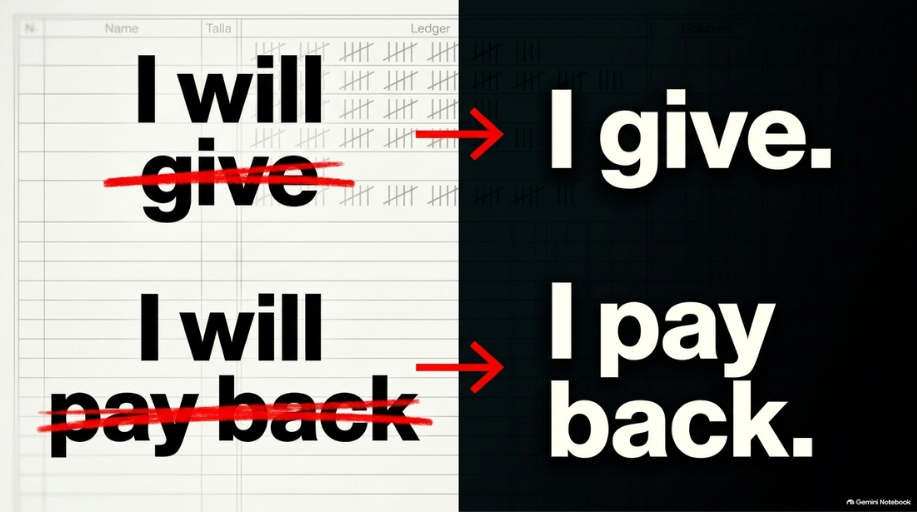
Then Zacchaeus stands and speaks, and here Pastor Harry found the detail he had missed for years. The verbs are in the present tense. Not I will give, but I give. Not I will pay back, but I pay back. Zacchaeus is not announcing a new plan. He is describing what he already regularly does. And notice the wording: if I have cheated anyone, not because I have. That sounds less like a confession and more like a defense. Pastor Harry was not alone in this reading. The Lukan scholar Joseph Fitzmyer reads the verbs the same way, and Episcopal priest Elizabeth Kaeton points out that the name Zacchaeus comes from a Hebrew word meaning pure, clean, or righteous.
If that is right, the crowd was not grumbling because Jesus ate with a villain who needed to change. They were grumbling because Jesus ate with a man they had already convicted of something they never investigated. His uniform did all the talking. When Jesus says that salvation has come to this house, he is overturning a verdict the crowd handed down long before Zacchaeus ever climbed that tree.
Pastor Harry compared Zacchaeus to Severus Snape from the Harry Potter stories: a man who wore the mark of the enemy, whom nearly everyone assumed the worst about, and whose true loyalty and costly love were only understood after he was gone. Almost no one bothered to ask what kind of man was underneath the mark. Today, ask yourself whose uniform you have been reading instead of their life.
Scripture: “Zacchaeus stood and said to the Lord, ‘Behold, Lord, half of my goods I give to the poor. If I have wrongfully exacted anything of anyone, I restore four times as much.'” (Luke 19:8, WEB)
From the Sermon: “Nobody in that crowd had bothered to ask what kind of tax collector he actually was.”
For Reflection:
- If Zacchaeus was describing what he already did rather than promising to change, what is Jesus doing when he says, “Today, salvation has come to this house”?
- Whom have you judged by their uniform (their job, their reputation, a past mistake, their family name) before you ever took the time to learn their story? And when have you been judged that way yourself?
- Who in our community wears a “uniform” that keeps people from asking who they really are, and how could you take time this week to find out?
Prayer: Jesus, you stopped beneath the tree and called Zacchaeus by name, while the crowd around you had already made up its mind. Forgive us for the verdicts we have handed down without ever asking a single question. Slow our quick judgments. Teach us to look past the uniform to the person you already know. And for any of us who have been misread by others, remind us that you see us truly. In your name we pray. Amen.
Day Four: Already Further Along
Luke does not put these stories in random order. Earlier in the same chapter as Simon’s dinner, Jesus heals a Roman centurion’s servant and says he has not found faith like that anywhere in Israel. The praise goes not to an insider but to an officer of the occupying army.
Then, only a few verses before the woman walks through Simon’s door, Luke says it plainly: all the people, even the tax collectors, heard Jesus and acknowledged that God’s way was right. The Pharisees, Luke adds, rejected it. The very people Simon’s table would never have set a place for were already further along with God than Simon was, well before Zacchaeus ever climbed his tree.
Pastor Harry called this Luke building a case. There is a kind of welcome that says, come in, we are glad to have you, and underneath it, usually without meaning to, assumes that we as the host are the ones doing someone a favor. The posture Jesus keeps modeling assumes the opposite: the stranger standing outside might already be closer to God than the people deciding whether to let them in.
Simon’s table shows the difference. He gave Jesus a proper invitation and a place of honor, and he still could not include the woman kneeling at Jesus’ feet. Welcome, Pastor Harry said, is not the same thing as full inclusion. A church can be warm at the door and still quietly closed around the table where decisions are made, keys are handed out, and people are asked to serve.
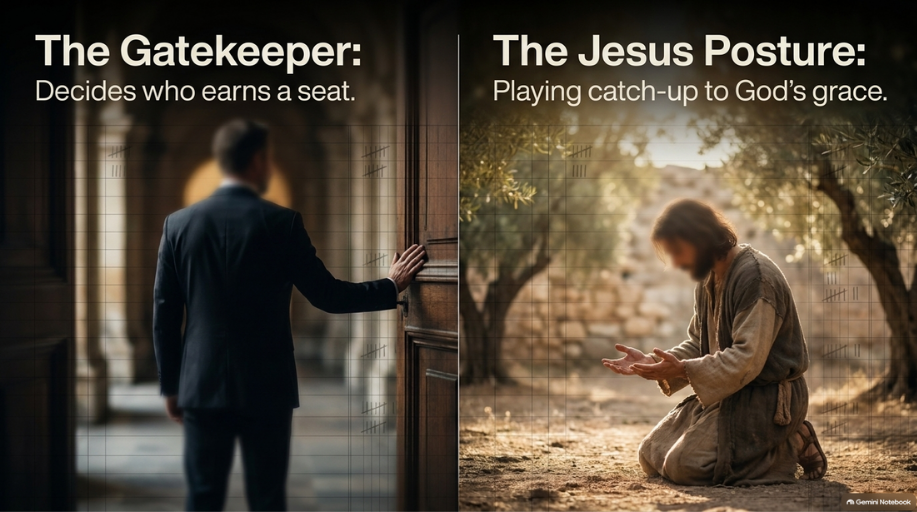
This is humbling, and it is freeing. We do not have to be the gatekeepers of anyone’s belonging. We do not have to evaluate whether someone has earned a seat. More often than we would like to admit, we are the ones who have some catching up to do.
Today, think about the last person who came into your church, your workplace, or your neighborhood whom you quietly placed on the outside. What might they already know about God that you have not learned yet?
Scripture: “When all the people and the tax collectors heard this, they declared God to be just, having been baptized with John’s baptism.” (Luke 7:29, WEB)
From the Sermon: “We’re not gatekeepers deciding whether they’ve earned a place at the table. More often than we’d like to admit, we’re the ones playing catch up.”
For Reflection:
- Why do you think Luke keeps placing outsiders (a Roman centurion, tax collectors, a woman with a reputation) ahead of the religious insiders in recognizing God’s way?
- When you welcome someone new, do you assume you are the one doing them a favor? What might change if you assumed they could be further along with God than you are?
- Welcome is not the same as full inclusion. Where in our church’s life (serving, leading, deciding, belonging) could someone new be given a real seat and not only a polite greeting?
Prayer: God of the centurion and the tax collector, forgive us for the times we have stood at the door as if belonging were ours to hand out. Humble us enough to learn from the people we were tempted to overlook. Move us beyond polite welcome to real inclusion, at our tables, in our ministries, and in the places where decisions are made. Help us catch up to what you are already doing. In Jesus’ name, Amen.
Day Five: The Chair Has Been Pulled Up
Pastor Harry closed by naming four kinds of people who might be listening, in the pews, in the back, or watching later on a screen, and he insisted that the story is not finished until it reaches all four.
To anyone who has been wrongly assessed, read by a reputation, a job, a mistake, or a family name before anyone took the time to know you: Jesus called Zacchaeus down by name because he knew who he really was. You do not have to keep proving what is already true about you in Christ’s eyes.
To anyone who has handed down a verdict on someone else without really knowing them, whether the family two pews over or the person who showed up last month looking or sounding different than you expected: ask yourself honestly whether you have been the crowd under the tree.
To those who hold whatever power a church has to decide who belongs: Simon gave Jesus every correct courtesy and still could not include the woman at his feet. If you decide who is asked to serve, who is handed a key, or who gets a seat where decisions happen, this word is for you.
And to anyone still keeping a private ledger against yourself, still trying to earn what was settled before you ever walked through the door: the woman’s tears were never the payment. They were the thank you. The debt is canceled. You are allowed to stop paying on it.
This is the heart of the series ahead. Between now and the middle of November, we will keep returning to one image: a chair someone pulled up to a table that was not originally set for them. Simon kept a ledger on the woman the moment she came in. The crowd kept one on Zacchaeus before he ever opened his mouth. Jesus tore up both of them in the same afternoon, one at a dinner table and one beneath a tree.
So the question for us is simple and searching: will we be a church that reads the uniform and calls that knowing someone, or a church willing to tear up the ledger? Go into this week in the mercy that met you before you asked for it, and in the grace that doesn’t wait for the ledger to balance.
Scripture: “He said to the woman, ‘Your faith has saved you. Go in peace.'” (Luke 7:50, WEB)
From the Sermon: “Friends, the chair’s been pulled up. Somebody’s going to go sit in it, and somebody else is going to have to stop reading the uniform long enough to include them there.”
For Reflection:
- In both stories Jesus sets aside the ledger someone else was keeping. What does that reveal about how God sees people compared with how we tend to see them?
- Of the four people Pastor Harry named (the one wrongly assessed, the one who handed down a verdict, the one who holds power to include, and the one keeping a ledger against yourself), which one are you this week?
- Who needs a chair pulled up for them, and what is one concrete step you can take this week to make room for them at the table?
Prayer: Holy God, you met us with mercy before we asked for it and with grace that never waited for our ledgers to balance. Where we have been misjudged, heal us. Where we have misjudged others, correct us. Where we hold power to include, make us generous. Where we are still paying on a debt you canceled, set us free. Pull up a chair for all of us, and teach us to pull up chairs for one another. In the name of Jesus, who tore up the ledger, we pray. Amen.
More Than Meets the Eye
Small Group Discussion Guide
The Empty Chair, Week One
Based on the sermon by Pastor Harry Jarrett | Luke 7:36-50; Luke 19:1-9
Pleasant Valley Church of the Brethren, Weyers Cave, Virginia
Summary
This week we began a new series, The Empty Chair, with two familiar stories from Luke: the woman who anoints Jesus’ feet at Simon the Pharisee’s dinner (Luke 7:36-50) and Zacchaeus, the chief tax collector who climbs a sycamore fig in Jericho (Luke 19:1-9). Pastor Harry confessed that he had always preached them as stories of guilty people earning their way back to God, and then showed what a closer look at the text reveals. Jesus says the woman’s sins, which are many, have been forgiven: already settled before she entered the room. Her tears were not the payment; they were the thank you. The parable of the two debtors makes the same point: the debt is canceled first, and love is what canceled debt looks like.
In Jericho, Zacchaeus speaks in the present tense (I give, I pay back), describing what he already does rather than promising to change, a reading shared by scholar Joseph Fitzmyer and priest Elizabeth Kaeton, who notes his name means pure or righteous. The crowd had convicted him by his uniform without ever investigating. Pastor Harry compared him to Severus Snape of the Harry Potter stories, then showed how Luke arranges his Gospel so outsiders recognize God’s way before insiders do. Welcome is not the same as full inclusion, and more often than we admit, we are the ones playing catch up. He closed by speaking to four kinds of listeners and introducing the series image: a chair pulled up to a table that wasn’t originally set for the one who will sit in it.
Opening Prayer
(Read aloud together, or led by one person.)
Gracious God, as we gather around your word, we confess how quickly we read one another by the surface: a job, a reputation, a rumor, a first impression. Open our eyes to see more than meets the eye, in these stories, in one another, and in ourselves. Where we are still keeping ledgers, loosen our grip. Where we have been misjudged, meet us with your knowing love. Speak to us here, and make room for us all at your table. In the name of Jesus we pray. Amen.
Ice Breaker
Share about a time your first impression of someone (a neighbor, a coworker, a teacher, a new church member) turned out to be completely wrong. What did you learn once you got to know them? Or, for a lighter option: what is the most surprising thing people would never guess about you just by looking?
Key Verses
“Behold, a woman in the city who was a sinner, when she knew that he was reclining in the Pharisee’s house, she brought an alabaster jar of ointment.” (Luke 7:37, WEB)
“Turning to the woman, he said to Simon, ‘Do you see this woman? I entered into your house, and you gave me no water for my feet, but she has wet my feet with her tears, and wiped them with the hair of her head.'” (Luke 7:44, WEB)
“Therefore I tell you, her sins, which are many, are forgiven, for she loved much. But to whom little is forgiven, the same loves little.” (Luke 7:47, WEB)
“Zacchaeus stood and said to the Lord, ‘Behold, Lord, half of my goods I give to the poor. If I have wrongfully exacted anything of anyone, I restore four times as much.'” (Luke 19:8, WEB)
“Jesus said to him, ‘Today, salvation has come to this house, because he also is a son of Abraham.'” (Luke 19:9, WEB)
Group Discussion Questions
- Pastor Harry admitted he had always preached these two stories as “guilty person meets Jesus, guilty person gets better.” How were you taught to understand the woman at Simon’s table and Zacchaeus? What changes when you read them the way he described?
- Jesus says the woman’s sins “have been forgiven,” already settled before she walked into the room. If her tears were the thank you and not the transaction, what does that suggest about how grace and our response to it are ordered?
- In the parable of the two debtors, Simon loved little because, as far as he knew, he owed little. Where do you see Simon’s kind of polite, courteous faith in yourself or in the church today?
- Zacchaeus speaks in the present tense: “I give,” “I pay back.” How does reading his words as a description of what he already does, rather than a new promise, change the meaning of the crowd’s grumbling and of Jesus’ words, “Today, salvation has come to this house”?
- The crowd read Zacchaeus by his uniform. Pastor Harry compared him to Severus Snape, who wore the mark of the enemy while secretly working against it. What “uniforms” do people in our community wear that cause others to stop asking who they really are?
- Luke places a Roman centurion and “the tax collectors” ahead of the religious leaders in recognizing God’s way. Why do you think outsiders so often see what insiders miss? Can you recall a time someone new to faith taught you something?
- Pastor Harry said, “welcome is not the same thing as full inclusion.” Simon welcomed Jesus but could not include the woman. Where might our congregation be warm at the door yet closed at the table where serving, leading, and deciding happen?
- Pastor Harry spoke to four kinds of people: the wrongly assessed, the one who handed down a verdict, the one who holds power to include, and the one keeping a ledger against yourself. Which one do you most identify with this week, and what would it look like for this story to reach you there?
Life Applications
- Ask one more question. This week, choose one person you have quietly “read by the uniform” (a coworker, a neighbor, someone at church you haven’t really met) and have a genuine conversation in which you ask about their story rather than assuming it.
Check-in: Come ready to share one thing you learned that surprised you.
- Close the ledger. Write down one thing you are still trying to “pay off” with God: a past mistake, a lingering sense of not being enough. Then write across it: “Canceled.” Keep it somewhere you’ll see it each morning this week.
Check-in: Text one group member midweek with a single word, “Canceled,” as a reminder to each other.
- Practice extravagant gratitude. Like the woman with her jar of perfume, do one generous, even slightly extravagant thing this week as a thank you to God: a gift, a note, an hour of time, given freely with no expectation of return.
Check-in: Share at the next gathering what you gave and how it felt to give it as thanks rather than obligation.
- Pull up a chair. Identify one concrete way to move someone from “welcomed” to “included” this week: invite a newer attender to help with a task, sit with someone new at a meal, or ask a quieter voice for their opinion at a meeting.
Check-in: Report back next week on the chair you pulled up and who sat in it.
Key Sermon Takeaways
- Familiar stories can hold more than meets the eye; a closer reading of the actual words may overturn how we have always understood them.
- Jesus says the woman’s sins “have been forgiven”: already settled before she entered Simon’s house. Her tears were the thank you, not the transaction.
- In the parable of the two debtors, the debt is canceled first; love is what canceled debt looks like in a grateful human being.
- Simon offered proper courtesy but little love, because he did not think he owed much.
- Zacchaeus speaks in the present tense (“I give,” “I pay back”), describing what he already does, a reading supported by Joseph Fitzmyer and Elizabeth Kaeton.
- The crowd convicted Zacchaeus by his uniform without investigating; Jesus overturned their verdict.
- Luke deliberately arranges his Gospel so outsiders (a centurion, tax collectors, sinners) recognize God’s way before the insiders do.
- Welcome is not the same as full inclusion; more often than we admit, we are the ones playing catch up.
- The Empty Chair series invites us to stop reading the uniform, tear up the ledger, and make room at the table.
Closing Prayer
(Read aloud together, or led by one person.)
Faithful God, thank you for the grace that found us before we ever asked for it. Thank you for seeing past every uniform, reputation, and rumor to the people we truly are. Send us out this week to ask one more question, to close the ledgers we have kept against ourselves and others, and to pull up chairs for those who have been left standing. Make us a church that includes and not only welcomes. Go with us in the mercy that met us first. In the name of Jesus, Amen.