Day One: The Charge to Form
Devotional
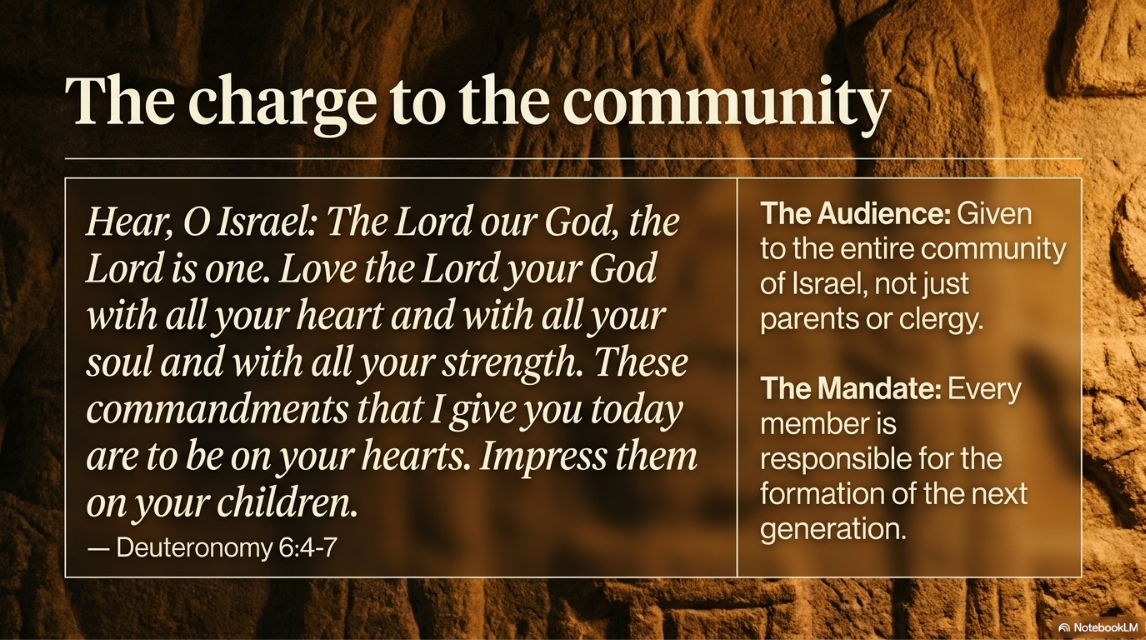
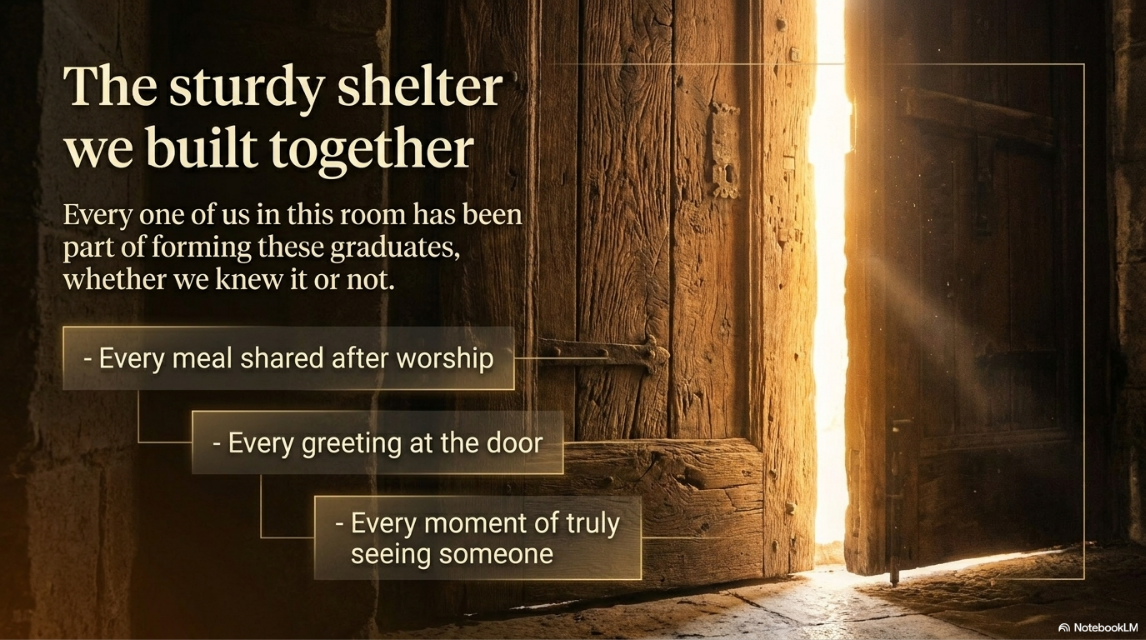
Faith formation is not the work of a few specialists. It belongs to the whole community. Moses gave the charge to impress faith on children not only to parents or teachers, but to all of Israel, which is to say, to everyone gathered together in covenant. Pleasant Valley Church of the Brethren lives this truth each week. Every shared meal, every greeting, every moment of being genuinely seen by someone in the congregation is part of forming the next generation. The teachers and leaders honored this Sunday did not work alone; they worked as representatives of a whole people committed to passing on what they had received.
Scripture
These commandments that I give you today are to be on your hearts. Impress them on your children. Talk about them when you sit at home and when you walk along the road, when you lie down and when you get up. (Deuteronomy 6:6-7)
From the Sermon
“The charge is given to Israel. To everyone standing there. Which means every one of us in this room this morning has also been part of forming these graduates, whether we knew it or not.”
Reflection Questions
- What does it mean that God entrusts the whole community, not just specialists, with the work of faith formation?
- In what ordinary moments this week have you spoken faith aloud, by word or action, to someone younger in the faith?
- Who in your neighborhood or workplace might be watching how you live and learning something about God from it?
Prayer
Lord our God, you are one, and you have called us into one covenant people. Forgive us for the times we have left the work of formation to others. Open our eyes to see the ordinary moments of today as holy ground where faith can be passed on. Give us words when words are needed, and give us presence when presence is enough. In the name of Jesus, who grew up in a community of faith, Amen.
Day Two: The Sharpening Work
Devotional
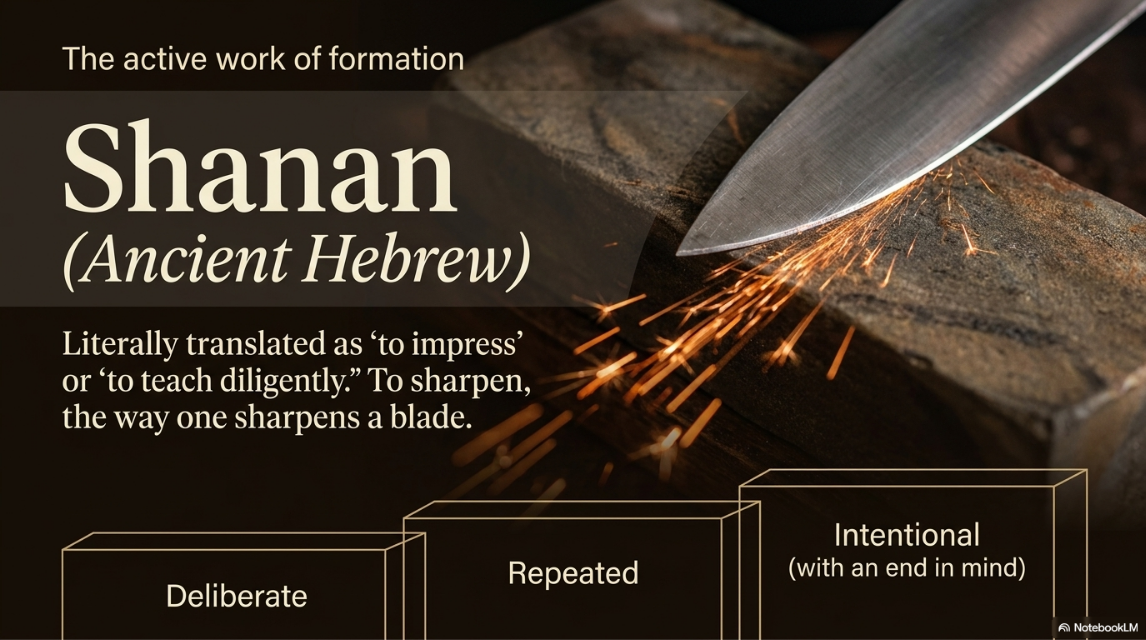
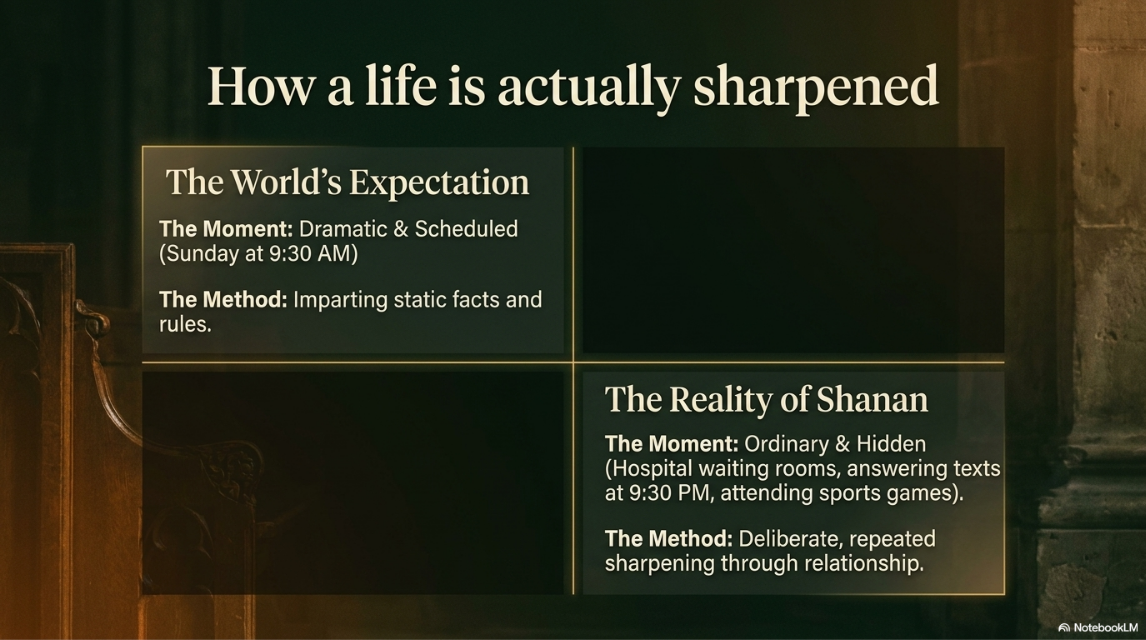
The Hebrew word shanan, translated as ‘impress’ or ‘teach diligently’ in Deuteronomy 6, literally means to sharpen, as one sharpens a blade. Sharpening is never accidental. It is deliberate, repeated, and oriented toward a purpose. The Sunday school teachers and youth leaders honored this weekend embodied that word. They answered strange questions at nine-thirty on Sunday mornings, sat in hospital waiting rooms, attended sports games and concerts, remembered names, sent texts. None of that was glamorous. All of it was sharpening. Formation happens not primarily in the dramatic moments but in the accumulated weight of steady, faithful presence.
Scripture
Blessed are those who find wisdom, those who gain understanding, for she is more profitable than silver and yields better returns than gold. (Proverbs 3:13-14)
From the Sermon
“When you sharpen a blade is deliberate. It is repeated. It is intentional. There is an end in mind.”
Reflection Questions
- Where have you experienced the slow, patient work of sharpening in your own spiritual life?
- Who has shown up for you in the unremarkable moments and, in doing so, shaped who you are?
- How might you offer that kind of steady presence to someone in your circle this week?
Prayer
Patient God, you do not give up on us in a single season. You work in us over years, through ordinary people and unremarkable moments. Thank you for the teachers and mentors you have placed in our lives. Make us willing to be that kind of presence for others: deliberate, repeated, and intentional in our love. Amen.
Day Three: Wisdom Is Already Moving Toward You
Devotional
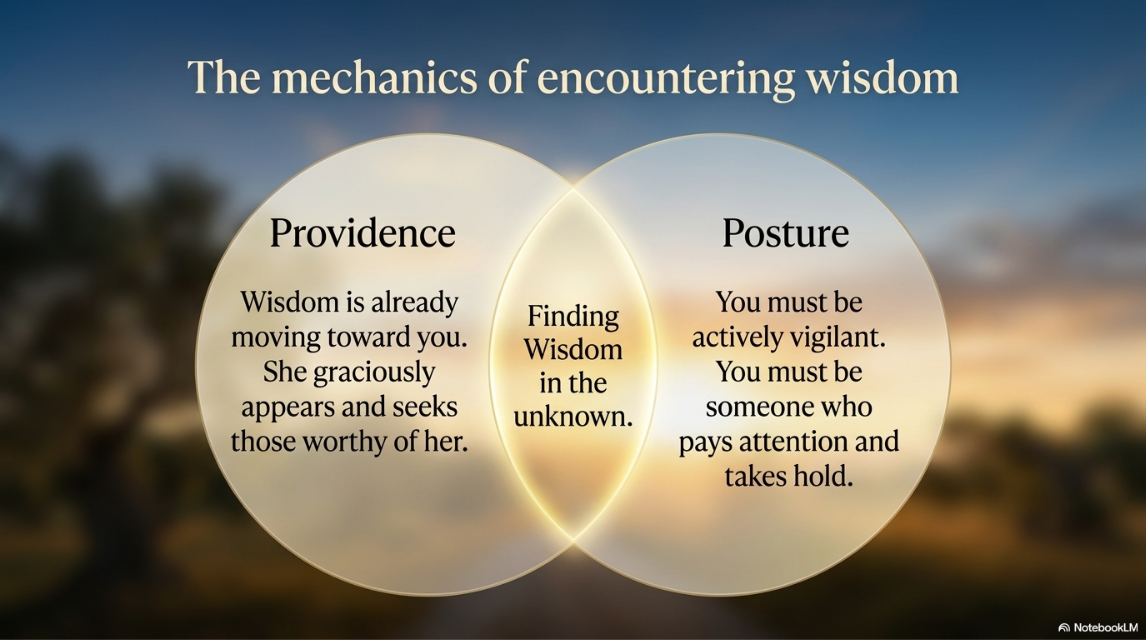
The book of Proverbs personifies wisdom as a woman who does not wait passively to be discovered. She goes out seeking those worthy of her. She appears graciously along the path. This is a word of deep comfort for any graduate, or any person, stepping into uncertain territory. The road ahead holds decisions with no clear right answer, situations for which no upbringing fully prepares us, and moments of feeling profoundly lost. Into all of that, Scripture speaks a promise: wisdom is already on the move toward you. The formation received in a community of faith has been preparing a person to recognize wisdom when she arrives, to have the eyes to see what is true and good and life-giving.
Scripture
Her ways are pleasant ways, and all her paths are peace. She is a tree of life to those who take hold of her; those who hold her fast will be blessed. (Proverbs 3:17-18)
From the Sermon
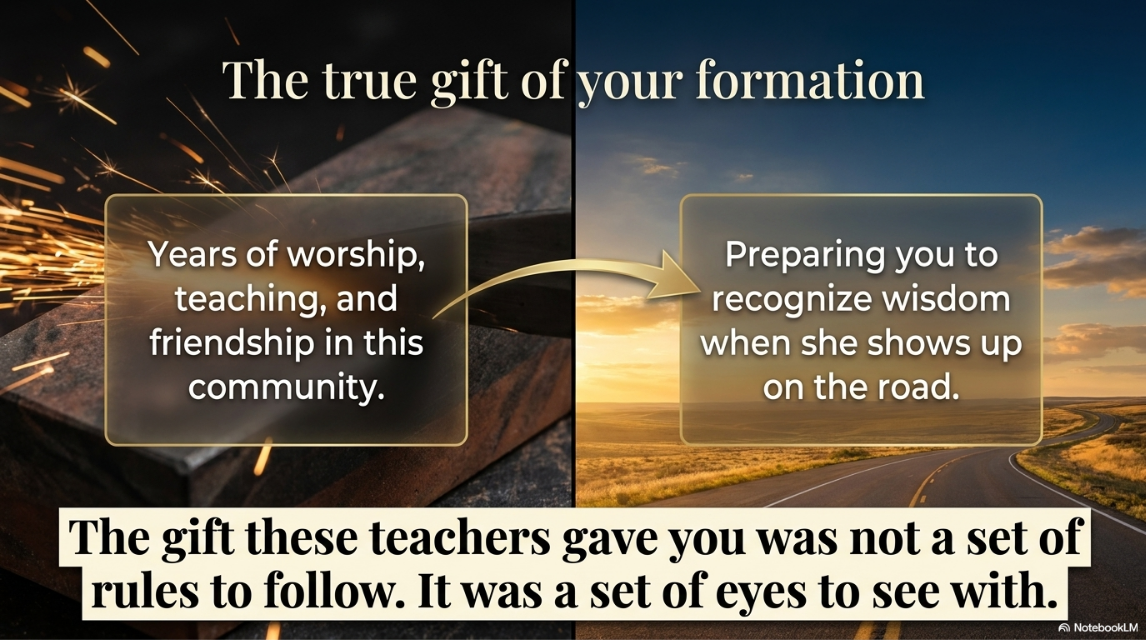
“That is the gift these teachers gave you. Not a set of rules to follow. A set of eyes to see with.”
Reflection Questions
- In what area of your life do you most need wisdom right now?
- Do you approach that need with anxiety or with the expectation that God’s wisdom is already moving toward you?
- What spiritual practices help you stay attentive enough to recognize wisdom when it appears?
Prayer
God of all wisdom, we confess that we sometimes face uncertain roads with more fear than faith. Remind us today that you are not only behind us in our formation but ahead of us in our future. Give us the attentiveness to recognize wisdom when she meets us, and the courage to take hold of what you offer. Amen.
Day Four: The Wonder and Anxiety of Becoming
Devotional
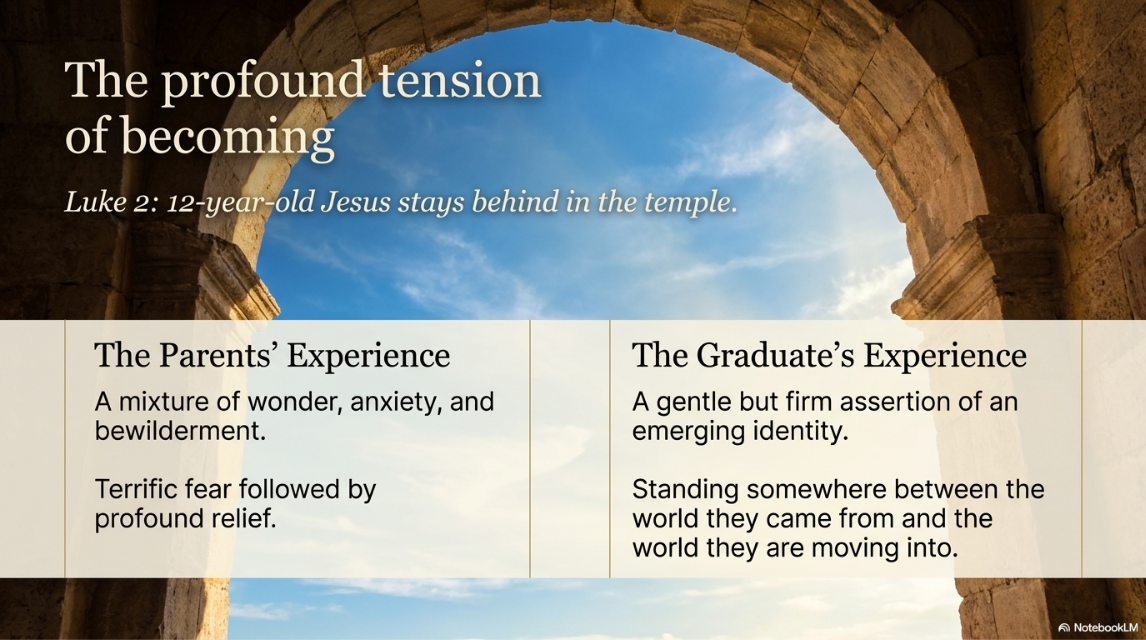
Luke’s account of the twelve-year-old Jesus in the temple is the only story of Jesus as a young person approaching adulthood. It is a complicated story: a boy who stays behind without telling his parents, a mother who expresses real worry, and a son who gently but firmly asserts his own emerging identity. Luke includes this story, the sermon suggests, because it is true to life. The moment when young people step into their own voice is almost always a mixture of wonder and anxiety for everyone involved. Growing into wholeness is not a smooth or painless process. It involves the disorientation of standing between the world you came from and the world you are moving into.
Scripture
After three days they found him in the temple courts, sitting among the teachers, listening to them and asking them questions. Everyone who heard him was amazed at his understanding and his answers. (Luke 2:46-47)
From the Sermon
“The moment when the young begin to step into their own voice and their own calling is almost always, for everyone involved, a mixture of wonder and anxiety.”
Reflection Questions
- Can you remember a time in your own life when you stood between the world you came from and the world you were moving into?
- What made that threshold terrifying, and what made it holy?
- How do you hold space for the people in your life who are currently in that in-between place?
Prayer
God who meets us at every threshold, thank you that even Jesus knew the disorientation of becoming. Be near to those in our community who are in the in-between right now: the graduate, the new parent, the one whose life has changed without warning. Give them wonder alongside their anxiety, and remind them that you are present in the temple and on the road home. Amen.
Day Five: Sent Forth to Grow Whole
Devotional
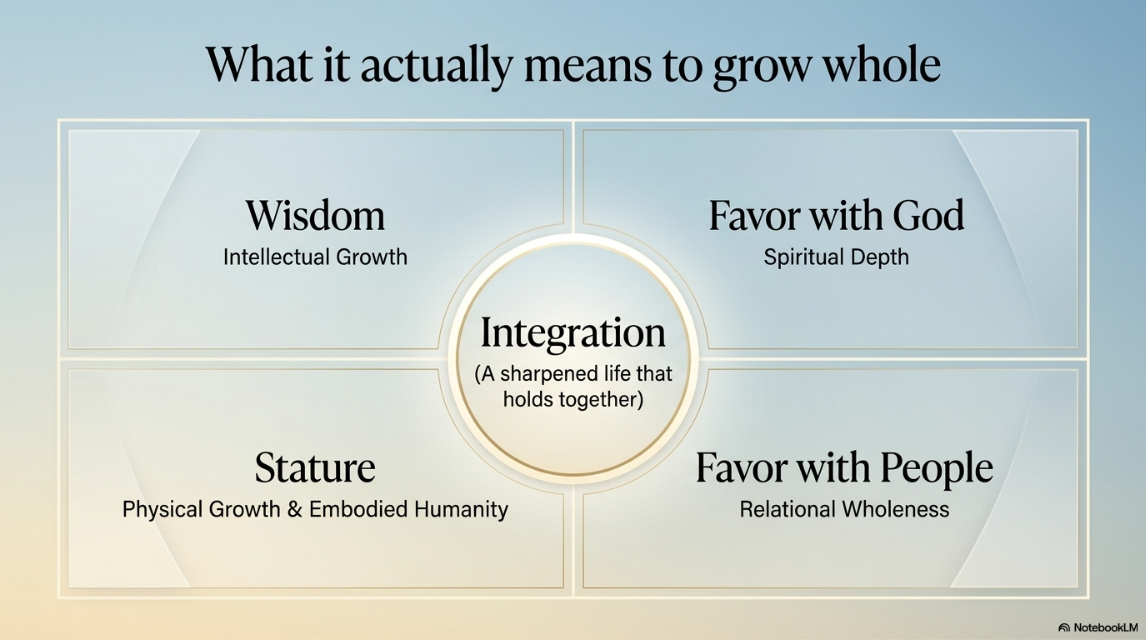
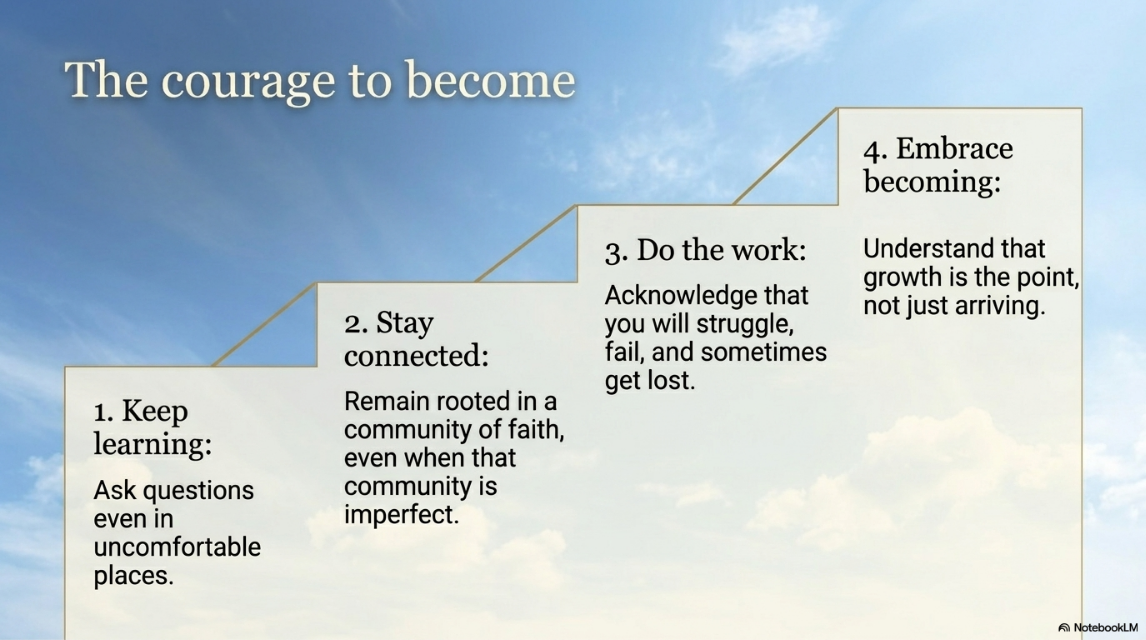
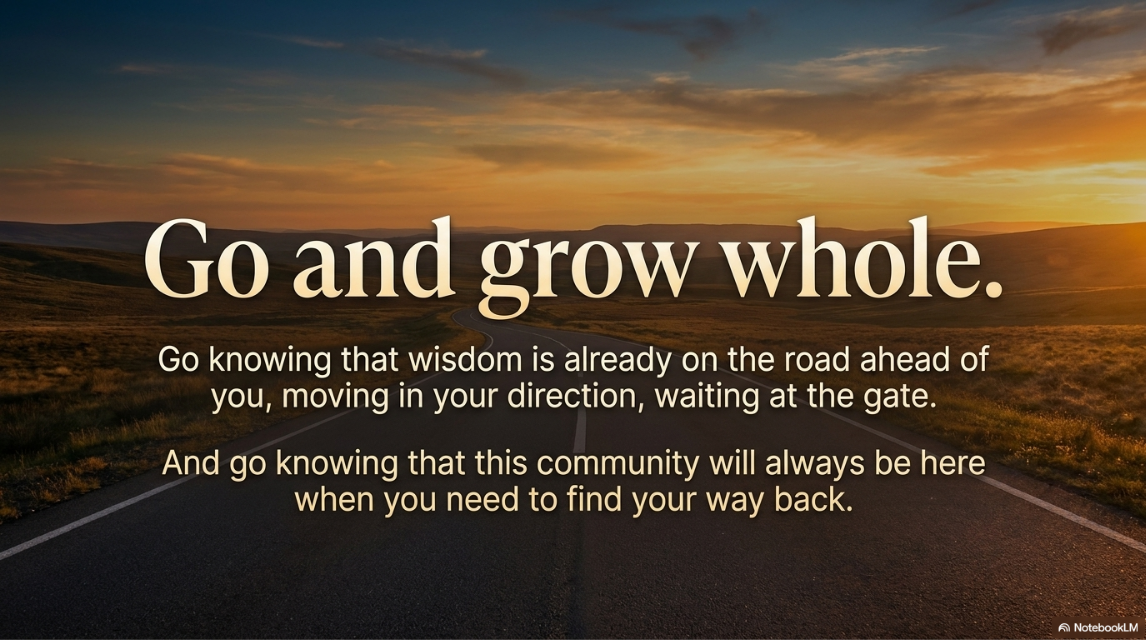
Luke summarizes Jesus’s growth in four dimensions: wisdom, stature, favor with God, and favor with people. Intellectual growth. Physical embodiment. Spiritual depth. Relational wholeness. This fourfold picture is the vision at the heart of Christian formation, not perfection, not arrival, but ongoing integration. Growing whole takes work: the willingness to keep learning, to stay connected to an imperfect community of faith, and the courage to keep becoming rather than simply to arrive. The sermon’s closing charge to graduates applies to all of us: go and grow wise, go and grow whole, go knowing that wisdom is already on the road ahead.
Scripture
And Jesus grew in wisdom and stature, and in favor with God and man. (Luke 2:52)
From the Sermon
“Becoming is not a betrayal of where you came from; it is the fruit of it.”
Reflection Questions
- Which of the four dimensions of wholeness (wisdom, physical embodiment, relationship with God, relationship with others) feels most neglected in your life right now?
- What would intentional growth in that area look like this week?
- Who has sent you forth, and who are you sending?
- What does it mean for your whole congregation to be sent?
Prayer
Lord Jesus, you grew in wisdom and stature and in relationship with God and with the people around you. We want that kind of wholeness. Where we have settled for partial lives, call us forward. Where we have confused arrival with faithfulness, remind us that becoming is the work of a lifetime. Send us forth today, imperfect and still growing, knowing you go with us. Amen.
Small Group Discussion Guide
“Sent Forth Whole”
Pleasant Valley Church of the Brethren
Summary
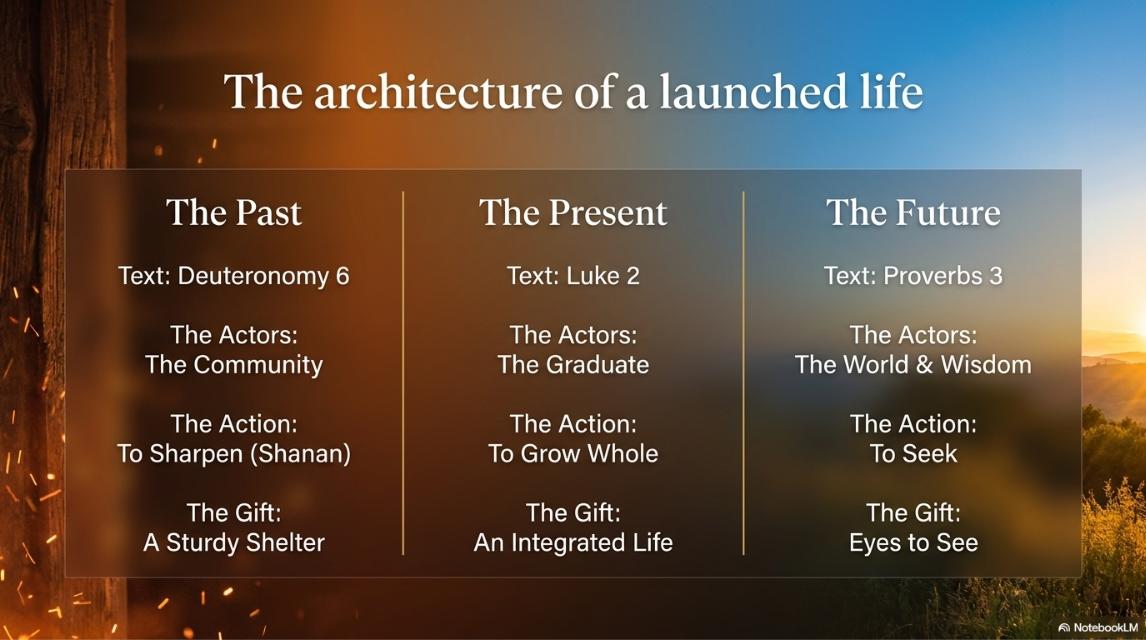
In this sermon for Graduation and Recognition Sunday, Pastor Harry draws from three Scripture passages to explore what it truly means to raise up a child in faith. From Deuteronomy 6, he reminds the congregation that the charge to form the next generation belongs not to a few specialists but to the whole community. From Proverbs 3, he offers graduates a promise: wisdom is not passive; she is already moving toward those who stay attentive. And from Luke 2, he holds up the young Jesus in the temple as a picture of what growing whole actually looks like, a process that is full of wonder and anxiety in equal measure. The sermon’s central vision is not perfection but wholeness: growing in wisdom, in body, in spirit, and in relationship, and becoming people courageous enough to keep growing long after the graduation ceremony ends.
Opening Prayer
Lord our God, you are one, and you have called us into one people. As we gather today, open our hearts to hear again what you are saying to this community through your Word. Give us honesty as we speak, patience as we listen, and courage to let this conversation change us. We ask for your wisdom to meet us in this room, just as your Word promises she will. In the name of Jesus, who grew in wisdom and in favor with all, Amen.
Ice Breaker
Think of one person outside your immediate family who shaped your faith when you were young. It does not have to be a Sunday school teacher; it could be a neighbor, a coach, a friend’s parent. Share their name and one thing they did that you still carry with you.
Key Verses
- Deuteronomy 6:6-7 “These commandments that I give you today are to be on your hearts. Impress them on your children. Talk about them when you sit at home and when you walk along the road, when you lie down and when you get up.”
- Proverbs 3:17-18 “Her ways are pleasant ways, and all her paths are peace. She is a tree of life to those who take hold of her; those who hold her fast will be blessed.”
- Luke 2:46-47, 52 “After three days they found him in the temple courts, sitting among the teachers, listening to them and asking them questions. Everyone who heard him was amazed at his understanding and his answers… And Jesus grew in wisdom and stature, and in favor with God and man.”
Group Discussion Questions
- Pastor Harry describes the Hebrew word shanan (to impress, or teach diligently) as meaning to sharpen, the way you sharpen a blade. What does that image tell us about how faith formation actually works? What does it require of the one doing the sharpening?
- Deuteronomy 6 gives the charge to form children in faith not only to parents or teachers but to all of Israel. What does it look like for a whole congregation, rather than a few designated leaders, to share that responsibility together?
- Pastor Harry says that every shared meal after worship, every greeting, every moment of being genuinely seen by someone in the congregation “all counted.” What ordinary moments in the life of this church do you think carry more forming power than we usually recognize?
- Proverbs 3 describes wisdom as actively moving toward those who seek her, not merely waiting to be found. How does that change the way you think about facing an uncertain future? Does it change how you pray?
- The sermon says the gift of good teachers is not “a set of rules to follow” but “a set of eyes to see with.” What is the difference? Can you think of a moment when you recognized wisdom because someone had given you eyes to see it?
- In Luke 2, Mary and Joseph experience three days of desperate searching before finding Jesus in the temple. Pastor Harry suggests this story is in the Bible because it is true to life: the moment a young person steps into their own voice involves wonder and anxiety for everyone. How does your community make space for that kind of threshold experience, for young people and for adults in transition?
- Luke summarizes Jesus’s growth in four dimensions: wisdom, stature, favor with God, and favor with people. Which of those four feels most neglected in your own life right now? What would growth in that area actually require of you this week?
- Pastor Harry closes by saying that becoming is not a betrayal of where you came from; it is the fruit of it. Where do you find that truth hopeful? Where do you find it challenging?
Life Applications
Choose one of the following to practice before your group meets again. Be prepared to share briefly how it went.
Option 1: Name Someone. Identify one person in the congregation, younger or newer in faith than you, whose name you know but with whom you have never gone beyond a greeting. Take one step toward them this week: a conversation, a text, an invitation to coffee. Check-in: What happened, and what did it cost you?
Option 2: Speak Faith in an Ordinary Moment. Look for one unremarkable moment this week, a meal, a drive, a walk, a phone call, and bring faith into it intentionally. This does not have to be a formal conversation; it might be a question, a Scripture verse, a prayer offered aloud. Check-in: What moment did you choose, and how did it feel to be deliberate?
Option 3: Name Your Threshold. If you are in a season of transition, write one page in a journal describing where you feel like you are standing between the world you came from and the world you are moving into. Bring that writing to God in prayer. Check-in: What did writing it down clarify for you?
Option 4: Write a Thank-You. Think of one person who sharpened you in faith. Write them a note, whether they are living or not, naming what they did and what it meant. If they are living, send it. Check-in: What did writing it bring up for you?
Key Sermon Takeaways
- Faith formation belongs to the whole community, not only to parents, teachers, or clergy. Every member of a congregation is forming the next generation, whether they know it or not.
- The work of sharpening (shanan) is deliberate, repeated, and oriented toward an end. Faithful formation shows up in ordinary moments, not only dramatic ones.
- Wisdom, as Proverbs describes her, is not passive. She moves toward those who are paying attention. The formation we receive in community prepares us to recognize her when she arrives.
- The in-between season, when a young person begins to step into their own voice and calling, is simultaneously full of wonder and full of anxiety. That is true to life, and Scripture honors it.
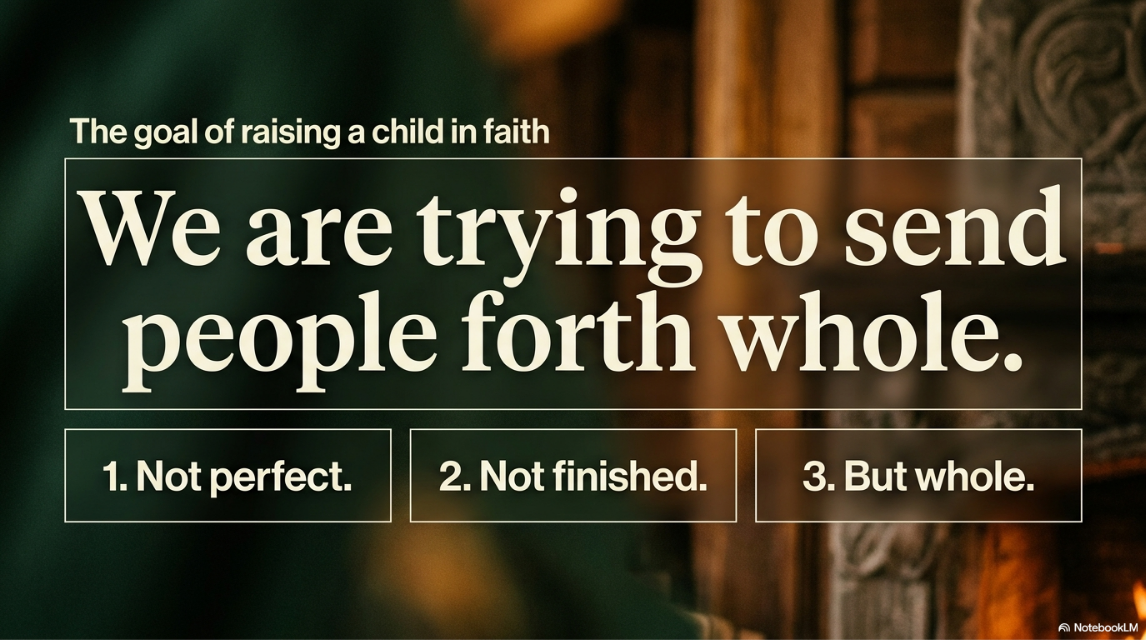
- The goal of Christian formation is not perfection but wholeness: growing in wisdom, in embodied humanity, in relationship with God, and in capacity for human love.
- Sending is an act of love. To raise someone well is to release them. Becoming is not a betrayal of where you came from; it is the fruit of it.
Closing Prayer
God of every season, we thank you that you are the one who forms us, through Scripture, through community, through the teachers who showed up in ordinary moments, and through the wisdom that moves toward us even when we do not know it is coming. As we leave this conversation, send us with the courage to keep growing and the humility to keep learning. Help us to be, for someone else, the steady presence that sharpened us. And in the moments when we feel lost between where we came from and where we are going, remind us that you are both behind us and ahead of us, and that is enough. In the name of Jesus, who grew in wisdom and stature and in favor with God and with all people, Amen.
Prepared for Pleasant Valley Church of the Brethren