We: The Most Relational Word
DEVOTIONAL
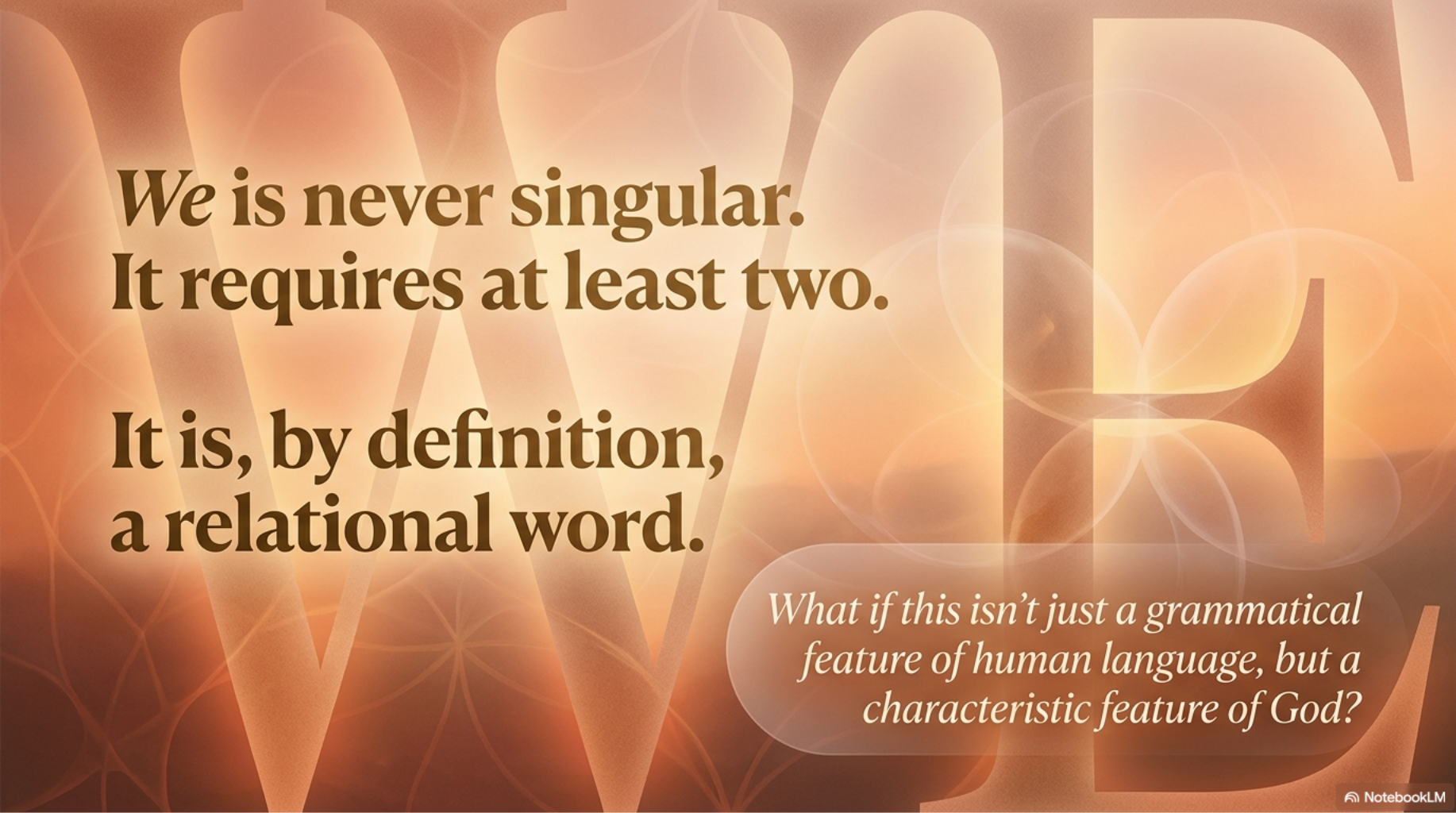
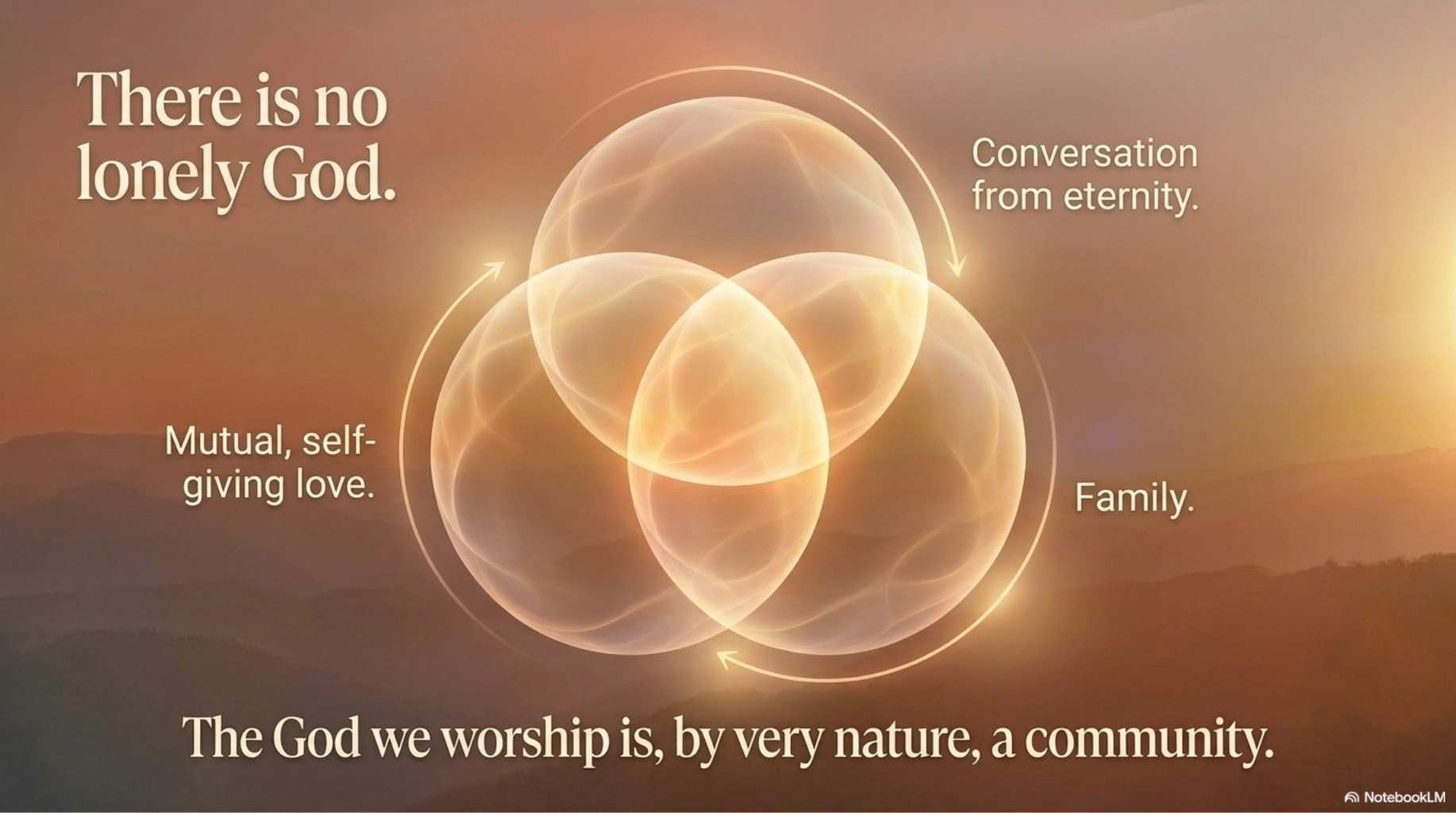
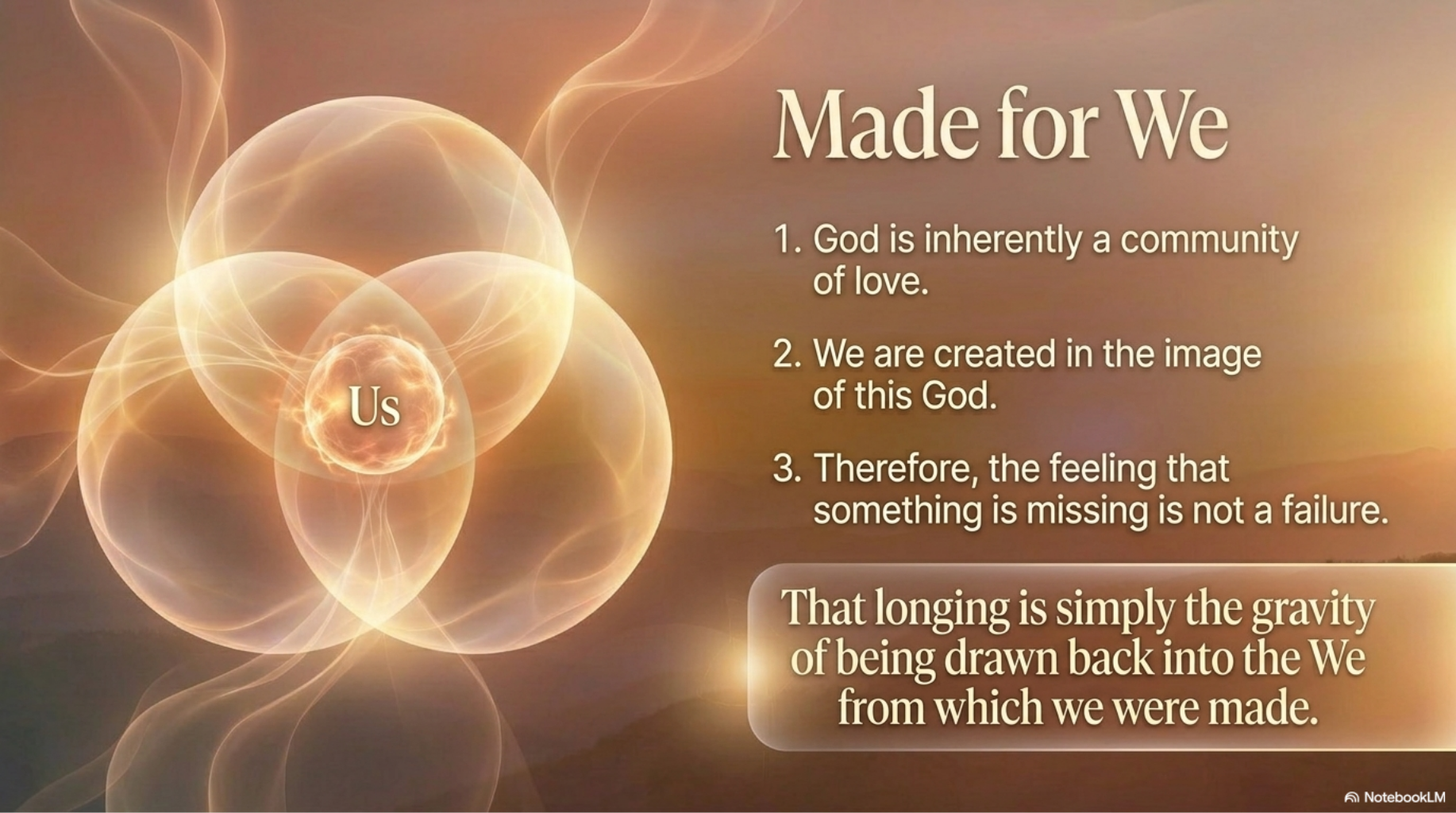
The word “we” is so common we almost never stop to notice it. But it carries a world inside it. You cannot say “we” and mean just yourself. The moment it leaves your lips, it reaches for another person, another life, another presence. What if that is not simply a quirk of grammar but a window into the nature of God? Scripture reveals a God who is, from all eternity, a community. Father, Son, and Holy Spirit, three persons in one unending conversation of love and mutual self-giving. If we are made in the image of this God, and if we live and move and have our being inside this God’s life, then our longing for connection is not a weakness. It is a sign that we are working as designed.
SCRIPTURE
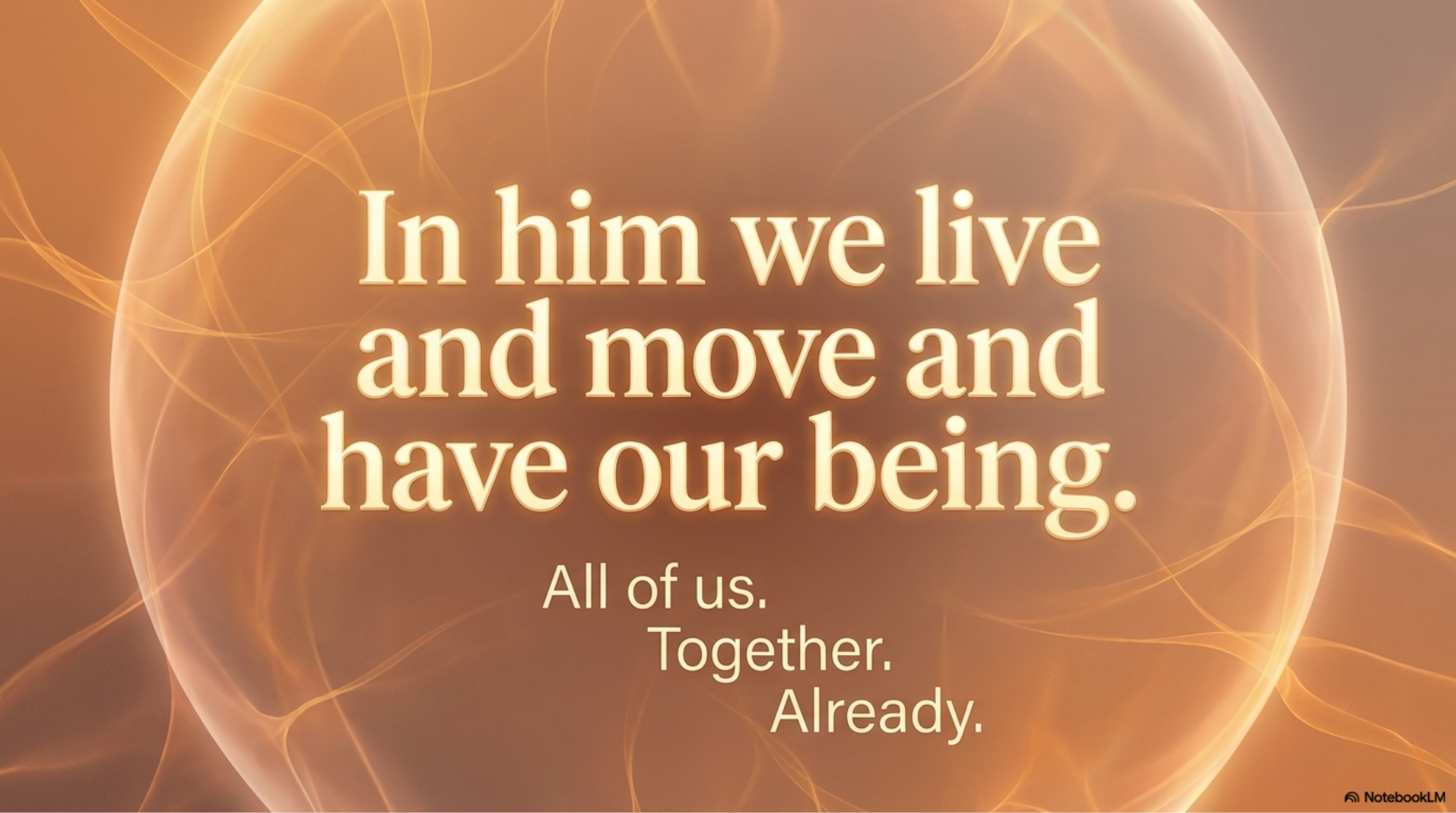
For in him we live and move and have our being. Acts 17:28
FROM THE SERMON
“The God we worship is by nature a community, a we. And if we are made in God’s image, if we live and move and have our being in this God, then we are made for the same thing.”
REFLECTION
Where in your life do you feel most like part of a “we”? What does that experience tell you about who God is?
PRAYER
God of community and conversation, you have never been alone and you have never meant for us to be either. Teach us to see our longing for connection not as a problem to fix, but as a gift that points us toward you. Draw us deeper into the we you have always been. Amen.
The Attentive Walker
DEVOTIONAL
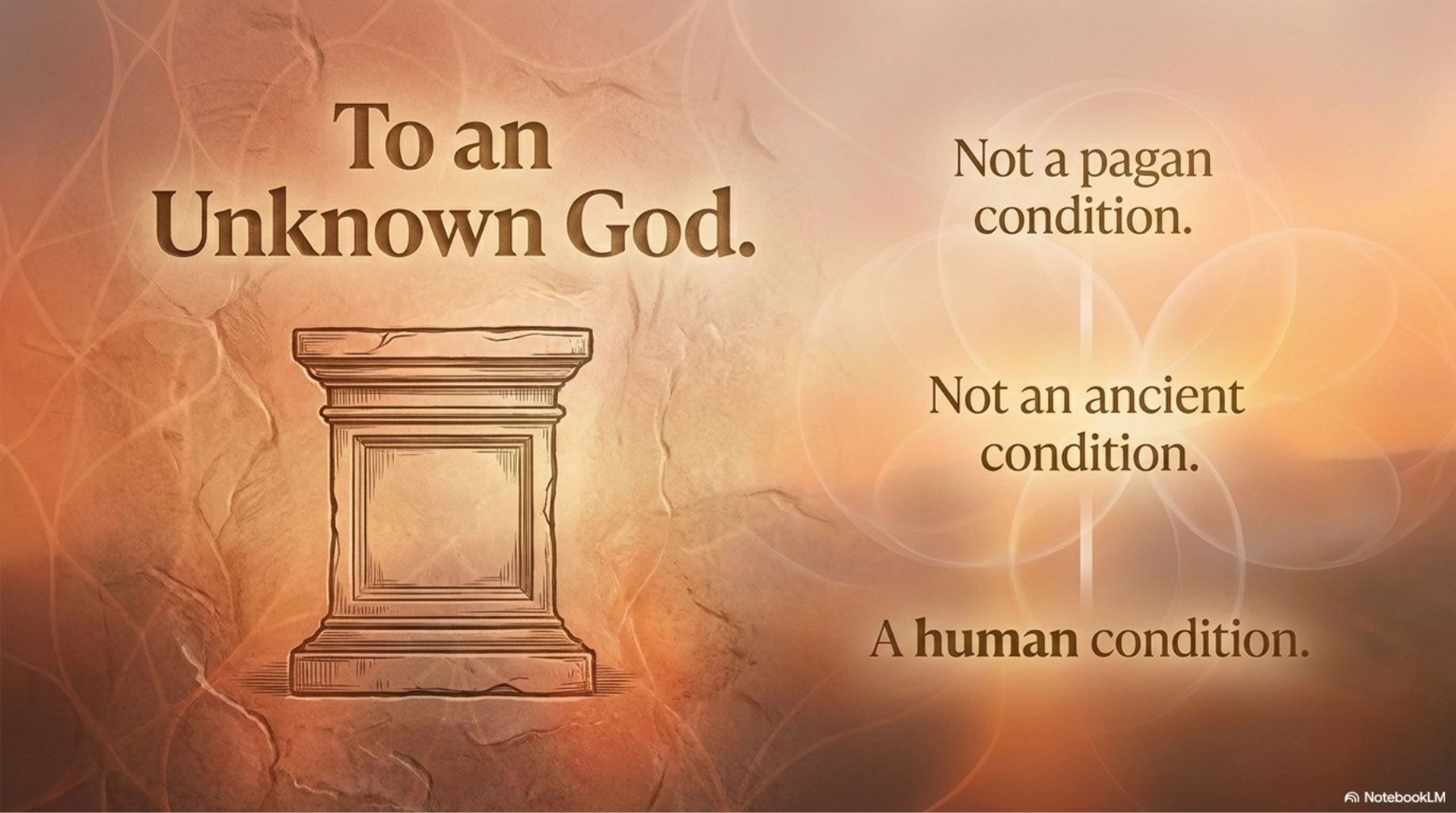
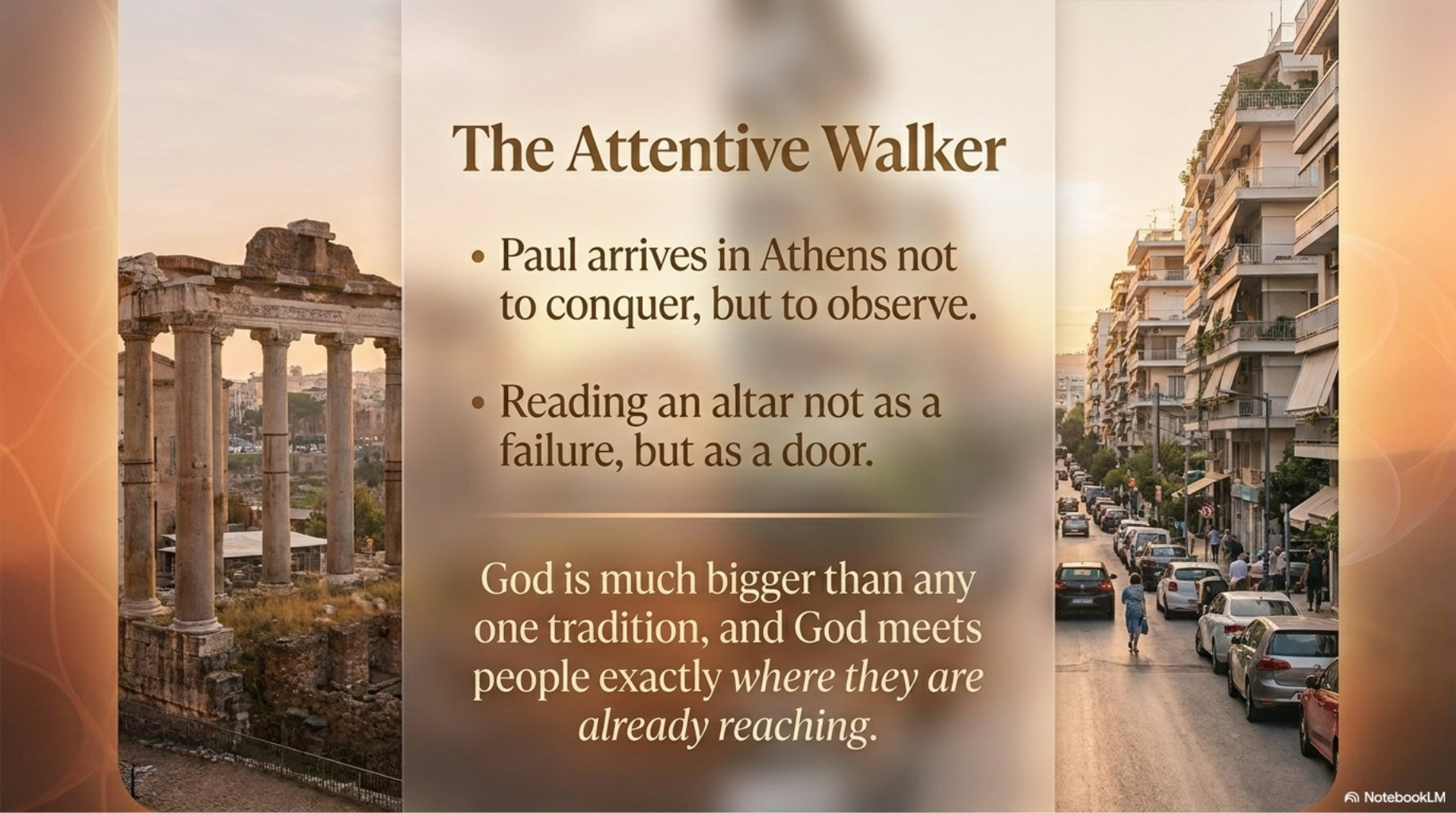
When Paul arrived in Athens, he did not stride in with answers. He walked. He observed. He paid attention to what the city was already reaching for. Among all its altars, he found one dedicated to an unknown God, and rather than seeing it as evidence of failure, he saw it as a doorway. Someone had been honest enough to carve into stone what most of us feel in our bones: there is something we are reaching for that we cannot yet name. Paul’s posture was not one of judgment but of curiosity. He had learned something crucial about God: God tends to arrive before we do. Our calling, like Paul’s, is not to bring God to places where God is absent, but to learn how to notice where God has already been at work.
SCRIPTURE
Paul stood in the middle of the Areopagus and said, ‘People of Athens, I see that in every way you are very religious. For as I walked around and looked carefully at your objects of worship, I even found an altar with this inscription: TO AN UNKNOWN GOD.’ Acts 17:22-23
FROM THE SERMON
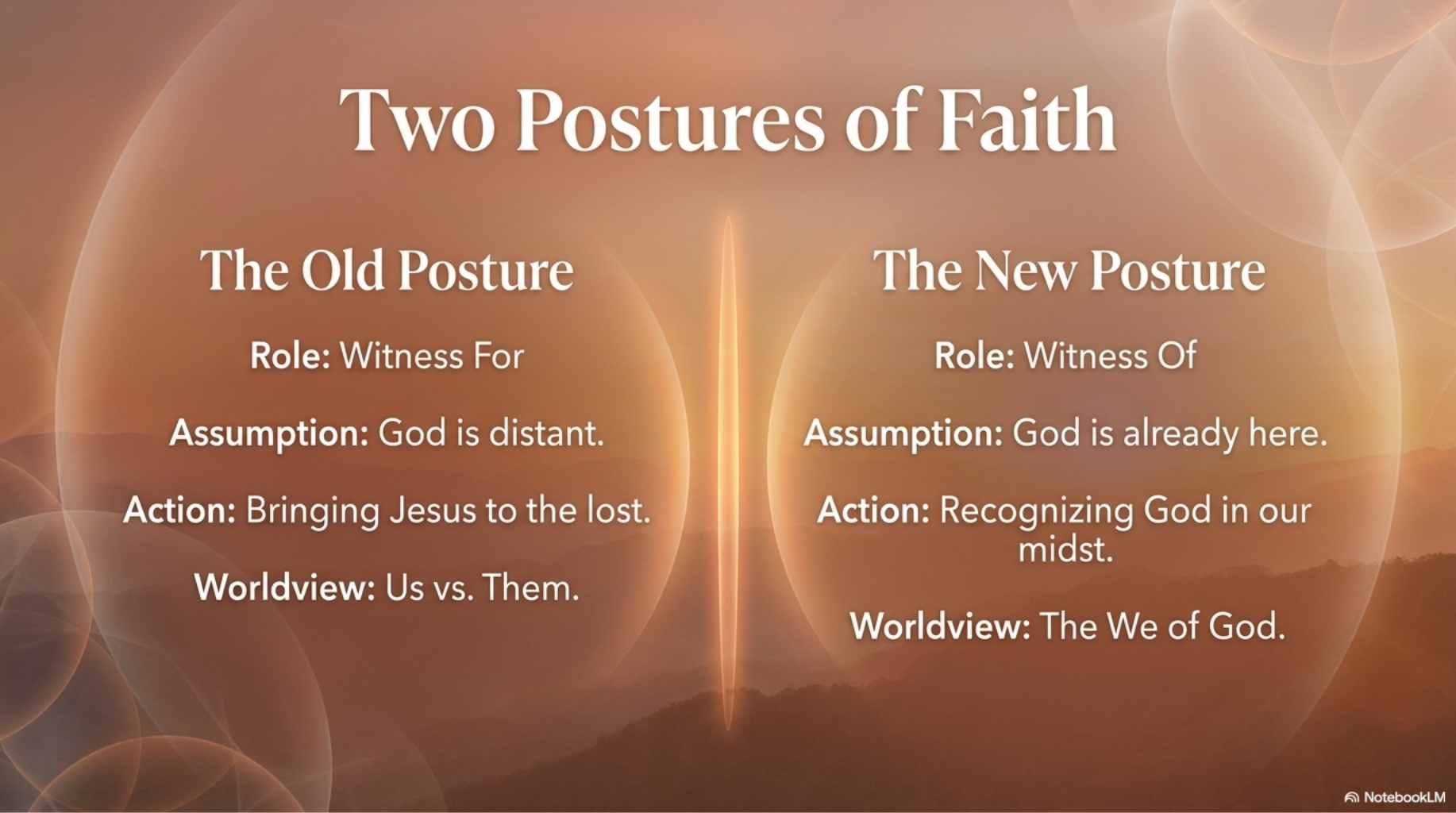
“Paul is being a witness of instead of a witness for.”
REFLECTION
Where have you recently noticed something that felt like more than it appeared to be? A moment, a conversation, a landscape that seemed to be reaching for God without using that name?
PRAYER
Patient and present God, forgive us for the times we assumed you had not yet arrived where we were going. Slow us down into the posture of attentive walkers. Open our eyes to the altars people have already carved out of their longing. Make us witnesses of your presence, not just messengers announcing your arrival. Amen.
Already Held
DEVOTIONAL
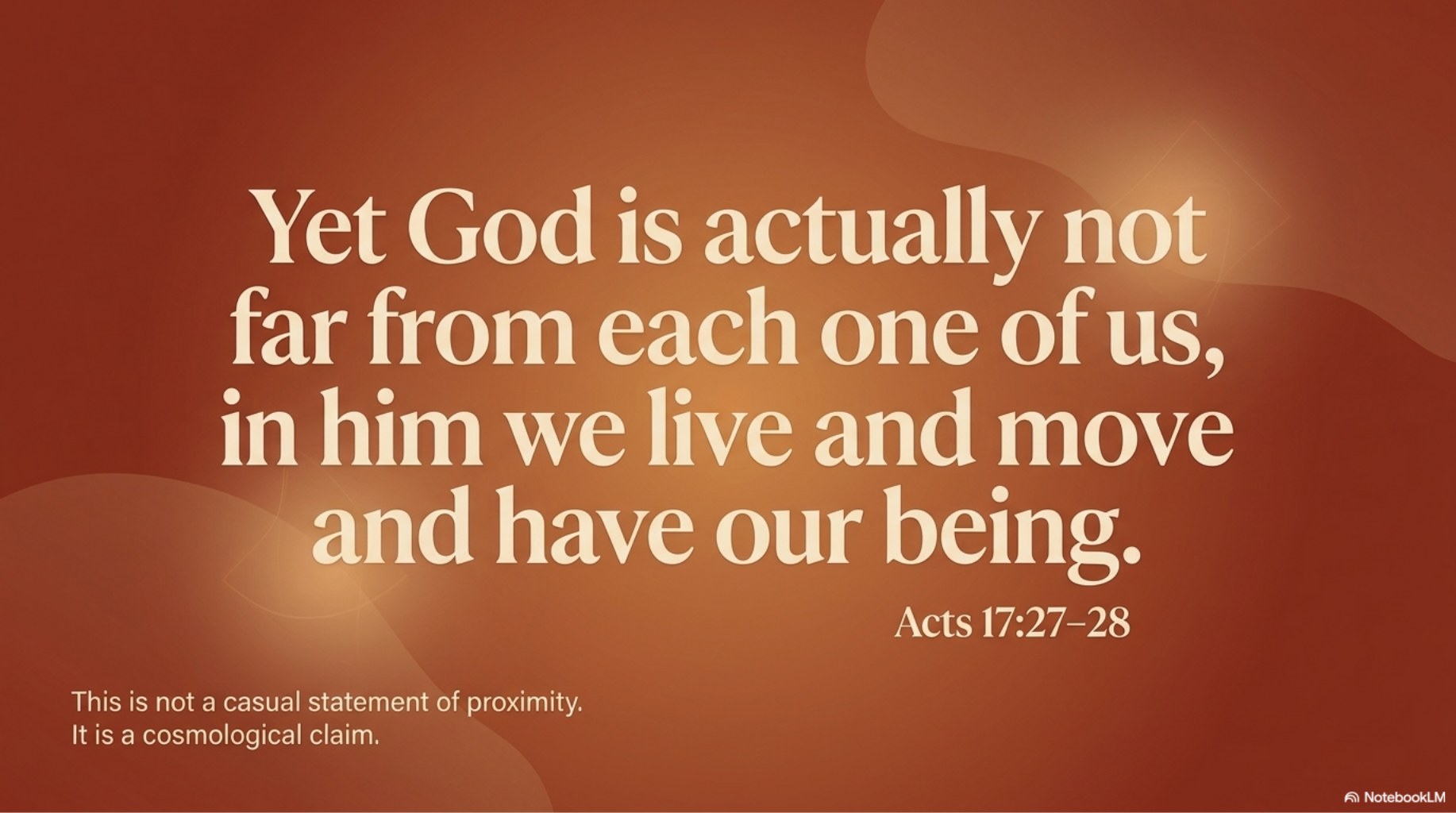
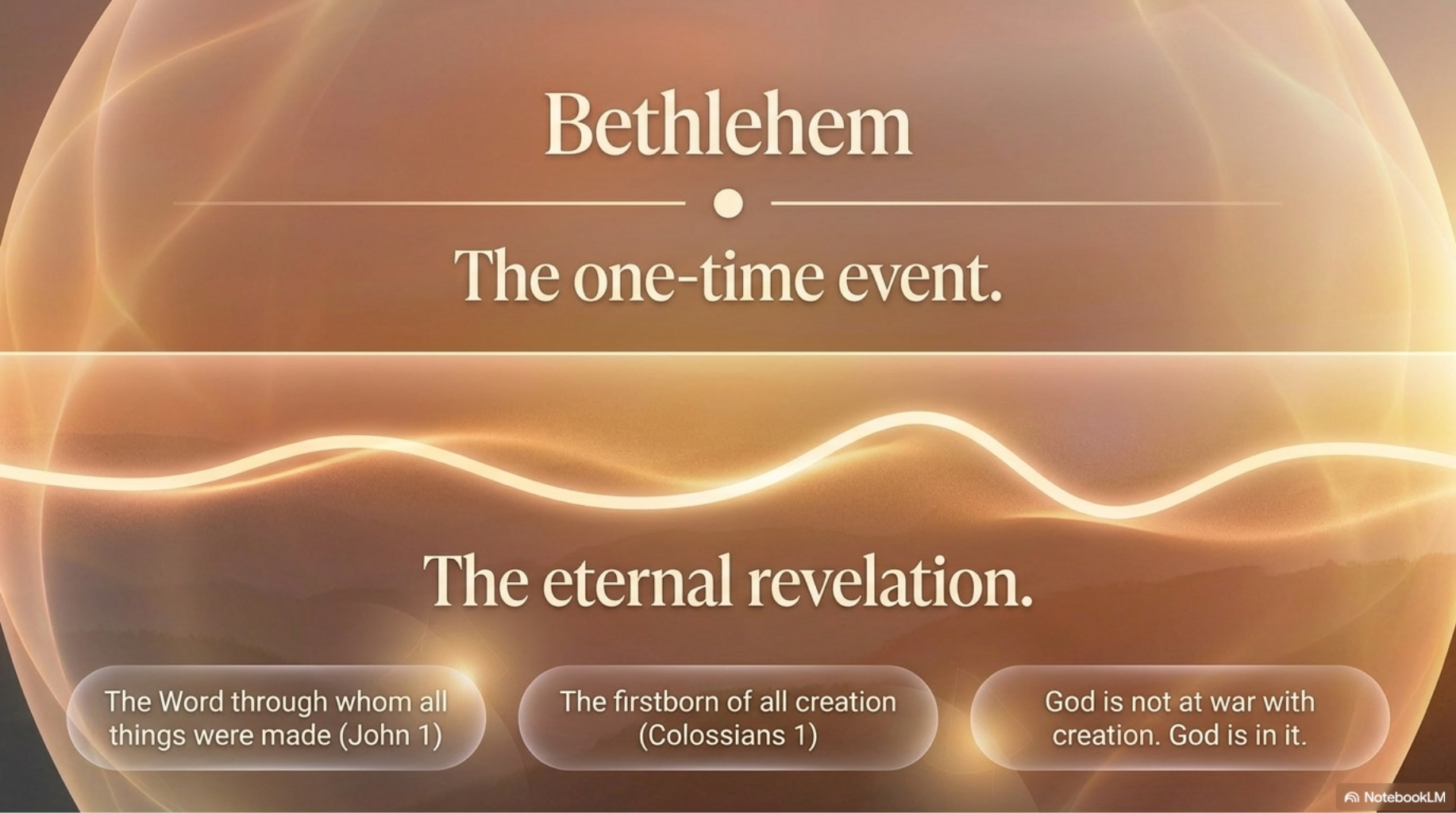
Paul’s words in Acts 17 are more than reassurance. They are a cosmological claim. He is not saying that God is nearby, as in somewhere you can find if you look in the right place. He is saying that your very existence, right now, is already held inside the life of God. You are not reaching across an enormous distance toward a distant deity. You are already encompassed, already embedded, already home in a way that most of us have not yet learned to trust. The incarnation, God coming to us in Jesus, is not a single exception to the rule. It is the clearest expression of something that has always been true: God is not at war with creation. God is in it and has declared it good.
SCRIPTURE
He is before all things, and in him all things hold together. Colossians 1:17
FROM THE SERMON
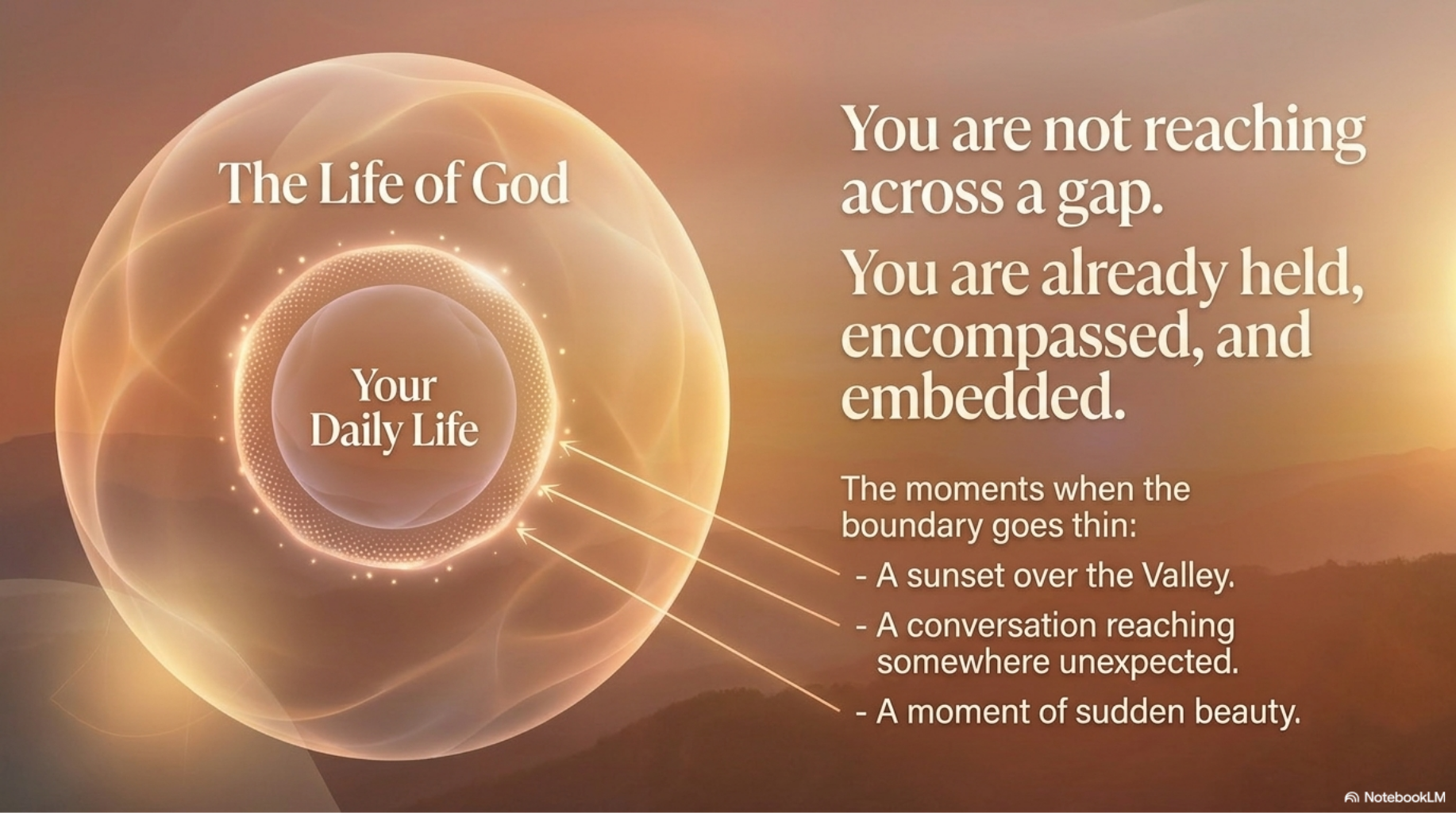
“You are not reaching across a gap toward a distant God. You are already held, already encompassed, already embedded in the life of the one who made you.”
REFLECTION
What would change in how you approach prayer, or your day, if you genuinely believed you were already held inside God’s life rather than trying to close a gap between you and God?
PRAYER
God who holds all things together, we confess that we sometimes live as if you are far off and we must earn our way closer. Remind us today that we already live and move and have our being in you. Let that truth be not just something we believe, but something we breathe. Amen.
Tab Content goes here
The Thin Places
DEVOTIONAL
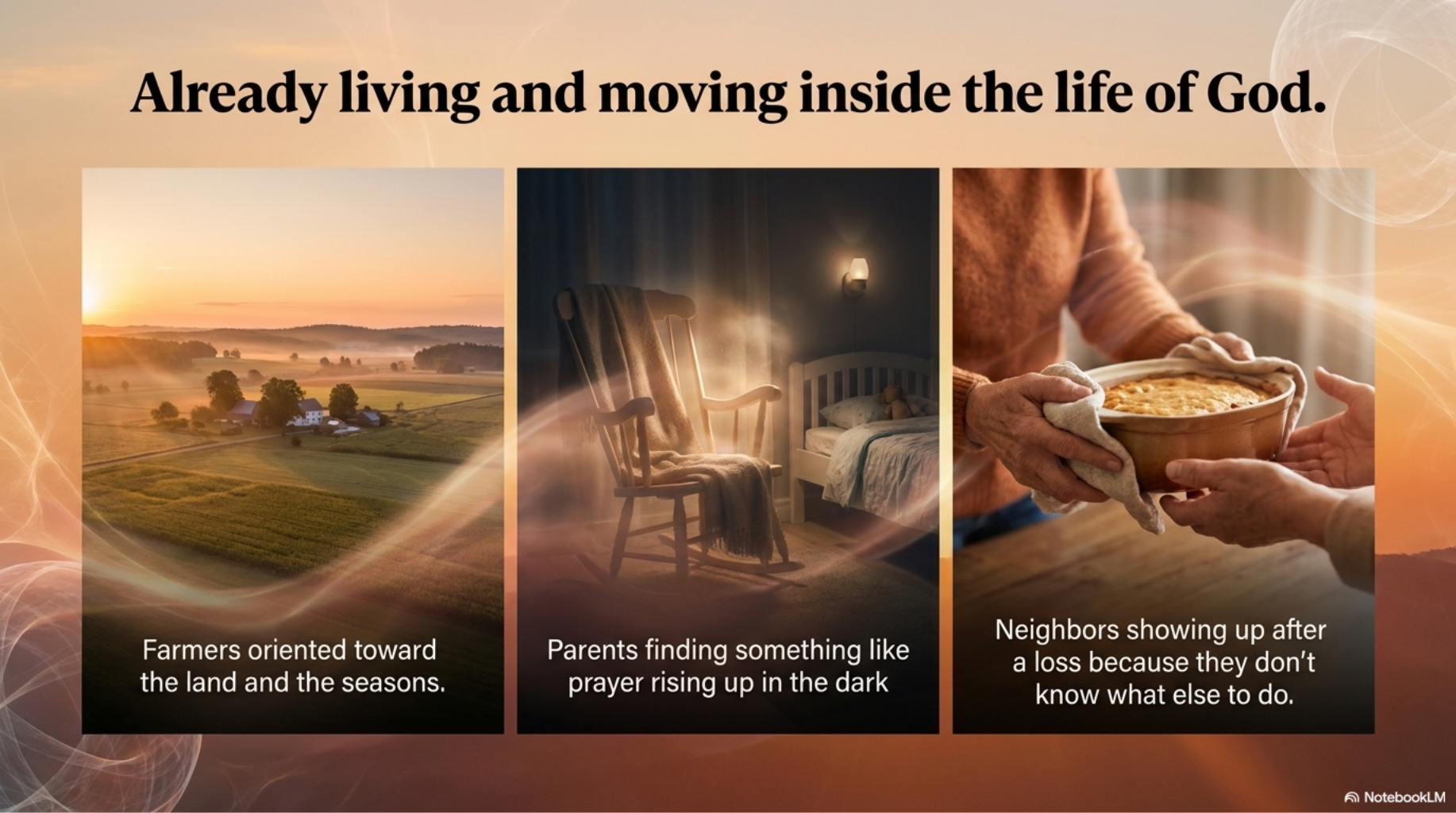
There are moments when the ordinary world goes transparent. A sunset over the valley that makes you feel the world is saying something you cannot quite translate. A conversation that reaches somewhere unexpected. A parent sitting in a child’s bedroom, something that functions like prayer rising up in them without them choosing it. These are the moments the ancient Celtic Christians called thin places, where the membrane between everyday life and the life of God grows thin enough to feel. These moments are not accidents and they are not available only to the spiritually advanced. They are the natural result of living inside a creation that God has never abandoned. Our task is simply to learn to recognize them.
SCRIPTURE
Where can I go from your Spirit? Where can I flee from your presence? If I go up to the heavens, you are there; if I make my bed in the depths, you are there. Psalm 139:7-8
FROM THE SERMON
“These are the moments when the membrane between your daily life and the life of God goes thin. That is what it feels like to live and move and have our being in something that is larger than ourselves.”
REFLECTION
Think of a recent thin place in your own life, a moment when the ordinary felt charged with something more. What was it, and what did it stir in you?
PRAYER
God of every thin place, thank you for the sunsets, the conversations, the casseroles brought to grieving neighbors, and all the small moments when your love becomes visible through the ordinary. Sharpen our attention. Help us live with the kind of awareness that can recognize you when you show up in the everyday. Amen.
Pointing to What Is Already True
DEVOTIONAL
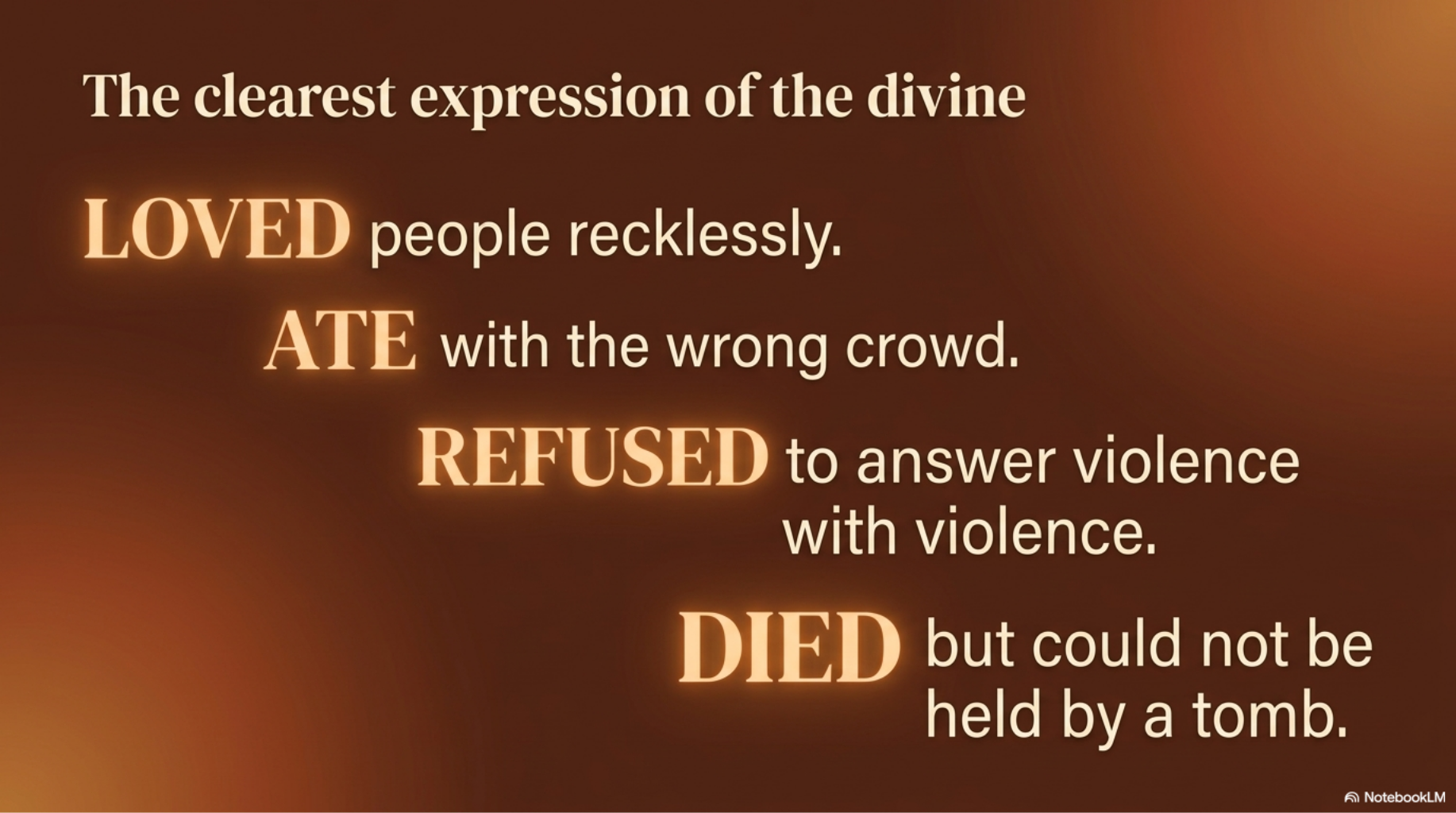
The good news Paul proclaimed in Athens was not primarily that God was now paying attention. It was that God had been there all along, long enough to be noticed, long enough to be etched into a stone. Our calling as followers of Jesus is not to inform our neighbors that God has finally arrived in their direction. It is to point to what is already true: that the love holding everything together, even when everything feels like it is falling apart, is real and it has a name. The best picture we have of what that love looks like is a man from Galilee who loved recklessly, ate with the wrong people, refused to answer violence with violence, and who the tomb could not hold. In him we live. In him we move. In him we have our being. All of us. Together. Already.
SCRIPTURE
God did this so that they would seek him and perhaps reach out for him and find him, though he is not far from any one of us. For in him we live and move and have our being. Acts 17:27-28a
FROM THE SERMON
“Our job is to point to what is already true. The love that holds everything together, even when everything feels like it is falling apart, is the thing we call God.”
REFLECTION
Who in your life is already living inside the love of God without knowing what to call it? How might you, as a witness of rather than a witness for, help them see what is already true about them?
PRAYER
God of reckless love, you have been reaching toward us long before we thought to reach toward you. You are not held in any one building or tradition or group. You are the one in whom we already live and move and have our being, all of us, together, already. Give us the courage and the gentleness to point to that truth in the lives of the people around us. May we be, above all else, witnesses of your presence. Amen.
Tab Content goes here
Revealing What Binds Us
Small Group Discussion Guide
Reimagining Life With Jesus — Practicing Hope Together
“For in him we live and move and have our being.” — Acts 17:28
Pleasant Valley Church of the Brethren | Pastor Harry Jarrett
Sermon Summary
In this sermon, Pastor Harry invites us to stop and sit inside one of the most ordinary words in our language: we. What begins as a grammatical observation becomes a window into the very nature of God. Drawing from Acts 17, where Paul walks through Athens as a curious observer rather than a conquering missionary, we are invited to reimagine our posture toward the people around us.
Paul finds an altar to an unknown God and does not condemn it. He sees it as a doorway, evidence that God has already been at work long before anyone thought to bring the gospel. His proclamation, that in God we live and move and have our being, is not a casual comfort. It is a cosmological claim: we are not reaching across a gap toward a distant God. We are already held inside God’s life.
The sermon calls us to become witnesses of God’s presence rather than witnesses for it, to point to what is already true in the lives of our neighbors, our community, and our world. At the center of the universe, there is relationship. The God we worship is, by nature, a we.
Opening Prayer
Read aloud together, or invite one person to lead:
God of community, you have never been alone, and you have never meant for us to be either. As we gather around this text and around one another, slow us down. Quiet the noise of our separate lives long enough to remember that we already live and move and have our being inside your life. Open our minds to what we have not yet been able to name, and open our hearts to the people sitting beside us. May this time together be, in its own small way, a thin place. Amen.
Ice Breaker
Use one of these questions to open your time together. Keep answers brief, one to two minutes per person. The goal is simply to get everyone talking.
Option A: Think of a word or phrase you use constantly but rarely stop to examine. What is it, and what do you think it actually reveals about you?
Option B: Describe a place or moment in your life where you felt deeply part of a “we.” A team, a neighborhood, a family gathering, a church community. What made it feel that way?
Key Verses
Read these passages aloud before your discussion. Consider assigning them to different readers.
Acts 17:22-28 Paul stood in the middle of the Areopagus and said: “People of Athens! I see that in every way you are very religious. For as I walked around and looked carefully at your objects of worship, I even found an altar with this inscription: TO AN UNKNOWN GOD. So you are ignorant of the very thing you worship, and this is what I am going to proclaim to you. The God who made the world and everything in it is the Lord of heaven and earth and does not live in temples built by human hands… God did this so that they would seek him and perhaps reach out for him and find him, though he is not far from any one of us. For in him we live and move and have our being.”
Colossians 1:15-17 The Son is the image of the invisible God, the firstborn over all creation. For in him all things were created: things in heaven and on earth, visible and invisible… He is before all things, and in him all things hold together.
John 1:1-4 In the beginning was the Word, and the Word was with God, and the Word was God. He was with God in the beginning. Through him all things were made; without him nothing was made that has been made. In him was life, and that life was the light of all people.
Group Discussion Questions
1. Pastor Harry describes the word “we” as not just a grammatical feature of language but a characteristic feature of God. What does it mean to you that at the center of the universe there is relationship rather than a solitary God?
Follow-up: How does the idea of the Trinity as a “we” change how you think about your own need for community?
2. Paul arrived in Athens as an attentive walker, paying attention to what the city was already reaching for. Who in your life, or in your neighborhood, seems to be reaching for something they cannot yet name? What do you notice about how they reach?
3. The sermon distinguishes between being a witness of God’s presence versus a witness for God: we are not bringing God to people, but pointing to where God already is. How does that shift change your posture toward people who do not share your faith?
Follow-up: Is that shift easy or difficult for you personally? Why?
4. Paul says “in him we live and move and have our being.” Pastor Harry calls this a cosmological claim: not simply that God is nearby, but that our very existence is already inside God’s life. What emotions or questions does that stir in you?
5. The sermon references what some call thin places, moments when the membrane between everyday life and the life of God grows thin. A sunset over the valley, a conversation that went somewhere unexpected, a parent sitting quietly in a child’s room. Share a recent thin place from your own life. What was it, and what did it feel like?
6. Pastor Harry confesses that when he arrived in Sicily as a young missionary, he thought he was bringing God to a place where God had not yet been. Years later he realized God had been there long before him. Have you had a similar realization, a moment when you discovered God was already at work somewhere you assumed God was absent?
7. The sermon closes with an image of a man from Galilee who loved recklessly, ate with the wrong crowd, died refusing to answer violence with violence, and whom the tomb could not hold. How does that description of Jesus shape what the word “God” means to you personally?
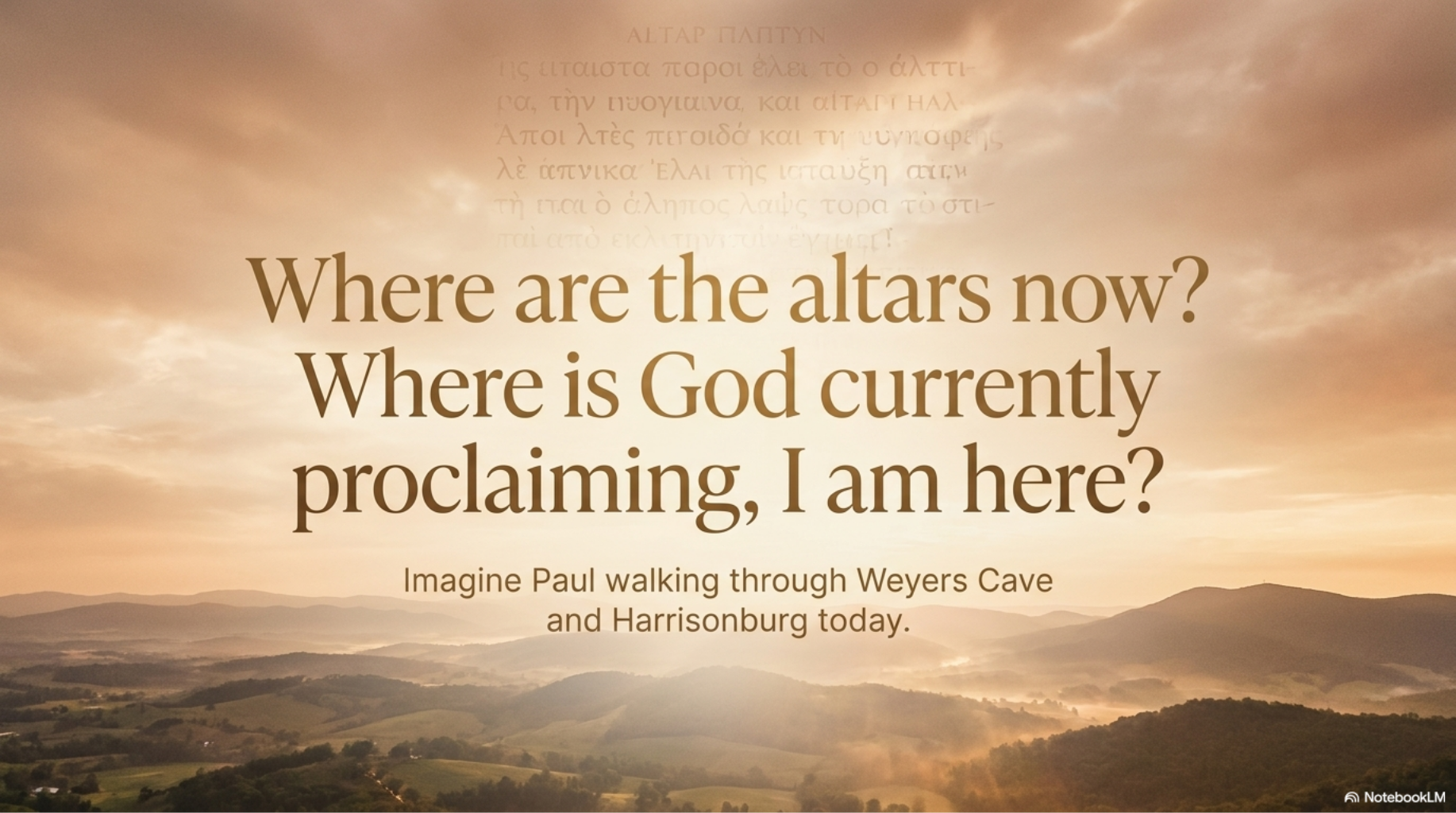
8. If Paul walked through Weyers Cave, through Harrisonburg, through the specific streets where you live and work, where do you think he would find the inscriptions of God’s presence? Where would he see evidence that people are already reaching for something larger than themselves?
Follow-up: What would it look like for your group or church to point to those inscriptions rather than build new ones from scratch?
Life Applications
Choose one or two of these to practice this week. Consider checking in with one another next time you meet.
Practice attentive walking. Take a 20-minute walk through your neighborhood this week with no earbuds, no phone, and no agenda. Pay attention to where people seem to be reaching for something they cannot name. Where do you see longing, beauty, or quiet devotion?
Look for the altars. Notice the ways people around you, whether they use religious language or not, are already oriented toward something larger than themselves. A farmer rising before dawn. A neighbor who shows up with food. A coworker who speaks of their work as a calling. Practice naming these quietly as signs of God’s presence.
Reframe one relationship. Think of someone in your life whom you have seen as “outside” the faith. This week, approach them as someone already held inside God’s life, not as a project but as a person. How does that reframe change how you listen to them?
Pray the verse. Each morning this week, before your feet hit the floor, say aloud: “In him I live and move and have my being.” Let that be your first orientation of the day and notice what it changes.
Share a thin place. Write down one moment from the past month when the ordinary felt charged with something more. Share it with a trusted friend, or bring it back to your group next week.
Key Sermon Takeaways
“The God we worship is by nature a community, a we. And if we are made in God’s image, then we are made for the same thing.”
- The word “we” is not just grammatical. It points to the relational nature of God, who has existed from eternity as Father, Son, and Holy Spirit, a community of love and self-giving.
- Paul’s posture in Athens was curiosity, not condemnation. He saw an altar to an unknown God as a doorway, not a failure. That is the posture we are invited into.
- The incarnation is not a one-time exception. Jesus is the clearest expression of something always cosmically true: God has never been at war with creation. God is in it and thinks of it as good.
- Acts 17:28 is a cosmological claim. We are not closing a gap between ourselves and a distant God. We already live and move and have our being inside God’s life.
- Our calling is to be witnesses of God’s presence rather than witnesses for God, pointing to what is already true rather than announcing an arrival.
- The best picture of God we have is a man from Galilee who loved recklessly, refused violence, and whom the tomb could not hold. In him: all of us, together, already.
Closing Prayer
Read aloud together, or invite one person to close:
God who holds all things together, we have spent this time trying to find words for what you have always known: that we belong to each other because we first belong to you. Forgive us for the times we have lived as if we were alone, or as if you were far away, or as if the people around us were outside your reach.
Send us back into our weeks as attentive walkers, as witnesses of your presence, as people who know that in you we live and move and have our being, all of us, together, already. May we love recklessly. May we eat with the wrong crowd. May we refuse to answer the violence of this world with more violence. And may we trust that the tomb has never had the final word. Amen.
Pleasant Valley Church of the Brethren | Weyers Cave, Virginia